


The Big Picture |

- 10 Thursday PM Reads
- Where Will the Jobs Be In 2020?
- Around the Globe, Central Banks Flex Muscles
- Weaker Chinese, Japanese and EZ economic data
- 10 Thursday AM Reads
- POTUS with Pete Domick on Sirius XM
- The Hobbit: An Unexpected Journey
- For now, I still say sell the central bank news
- Liscio Report: Recent Work on Income Disparity
- Economic Analysis of the Top Tax Rates Since 1945
| Posted: 20 Sep 2012 01:30 PM PDT My afternoon train reading:
What are you reading?
China’s CIC Makes Investing Shift |
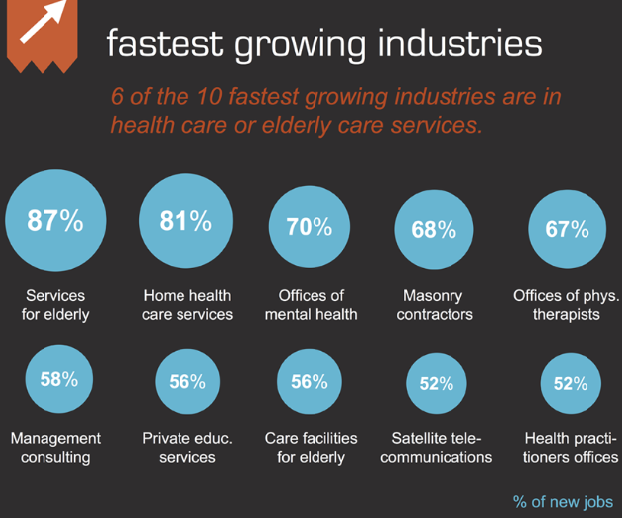
| Where Will the Jobs Be In 2020? Posted: 20 Sep 2012 11:30 AM PDT |
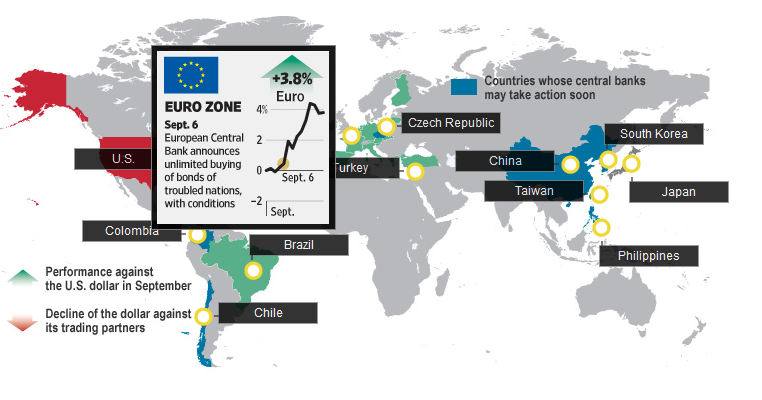
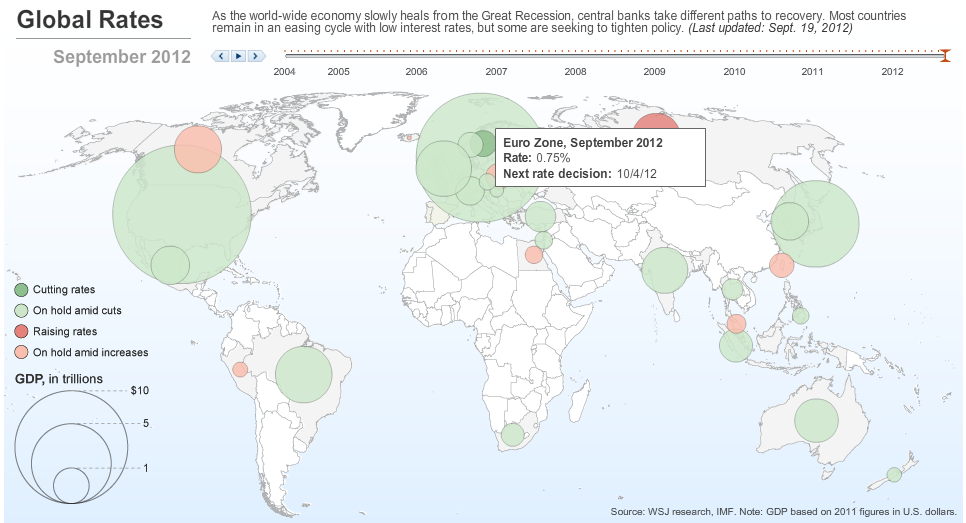
| Around the Globe, Central Banks Flex Muscles Posted: 20 Sep 2012 09:00 AM PDT |
| Weaker Chinese, Japanese and EZ economic data Posted: 20 Sep 2012 08:28 AM PDT The IMF suggests that Australia cut interest rates and delay a return to a budget surplus. In addition, they report that inflation is within target and forecast GDP growth of +3.25% this year, similar to last year. They add that the A$ is “stronger than would be consistent” with just the structural shift that is re-orientating the economy toward mining. I remain bearish on the A$. (Source Bloomberg); Japanese exports declined by -5.8% in August Y/Y, better than forecasts for a -7.5% decline, a 3rd consecutive monthly decline. Weakness in demand from China, together with the EZ was the main reason. Imports declined by -5.4% (lower oil prices), resulting in a trade deficit of US$9.6bn, slightly better than forecasts, though the worst since March 2011. Seasonally adjusted, Japan has recorded trade deficits for the past 18 months, since the Tsunami stuck the country. Exports to the US rose by 10.3%, though down 9.9% to China, the 3rd consecutive monthly decline. Shipments to Western Europe declined by -28% Y/Y, due to a large decline in exports to Germany (-18%) and the UK (-42%). The sharp decline to the UK looks like a one off; Taiwan’s export orders fell for the 6th consecutive month in August. Exports orders to even the US declined by -4.2%, worse than the -2.7% fall expected. Taiwan’s export data is a leading indicator of the state of the global economy, by the way. CPI rose to +3.4% last month, a 4 year high and is likely to rise further, which is bad news as the Central Bank will, as a result, be restrained from cutting interest rates, which it kept on hold today;
Chinese September flash manufacturing PMI came in at 47.8, slightly higher than 47.6 in August and the 11th monthly contraction and near a 9 month low, reports HSBC. The “official” data is to released on 1st October and is normally better than the HSBC data. The continued decline will impact employment, which will be a major concern for the Chinese authorities. The weakness in the economic data suggests that Premier Wen’s target of GDP growth of +7.5% this year is, shall I say, “optimistic” – I would not be surprised if it came in below 7.0%. The Shanghai Composite index slumped by over 2.0% today, to the lowest since February 2009. Cant see much respite in coming days either. Interestingly, the Yuan rose to just below 6.30 against the US$ today and is up +1.4% since its July low – possibly US QE3, US Presidential election campaign and/or ECB proposed bond buying programme related. However, the forward market (1 year ahead) has not moved, suggesting that the current “strength” is temporary;
Mexico is challenging China as a manufacturing base, reports the FT. I had reported that businesses are relocating manufacturing operations from China to other parts of the world. The FT reports that Mexico is benefiting. Makes sense given the neighbouring US market. During the 1st half of the year, Mexico accounted for 14.2% of manufactured imports into the US, as opposed to 11.0% in 2005. Chinese imports, on the other hand, declined from 29.3% at the end of 2009, to just 26.4% at present. Worryingly for China, the rate of decline is increasing recently. (Source FT); Indian markets declined today following the announcement by the Trinamool party that they would withdraw from the coalition, the United Progressive Alliance (“UPA”). However, amateur theatrics is a staple ploy utilised by Indian politicians, so don’t believe everything you read. In addition, the Indian Parliament does not reconvene till December. The real issue is that the lunatic Ms Banerjee, head of the Trinamool Party, wants to extricate large sums of money from Delhi, as her State, West Bengal, where she is Chief Minister, is bust. Ms Banerjee opposed the recent appointment of the Indian President, though fell in line at the last moment. A strike in India was called for today, in protest at the reform package which is to, inter alia, increase diesel prices (actually through reducing subsidies) and allowing foreign multi brand retailers; Russia is kicking out USAID, alleging that the agency is trying to influence domestic elections. Russia states that civic groups do not need funding. The Russian Foreign Ministry stated that they were expelling USAID because the agency was “not promoting bilateral humanitarian cooperation”, though rather were trying to “influence the political process through the distribution of grants” to selective groups. The Agency’s funding in Russia was a mere US$50mn. The move continues the tougher line that Russia/Mr Putin is taking on political opponents and those who are highlighting the increasing corruption in the country;
The EU has wimped out of a trade dispute with China. Premier Wen of China is visiting. Mr Karel De Gucht, the EU Trade Commissioner, has told his officials that he needs stronger evidence to proceed against China, having previously stated that he had “very solid evidence” !!!!. During a recent trip to China, Mrs Merkel suggested that the EU should back off on trade issues in respect of China. All pure coincidence, of course !!!!!!!; Spain sold E4.8bn of bonds today, above the E3.5bn to E4.bn targeted. The 10 year yield declined from 6.47% last month to 5.666%, with a bid to cover ratio of 2.8 times, higher than the 2.4 in August. The yield was well below the record of 7.62% just before Mr Draghi’s “do whatever it takes” to preserve the Euro speech in July. The better auction results is due to expectations that Spain will request aid shortly. In addition, S&P has stated that they would not remove Spain’s investment grade rating, which has given the Spanish PM more time. Mr Rajoy is facing regional elections in about 1 months time and, ideally, does not want to seek aid ahead of that. Reports that Spain will use the balance of E40bn (from the E100bn allocated to Spanish banks) not used to recap its banks, reported by Spanish newspapers, is absurd however – the EZ will never go for it. Interestingly, the head of BBVA suggests that the stress tests will reveal that Spanish banks need E70bn to E80bn – still far too low in my opinion. Finally, Mr Rajoy had a tough meeting with the head of the Catalonia region today. Mr Rajoy stated that Mr Mas, the head of the Catalonia region, has proposed a number of unconstitutional statements – well I suppose threatening to break away from Spain can be deemed to be unconstitutional; EZ September flash PMI’s confirms the increasing weakness of the EZ economy and suggests that 3rd Q GDP will contract more so than the 2nd Q. EZ September composite PMI came in at 45.9, lower than 46.3 in August and 46.6 forecast. EZ September services PMI came in at 46.0, lower than the 47.5 expected and 47.2 in August. EZ September manufacturing PMI came in at 46.0, better than the 45.5 forecast and 45.1 in August. Overall, French manufacturing PMI slumped to 42.2, well below 46.4 forecast and 46.0 in August and the 7th consecutive monthly decline. French services PMI came in at 46.1, lower than 49.4 forecast and 49.2 in August, a 4 month low. German manufacturing PMI however, rose to 47.3, better than 45.3 forecast and 44.7 in August, the highest rating since March this year. German services PMI came in at 50.6, better than 48.5 expected and 48.3 in August. The biggest concern in the above data is France. The French composite index slumped to 44.1 in September, its lowest for nearly 3 1/2 years, from 48.0 in August. The data suggests that French 3d Q GDP could decline by -0.5% in the current Q – a definite whoops. French business orders collapsed to a 3 1/2 year low, as well, with layoffs rising to a 34 month high. Services sector expectations slumped into negative territory in September for the 1st time since February 2009. As you know, I believe that France will prove to be the major problem country in the EZ, even more so than Spain and Italy; UK August retail sales declined by -0.2% M/M, though better than the -0.3% forecast and lower than the rise of +0.3% in July. The numbers were negatively affected by the Olympics, which should result in a rebound in September. The UK September CBI trends reports that total (manufacturing) orders came in at -8, though up from the -21 in August and better than the -15 forecast. September output expectations rose to +7, from flat in August. Recent UK data has generally been better than forecasts; Irish 2nd Q GDP (seasonally adjusted) came in lower than expected at flat, as opposed to +0.7% expected and -0.7% in the 1st Q. Y/Y GDP was down -1.1%. However, the 2nd Q current account Q/Q came in at +E3.235bn, much better than the -E1.045bn in the 1st Q. The EU forecast that Irish debt to GDP will peak at 119% in 2013. The Irish benchmark 2020 bond yielded just below 5.0% this morning, the 1st time since Ireland’s bail out in November 2010; US initial jobless claims came in at 382k, higher than the 375k expected and the upwardly revised 385k the previous week. Continuing claims came in at 3.272mn, from 3.30mn previously; US September manufacturing PMI came in at 51.5, as opposed to 51.5 expected and 51.5 in August. The output component came in at 51.2 versus 51.9 in August. New orders were higher at 52.5, versus 51.9 in August, with employment better at 52.7 as opposed to 52.4 in August. (Source Markit); The September Philly FED came in at -1.9, much better than the -4.5 expected and the -7.1 in August. However, it was the 5th consecutive monthly decline. The reading was better than the recent Empire State data; Outlook Asian markets closed sharply lower, following the Chinese PMI data and weaker Japanese exports. European markets are also weaker. US markets, not surprisingly, have opened lower, but no major sell off – the S&P is down around -0.7%, as is the NASDAQ. . The Euro continues to weaken – currently US$1.2946, as does the A$, currently US$1.0377. November Brent is trading at US$108.94, with gold at US$1757. Yields of US, German and UK bonds are declining (ex the 2 year German Schatz), given weaker markets. The Shanghai Composite index is down 40% since August 2009, whereas the US S&P is up 45%. I thought I’d mention that for the Chinese bulls – still many out there. I keep getting brokers reports urging investment in the miners. I must say, that seems to be the craziest suggestion I have received recently, given the negative impact of China on the sector due to its continued slowdown, oversupply, reducing capex programme and lower prices, especially for Iron ore and coking coal. Sure the miners are cheap, but for good reason. I remain bearish on the sector and certain commodity currencies, such as the A$ and the Rand, in particular. I must say that markets have been disappointing this week, though I will remain net long. The FED/ECB announcements remain, in my humble view, positive. I leave you with this. Greece has closed down tax offices to reduce tax administration spending !!!!!. Well, I suppose if no one pays taxes……. Kiron Sarkar 20th September 2012 |
| Posted: 20 Sep 2012 06:30 AM PDT My early morning reads:
What are you reading?
The debtors’ merry-go-round |
| POTUS with Pete Domick on Sirius XM Posted: 20 Sep 2012 06:00 AM PDT Here is yesterday’s appearance on POTUS, which I referenced last night.
click for audio
This posting includes an audio/video/photo media file: Download Now |
| The Hobbit: An Unexpected Journey Posted: 20 Sep 2012 05:00 AM PDT The Hobbit Trailer Official site: http://www.thehobbit.com/ |
| For now, I still say sell the central bank news Posted: 20 Sep 2012 04:52 AM PDT I’m sticking to my belief that last Thursday’s news from the Fed culminated the central bank rally that started in earnest in late July, when ECB Pres Draghi took out his verbal guns, rather than being the impetus for another leg higher. Sell on the central bank news I continue to say for now as the reality of slowing economic and earnings growth that was swept under the rug for a few months pops back out again over the next month as we get more of a feel for Q3 earnings that will very likely show the 1st negative y/o/y earnings rate in 3 years. On the heels of the FDX earnings news, NSC last night attributed part of its earnings miss to “volume declines in certain markets.” Today, the initial Sept HSBC mfr’g PMI in China remained below 50 for an 11th straight month at 47.8 vs 47.6 in Aug, sending the Shanghai index lower by 2% to the lowest since Mar ’09 again. The euro zone Sept mfr’g and services composite index fell to 45.9 from 46.3 to the lowest since June ’09 as while Germany showed some improvement, it was more than offset by declines in France. Spain was able to sell 4.8b euros worth of 3s and 10s, above their targeted amount of 4.5b euros but the emphasis was on the lower cost 3s which made up 82% of the sales as Spain takes advantage of the dramatic drop in their short term yields. Rollover risk is a risk for another day for them while the getting is good. In the US, sentiment wise, individual investors are less bullish than the II measured newsletter writers as AAII said Bulls were 37.5 v 36.5 and Bears were 33.8 v 33.0 |
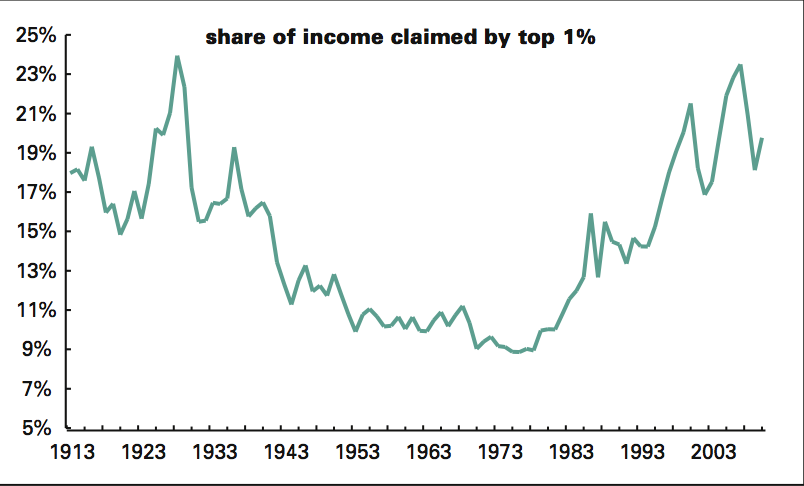
| Liscio Report: Recent Work on Income Disparity Posted: 20 Sep 2012 04:15 AM PDT Philippa and Doug are co-editors of The Liscio Report, an independent research newsletter focusing on the U.S. labor market, debt issues, and international flows. Their work includes month-by-month tracking of tax revenues at the state level, and detailed analysis of federal data releases. ~~~ Setting the stage UC Berkeley Economics Professor Emmanuel Saez recently updated his income-share spreadsheets through 2010, using data from the IRS's Statistics of Income Division. This series includes capital gains, which results in more dramatic swings than one sees in series that exclude them. Including capital gains real incomes fell 17.4% between 2007 and 2009, the largest decline since the Great Depression. Within that the incomes of the top 1% were down 36.3%, largely the result of the 74% decline in realized capital gains between 2007 and 2009, while those of the lower 99% were down 11.6%. Painful for all, indeed, but skewed to the upper income groups, a trend that had more than retraced itself by the end of 2010, the most recent year of IRS data. Between 2009 and 2010 the incomes of the lower 99% rose only 0.2% while the incomes of the top percentile rose 11.6%, meaning that close to all the over-the-year improvement in income, when adjusted for population, was captured by that top percentile, 93% of it to be exact. (See links below for more data.) That puts some numbers on why the recovery is experienced so differently by ordinary wage earners and by elite income groups, which in turn has surely heightened public awareness of our growing income disparity. But there's another big question out there. Whether you're rooting for the upper or lower percentiles, if you spend a lot of time looking at income distribution tables, you can't help but wonder why there is so little popular support for redistribution toward the middle classes, especially as the share of income going to the wealthiest citizens has risen toward levels last seen in the Roaring Twenties:
Piecing together what people think In "The American Public Looks at the Rich," sociologists David Weakliem and Robert Biggert round up a number of opinion polls on the subject taken over the last five decades and suggest some answers. We're re-quoting their opening quote because it's a bit hard to remember that concerns about "tyranny of the majority" related to taxation have a long history. Back in late 19th Century England, as property restrictions on voting weakened, John Stuart Mill fretted, "…is it not a considerable danger lest [the majority] should throw…upon the larger incomes, an unfair share, or even the whole, of the burden of taxation; and having done so, add to the amount without scruple, expending the proceeds of modes supposed to conduce to the profit and advantage of the labouring class?" Although American workers have fought for wages, unions, and benefits, why a push for inequitable tax burdens (some would say even equitable tax burdens) on the rich feared by Mill and his colleagues has never gained traction remains an open question. After reviewing polling evidence, Weakliem and Biggert note that, "There is little support for direct redirection from the rich," and, "Even the general principle of progressive taxation does not draw clear majority support." The paper is thoughtful, even-handed, and a refreshing break from dreary speculation that the lower-income groups are dominated by a disproportionate share of misguided lottery enthusiasts. The authors suggest a far more complex picture. For one thing, the authors note that Americans are not opposed to higher taxes on the rich– 59% of respondents to a 2011 poll favored higher rates for families making at least $250K—but they don't have much faith in the government's ability to accomplish this. In one poll that inquired about the government's ability to provide health care, college education, day care, and a few other services, "reducing the difference between the rich and poor" was the only item for which a larger percentage had had "no confidence at all," rather than "a great deal of confidence." One pollster notes that since the 1980s "people have told pollsters that the rich, not themselves, will benefit from budget agreements. It does not seem to matter what the contents of the agreement are or whether they are negotiated by Republicans or Democrats." Widespread belief that the rich get out of paying taxes leads respondents to believe that additional revenues intended to come from the wealthy would fall instead on the middle and lower incomes. For another, poll respondents did not have an accurate idea of how big the current income gap is, and were in the dark concerning America's international ranking in terms of economic equality. The authors found that although respondents were quite accurate in estimating compensation in a number of professions, they "dramatically underestimated" top executive incomes. For example, estimates of what CEOs and owners of large factories make were less than half the official estimates of actual salaries, as pieced together from a number of sources. Additionally, the margin between what respondents think executives make and what seems fair to them is considerably smaller than the margin between what respondents think executives make and what they actually make. (The authors note that respondents might have made more accurate estimates had they been asked about entertainers and athletes, rather than business-people, and that doctors' and lawyers' salaries are often over-estimated.) In a 2006 poll, the respondents optimistically gave the US a mean ranking of 15th out of 32 industrialized nations in terms of economic equality as measured by income ratios. Our actual ranking was 28th, with only Mexico, Turkey, Hong Kong and Singapore more unequal. And for yet another, across a number of polls, respondents showed strong agreement that the possibility of earning high salaries was important to the economy as a whole, and to bringing people into professions demanding a lot of preparation. One poll found 63% agreeing that the spending of millionaires gives “employment to a lot of people,” with 23% not agreeing, and 68% agreeing that investments help “create jobs and provide prosperity,” with 19% disagreeing. A majority agree that no one would go through law or medical school unless they could earn substantially higher incomes than ordinary workers. So concerns about the negative economic effects of curtailing income inequality look to be part of the explanation for the lack of support for redistribution. On the other hand, the authors found little support for the idea that Americans over-estimate their own standing on the income ladder, and none at all for David Brooks’s claims that 19% of Americans believe they are in the top percentile. In one older poll, 20% ranked their families as above or far above average, and 29% as below or far below average; in a newer poll 8% ranked themselves as poor, 19% as lower income, 11% as upper income, and 2% as rich. The halves don’t add up, and are skewed to the lower side. The authors note the people tend to be generous in evaluating their abilities, so perhaps there is some over-estimation, but polling evidence suggests otherwise. The common assumption that people over-estimate upward mobility is complicated by disparate estimations of what it means to be wealthy. One study found that those making $10K a year would require only $50K, while it would take $250K for those making around $75K, so definitions of "rich" probably include moving beyond a hand-to-mouth existence. But the authors suggest that respondents are generally quite reasonable in their expectations about becoming wealthy. Noting that 8% of households make more than $150K a year, and that one analysis of tax returns found a 50% turnover within the top 5% over ten years, the number of people who will be rich at some point is several times larger than the number who are rich at any given time. According to various polls, about 10% of respondents think it is very likely they will be rich, and about 24% that it's somewhat likely, so they aren't so far off. In 2009, one set of pollsters concluded that, “Americans doggedly believe in the rags-to-riches story,” but there’s a problem with the question on which this conclusion is based: “Do you believe it is still possible to start out poor in this country, work hard, and become rich?” The authors point out that it’s certainly possible, so the correct answer in fact is yes; people answering yes may well be acknowledging that possibility, not saying it’s highly likely, just as the up to 40% who responded no were more likely commenting on the rareness of the event than the literal impossibility. Some have suggested that the American public tends to idolize the rich, but this was not supported in polls. First, the majority of respondents indicated they don't find the rich that interesting, although they like to read about celebrities. A majority of respondents to an AARP poll thought being wealthy was the result of hard work rather than luck, but other polls found that percentages of people who agreed and disagreed that people worked hard for their wealth, and agreed and disagreed that the wealthy had exploited people to get where they were, were about even. Weakleim and Biggert suggest that the number of people who dismiss luck's importance in becoming wealthy might be unrealistically high because some people may understand "luck" to "mean completely haphazard events, rather than systematic factors such as being born in a wealthy family." Although a majority of respondents in one poll believe millionaires give generously to charities, 49% do not believe they feel a responsibility to society because of their wealth, 78% believe them more likely to be snobs, 66% less likely to be honest, and 54% think them more likely to be racists. So, although 61% think the very rich are more likely to be physically attractive, that hasn't translated to general merit, so admiration for the rich does not rank high as a reason that Mill's prediction has not come to pass. And finally the authors take on happiness. Although polls have found that large majorities believe they would be happier if they made more money, and 60% would like to be rich, only about 40% believe they would be happier if they were rich. Fifty-two percent believe the rich are no happier than they are, with only 11% thinking the rich are happier, and 35%, less happy. The authors don't really see a contradiction here. They note that people might prefer to be rich because it would provide better benefits for their children, or that they would like to be relatively better off than they are, but not necessarily rich. In any case, the authors suggest that people are "resisting the logical consequence of the principle that money makes life better." Who knew? ~~~ Notes: Income distribution data available at Emmanuel Saez's website: http://elsa.berkeley.edu/~saez/ If you would like to see a copy of, "America Looks at the Rich," please get in touch with Philippa Dunne, 877-324-1893 |
| Economic Analysis of the Top Tax Rates Since 1945 Posted: 20 Sep 2012 03:00 AM PDT |



| You are subscribed to email updates from The Big Picture To stop receiving these emails, you may unsubscribe now. | Email delivery powered by Google |
| Google Inc., 20 West Kinzie, Chicago IL USA 60610 | |



0 comments:
Post a Comment