


The Big Picture |

- BP Says Everything Is Fine … Scientists Aren’t So Sure
- 99 Problems But Mitt Ain’t One (Explicit Political Remix)
- Weekly Eurozone Watch: Sovereign Spread Flop
- Black Monday After 25 Years
- Succinct Summation of Week’s Events (10/19/12)
- 10 Key Trends Changing Investment Management
- Existing home sales in line but down from Aug
- EZ Fudge on Banking Union
- 10 Friday AM Reads
- Investor Behavior in the October 1987 Crash
| BP Says Everything Is Fine … Scientists Aren’t So Sure Posted: 19 Oct 2012 10:30 PM PDT BP Oil Spill: Case NOT ClosedToday, BP and the Coast Guard attributed the new oil sheen to a leak from the "cofferdam". We will give some background on what the cofferdam is, and then explain why the case is not closed … and an ongoing investigation is needed to determine whether or not the well has really stopped leaking. The Equipment Everyone Is DiscussingThe cofferdam is a container which BP tried to lower over the oil gusher in 2010. Here is the way it was supposed to work:
The cofferdam was built in Port Fourchon, Louisiana:
It was then shipped to the site of the spill and lowered into the ocean:
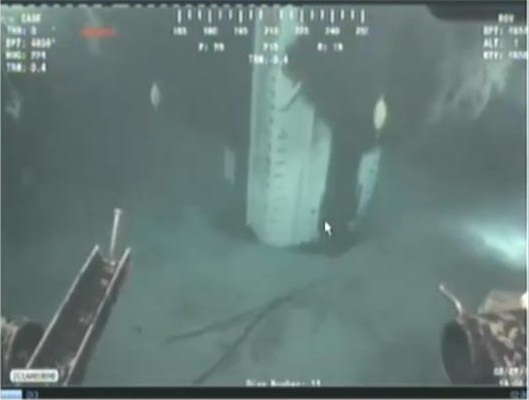
But it didn't work. The cofferdam leaked, because methane gushing out of the stricken well quickly built up, clogged up the cofferdam, and made it float:
As FastCompany summarizes:
After the cofferdam was lowered over the leak nearly a mile below the surface, it had to be raised and moved 200 meters to the side. BP engineers then gave up on the cofferdam, tried the smaller "top hat" containment dome (which also failed because it got plugged up with methane hydrate crystals), and then moved onto the "junk shot" and "top kill" approaches to capping the well. Any Oil from the Cofferdam Should Have Been Degraded By NowDr. Ian MacDonald – an expert in deep-ocean extreme communities including natural hydrocarbon seeps, gas hydrates, and mud volcano systems, a former long-time NOAA scientist, and a professor of Biological Oceanography at Florida State University- told us last week:
When the cofferdam was moved, the oil would have mixed thoroughly with sea water … and the oil-eating bacteria in it. Indeed, given the large holes in the cofferdam shaped to fit the leaking riser pipes (as shown in the photographs above), and the failure to maintain the the cofferdam, it has most likely not been water tight for the last 2 years – even sitting directly on the seafloor. As such, Dr. MacDonald's skepticism regarding BP's explanations for recent oil sheen applies to BP's new cofferdam theory. And top oil spill expert Dr. Robert Bea – a UC Berkeley professor and government consultant – told us today:
A REAL, Thorough Investigation of the Seafloor Is A Vital Matter for AmericaBea has repeatedly stated that BP's oil disaster could very well have enlarged nearby oil seeps or even fractured the seabed, allowing a path for oil to make it into the ocean (and see this). Another expert warned right after the well was capped in 2010 that capping the well could have unintended consequences:
In other words, there may have been a destruction of a portion of the steel well casing which was temporarily plugged by methane crystals. Leaving the well cap may slowly raise the pressure in the well to the point where the hydrate crystals are dislodged, in which case the well might really start leaking. Although even less likely, scientists say that the methane could disturb the seafloor itself. As the St. Peterburg Times points out:
No wonder Congressmen Markey and Waxman have demanded that BP survey the seafloor near the site of the leaking oil well to determine whether there is new damage. But BP has – apparently – refused to comply with their demand. Because BP is struggling to wrap up a favorable settlement of lawsuits against it, the company is very motivated to sweep any problems under the rug. |
| 99 Problems But Mitt Ain’t One (Explicit Political Remix) Posted: 19 Oct 2012 04:04 PM PDT Forget the Al Smith Dinner, here is something much more amusing: 99 Problems (Explicit Political Remix) The lyrics for this Political Remix Video are available at http://lyonspotter.blogspot.com, as there is insufficient space to include them here. The remix features Barack Obama rapping a modified version of Jay Z’s “99 Problems.” Mitt Romney has a few lines in the role of “the police officer.” This parable I give unto you: Not a few who meant to cast out their devil went thereby into the swine themselves. **WARNING** Please be advised before watching the video that it contains every profanity Jay Z wrote into the original lyrics. The below Chris Hedges article inspired content for the outro section: |
| Weekly Eurozone Watch: Sovereign Spread Flop Posted: 19 Oct 2012 03:06 PM PDT Key Data Points Comments Click here for a nice timeline of the Eurozone Crisis Source: Guradian
(click here if charts are not observable)
|
| Posted: 19 Oct 2012 01:30 PM PDT It was just a quarter-century ago that Wall Street was shaken to its core by the October 19, 1987 stock market crash. The Dow Jones industrial average lost 23 percent of its value.
|
| Succinct Summation of Week’s Events (10/19/12) Posted: 19 Oct 2012 01:00 PM PDT Succinct summation of week’s events: Positives:
Negatives:
|
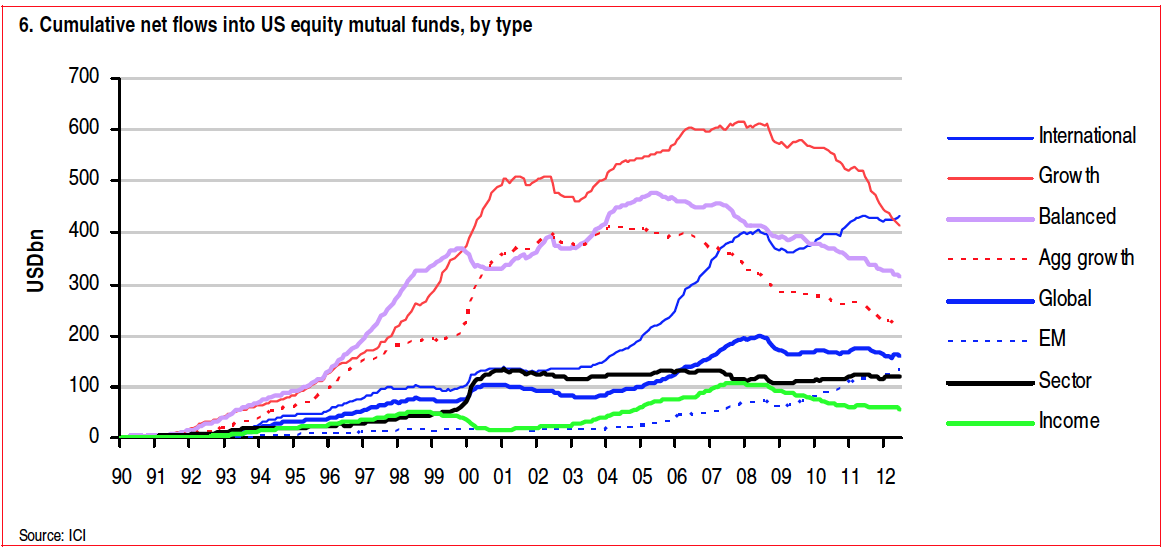
| 10 Key Trends Changing Investment Management Posted: 19 Oct 2012 08:30 AM PDT
Very nice big macro think piece from HSBC global research, looking at the key drivers of markets, psychology, asset prices and investing:
Huge amount of info on each trend — its a 50 page report . .
Source: |
| Existing home sales in line but down from Aug Posted: 19 Oct 2012 08:00 AM PDT Existing Home Sales in Sept totaled 4.75mm annualized, right in line with expectations but down from 4.83mm in Aug. On a y/o/y basis, sales were up 11%. Single family home sales were lower by 80k from Aug but sales of condos/co-ops were unchanged. Because the amount of homes for sale fell by 80k to the lowest since March, the inventory to sales ratio fell to 5.9 from 6.0, the lowest since March ’06. Distressed sales made up 24% of overall sales vs 30% a yr ago as foreclosure sales are just 13% of that total, down from 18% in Sept ’11. Investors were 18% of the market, about in line with Aug ’12 and Sept ’11. The median home home price at $183,900 is up 11.3% y/o/y. Bottom line, the housing market continues to bounce off its extraordinarily depressed level and the difficulty in getting a mortgage is holding it back from being even better. The NAR Pres who’s a RE broker himself said “home buyers need to be more focused on the mortgage process in the current environment where lenders and banking regulators are being risk averse.” This said, as I did with housing starts, perspective is also necessary of what this recovery entails. With single family sales specifically at 4.21mm, they are back to where they were in 1998 and not too far from where they were in a temporary peak at the time in 1978. Also, while up 40% off the recent low in Aug’10, they’re still down 34% from the bubblicious highs in Sept ’05. Housing has bottomed but the recovery will be in more fits and starts rather than straight up, I believe. |
| Posted: 19 Oct 2012 07:30 AM PDT An adviser to the PBoC forecasts that inflation in China will fall to just 1.0% in Q1 next year. Does not suggest a robust economy if that’s the case, boys and girls. I continue to believe that a stimulus programme is coming, most likely in Q1 next year; FDI into China fell the 10th time in 11 months reports Bloomberg. FDI amounted to US$83.4bn for the period to September this year, some -3.8% lower than the comparable period last year. FDI should decline far more sharply in coming months; Spanish home prices declined by -2.4% in Q3 Q/Q, slightly better than the -2.8% expected and the -2.5% in the previous Q and nearly 10% lower Y/Y. I really don’t understand why anyone bothers about this nonsensical data. Actual prices are at least 25%+ lower; The Spanish PM, Mr “ditherer” Rajoy stated that Spain may not need a bail out. 2 year yields rose 8bps on the statement. With the ECB backstop, Spain has more time and, in addition, has financed most of this years requirements. However, with no recap of Spanish banks imminent, its going to be tough in coming months. The IBEX is down about -1.7% today. The Baleric Islands is the latest regional administration which has asked for a bail out from the Spanish central authorities; The EU Heads of State meeting agreed that the EZ would agree to a framework for banking union by the year end - more likely early 2013. However, the details will need to be sorted out next year, which suggests that it will be 2014, before this is in place. France and other countries were pressing for a more rapid solution, but Germany wants a more considered (ie delayed) process. It looks as if the ECB will supervise the more systemically important banks, rather than all 6000 banks – yet another win for the Germans. However, the ECB would have the power to intervene in any bank if necessary. The really important issue is that bank recaps will not happen until the supervision is in place ie Spanish banks will not get their money until late 2013 – conveniently after the next German general election?. Pure coincidence off course – yeah, just spotted a flying pig; President Hollande of France states that France and Germany have a collective responsibility to help the EZ exit the crisis. What he really means is that France is bust and Germany please can you open up your cheque book, before markets realise how bad France really is. The relationship between Mrs Merkel and Mr Hollande seems to be worsening – the body language says it all; UK public sector finances improved in September. The public sector net borrowing was £12.8bn in September, £0.7bn lower than the same month last year and the lowest since 2008. Total borrowing for the current fiscal year is £2.7bn higher than the corresponding period last year, totalling £65.1bn. However, the UK government is unlikely to meet its target for borrowings to be a max of £119.9bn for the current fiscal year, though income flows have started to accelerate recently. The details of the tax revenues suggests that employment is picking up, confirming the recent data and, once again, questioning the more bearish ONS data; US leading indicators came in +0.6% higher M/M in September, higher than the +0.2% expected and -0.1% in the previous month. The reading rose the most in 7 months. The Conference Board’s outlook for the next 3 to 6 months rose by +0.6%, much better than the decline of -0.4% in August. Improving markets and home prices were probability the reason for the recovery; The Philly FED index came in at +5.7, as opposed to +1.0 expected and a prior reading of -1.9. However, new orders were -0.6, as opposed to +1.0 and employment -10.7, versus -7.3 previously. Shipments and inventories were much better. The important 6 month capital expenditure outlook was -1.9, as opposed to +4.8 expected. The detail of the data suggests a much weaker picture than the headline number. In addition, the employment index suggests a weaker October NFP number; US September existing home sales came in at 4.75mn on an annualised basis, in line with expectations, though below the 4.83mn rate in August. Outlook Asian, European and US markets are lower. The Euro is weaker at US$1.3043, following the lack of progress at the EU Summit – cant see much support for the currency. Gold is trading around US$1733, with Brent (December) at US$112.54. The lack of progress on recapping European banks is a concern and are weighing on financials today. Disappointing earnings by Google, McDonald’s and GE are not helping either. Just listened to an interview by Ms Edith Cooper who is an HR person at Goldman’s – defending GS against statements by Mr Greg Smith – remember he was the GS guy who suggested that GS executives called their clients “Muppet’s” and has written a book. She makes Goldman’s sound like a cuddly teddy bear !!!!. However, her description of an investment bank is somewhat (OK, completely different) from reality. Interesting to see Goldman’s defending itself in public – must be getting more self conscious. Have a great weekend. Kiron Sarkar |
| Posted: 19 Oct 2012 07:00 AM PDT My Friday morning crash anniversary reads:
What are you reading?
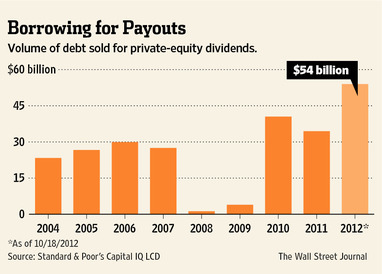
Debt Fuels a Dividend Boom |
| Investor Behavior in the October 1987 Crash Posted: 19 Oct 2012 06:35 AM PDT Robert Shiller, Investor Behavior in the October 1987 Stock market Crash: Survey Evidence, NBER
|






| You are subscribed to email updates from The Big Picture To stop receiving these emails, you may unsubscribe now. | Email delivery powered by Google |
| Google Inc., 20 West Kinzie, Chicago IL USA 60610 | |



0 comments:
Post a Comment