


The Big Picture |

- The 15 Rules of Web Disruption
- Books Bought By Big Picture Readers (October 2012)
- 10 Wednesday PM Reads
- European Halloween
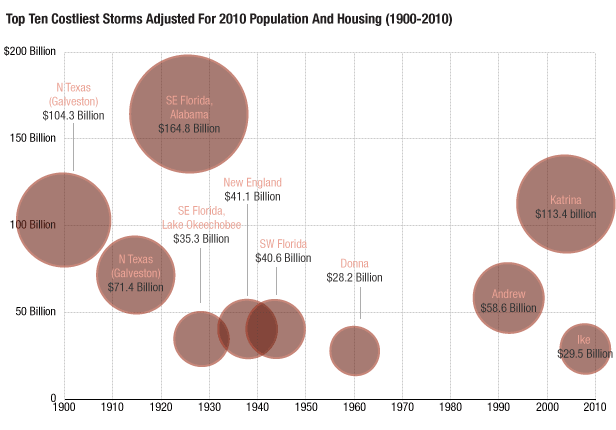
- Costliest Storms Across North America
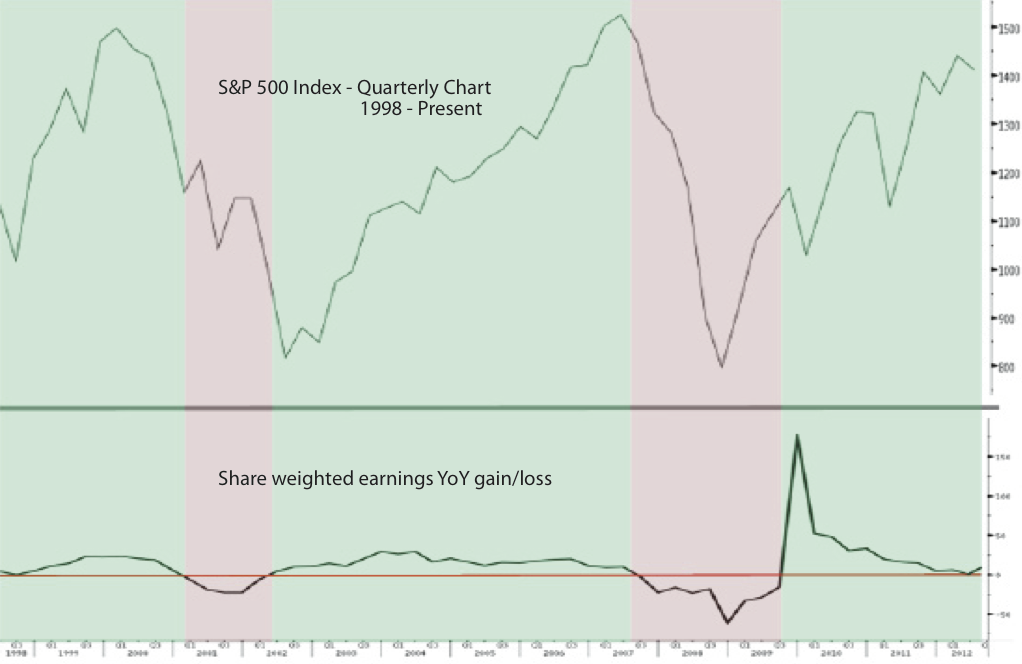
- S&P 500 Index with Share Weighted Earnings Average
- Case-Shiller Home Price Indices Update
- Eurozone Unemployment at Record Levels
- NYC Con Edison Plant Explosion (Video)
- Chicago PMI
| The 15 Rules of Web Disruption Posted: 31 Oct 2012 10:30 PM PDT How to Spot – and Defeat – Disruption on the InternetDavid Martin's Thirteen Rules for Truth Suppression, H. Michael Sweeney's 25 Rules of Disinformation (and now Brandon Smith's Disinformation: How It Works) are classic lessons on how to spot disruption and disinformation tactics. We've seen a number of tactics come and go over the years. Here are the ones we see a lot of currently. 1. Start a partisan divide-and-conquer fight or otherwise push emotional buttons to sow discord and ensure that cooperation is thwarted. Get people fighting against each other instead of the corrupt powers-that-be. Use baseless caricatures to rile everyone up. For example, start a religious war whenever possible using stereotypes like "all Jews are selfish", "all Christians are crazy" or "all Muslims are terrorists". Accuse the author of being a gay, pro-abortion limp-wristed wimp or being a fundamentalist pro-war hick when the discussion has nothing to do with abortion, sexuality, religion, war or region. Appeal to people's basest prejudices and biases. And – as Sweeney explains – push the author into a defensive posture:
2. Pretend it's hopeless because we'll be squashed if we try. For example, every time a whistleblower leaks information, say "he's going to be bumped off". If people talk about protesting, organizing, boycotting, shareholder activism, spreading the real facts, moving our money or taking other constructive action, write things to scare and discourage people, say something like "we don't have any chance because they have drones and they'll just kill us if we try", or "Americans are too stupid, lazy and greedy, so they'll never help out." Encourage people to be apathetic instead of trying to change things. 3. Demand complete, fool-proof and guaranteed solutions to the problems being discussed. For example, if a reporter breaks the story that the big banks conspired to rig a market, ask "given that people are selfish and that no regulation can close all possible loopholes … how are you going to change human nature?", and pretend that it's not worth talking about the details of the market manipulation. This discourages people from reporting on and publicizing the corruption, fraud and other real problems. And it ensures that not enough people will spread the facts so that the majority know what's really going on. 4. Suggest extreme, over-the-top, counter-productive solutions which will hurt more than help, or which are wholly disproportionate to what is being discussed. For example, if the discussion is whether or not to break up the big banks or to go back on the gold standard, say that everyone over 30 should be killed because they are sell-outs and irredeemable, or that all of the banks should be bombed. This discredits the attempt to spread the facts and to organize, and is simply the web method of the provocateur. 5. Pretend that alternative media – such as blogs written by the top experts in their fields, without any middleman – are untrustworthy or are motivated solely by money (for example, use the derogatory term "blogspam" for any blog posting, pretending that there is no original or insightful reporting, but that the person is simply doing it for ad revenue). 6. Coordinate with a couple of others to "shout down" reasonable comments. This is especially effective when the posters launch an avalanche of comments in quick succession … the original, reasonable comment gets lost or attacked so much that it is largely lost. 7. Use an army of sock puppets. You can either hire low-wage workers in India or other developing countries to "astroturf" or – if you work for the government – you can use hire military personnel and subcontractors to monitor social media and "correct" information which you don't like (and see this), or use software which allows you to quickly create and alternate between numerous false identities, each with their own internet address. 8. Censor social media, so that the hardest-hitting information is buried. If you can't censor it, set up "free speech zones" to push dissent into dank, dark corners where no one will see it. 9. When the powers-that-be cut corners and take criminally reckless gambles with our lives and our livelihoods, protect them by pretending that the inevitable result - nuclear accidents, financial crises, terrorist attacks or other disasters – were "unforeseeable" and that "no could have known". 10. Protect the rich and powerful by labeling any allegations of criminal activity as being a "conspiracy theory". For example, when Goldman gets caught rigging markets, label the accusations as mere conspiracies. The following 4 tactics from Sweeney are also still commonly used … 11. Become incredulous and indignant. Avoid discussing key issues and instead focus on side issues which can be used show the topic as being critical of some otherwise sacrosanct group or theme. This is also known as the "How dare you!" gambit. 12. Use a straw man. Find or create a seeming element of your opponent's argument which you can easily knock down to make yourself look good and the opponent to look bad. Either make up an issue you may safely imply exists based on your interpretation of the opponent/opponent arguments/situation, or select the weakest aspect of the weakest charges. Amplify their significance and destroy them in a way which appears to debunk all the charges, real and fabricated alike, while actually avoiding discussion of the real issues. 13. Hit and Run. In any public forum, make a brief attack of your opponent or the opponent position and then scamper off before an answer can be fielded, or simply ignore any answer. This works extremely well in Internet and letters-to-the-editor environments where a steady stream of new identities can be called upon without having to explain criticism reasoning — simply make an accusation or other attack, never discussing issues, and never answering any subsequent response, for that would dignify the opponent's viewpoint. 14. Question motives. Twist or amplify any fact which could so taken to imply that the opponent operates out of a hidden personal agenda or other bias. This avoids discussing issues and forces the accuser on the defensive. 15. Associate opponent charges with old news. A derivative of the straw man usually, in any large-scale matter of high visibility, someone will make charges early on which can be or were already easily dealt with. Where it can be foreseen, have your own side raise a straw man issue and have it dealt with early on as part of the initial contingency plans. Subsequent charges, regardless of validity or new ground uncovered, can usually them be associated with the original charge and dismissed as simply being a rehash without need to address current issues — so much the better where the opponent is or was involved with the original source. Postscript: Over a number of years, we've found that the most effective way to fight disruption and disinformation is to link to a post such as this one which rounds up disruption techniques, and then to cite the disinfo technique you think is being used. Specifically, we've found the following format to be highly effective in educating people in a non-confrontational manner about what the disrupting person is doing:
Or:
(include the link so people can see what you're referring to.) The reason this is effective is that other readers will learn about the specific disruption tactic being used … in context, like seeing wildlife while holding a wildlife guide, so that one learns what it looks like "in the field". At the same time, you come across as humorous and light-hearted instead of heavy-handed or overly-intense. Try it … It works. |
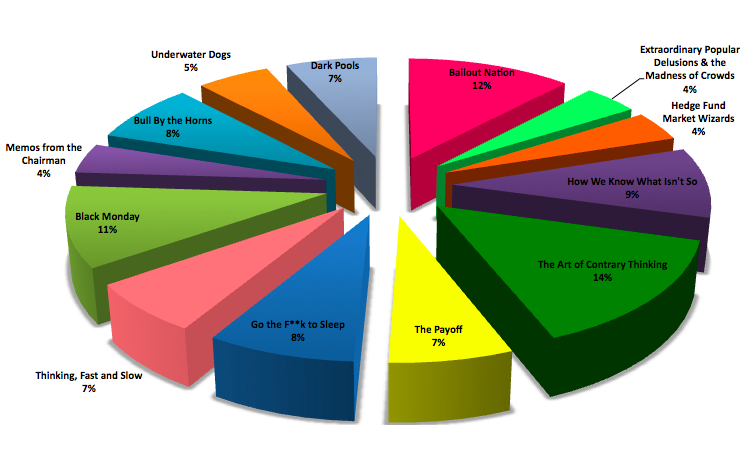
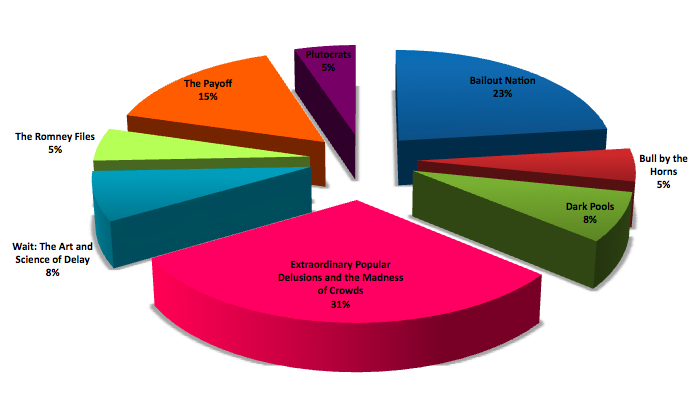
| Books Bought By Big Picture Readers (October 2012) Posted: 31 Oct 2012 04:30 PM PDT Click to enlarge: Once again, its time to peruse the data to see which books TBP readers bought last month. Amazon's embed code lets me track every click from these links — how many people look at the page, how many books get seen, and/or collectively purchased. Its anonymous — I don't know who bought what — but there's lots of data on the various books generated. These were the most popular TBP books for October:
˜˜˜ Click to enlarge:
These were the most popular TBP Kindle eBooks for October:
|
| Posted: 31 Oct 2012 01:30 PM PDT My afternoon still aint got no electricity reads:
What are you reading?
Fading QE Impact? Freddie Mac's 'Omniscient Gnomes' Led the Company Astray http://www.bloomberg.com/news/2012-10-30/freddie-mac-s-omniscient-gnomes-led-the-company-astray-echoes.html |
| Posted: 31 Oct 2012 01:00 PM PDT Nightmare on Wall Street |
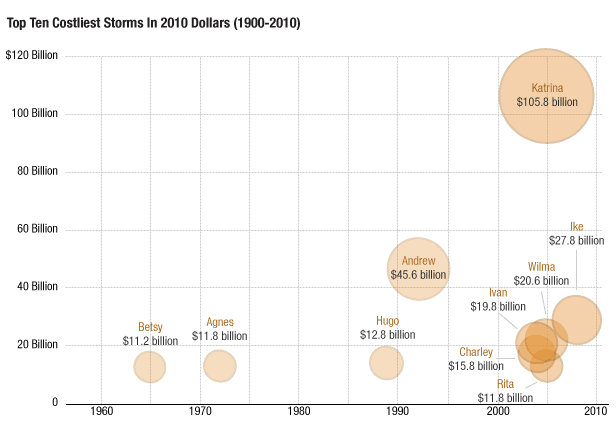
| Costliest Storms Across North America Posted: 31 Oct 2012 11:34 AM PDT |
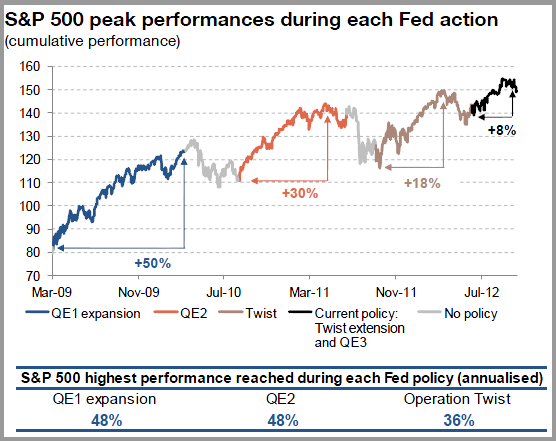
| S&P 500 Index with Share Weighted Earnings Average Posted: 31 Oct 2012 10:00 AM PDT S&P 500 Index with Share Weighted Earnings Average YoY Gain/Loss
From Fusion’s Kevin Lane:
|
| Case-Shiller Home Price Indices Update Posted: 31 Oct 2012 09:00 AM PDT Home Prices continue to rise in August 2012, according to the Case Shiller: (I tried to post this yesterday, but apprently, it did not take!) Click to enlarge Click to enlarge
|
| Eurozone Unemployment at Record Levels Posted: 31 Oct 2012 08:08 AM PDT Japanese PMI fell to 46.9 in October, an 18 month low, down from 48.0 in September. The reading suggests that manufacturing production will contract by -3.0% at a quarterly rate. The index of new export orders did rise to 46.7, from 46.3 in September, though its the 5th consecutive monthly reading below 50.0. Manufacturers cut employment in October for the 1st time in 6 months and at the fastest rate since mid 2009; Panasonic not only reported a loss (US$9.6bn) for the 2nd consecutive year (only slightly less than last year), as opposed to its earlier forecast that it would return to profits. The loss confirms the major problems facing Japanese consumer electronics companies, in particular. In addition, the company cancelled its dividend. Total losses at Panasonic over the last 5 tears have amounted to Yen2tr. Sony and Sharp faced large losses last year and may well be forced to downgrade their forecasts when they report earnings this Thursday. (Source FT); Receivables are rising materially in China. Accounts receivable in the 3rd Q have risen by 60% during the past year, well above revenue growth. Oops. Chinese banks, however, report record profits. Hmmm. (Source FT); Korean September IP rose by +0.7% Y/Y, below the forecast of +1.0%, though better than the +0.3% in August. September CPI came in at +2.0% Y/Y, higher than the +1.8% expected and +1.2% in August. The BoK meets on 11th November, though is not expected to cut rates below the current 2.75%; The Greeks have submitted their 2013 budget to Parliament. They forecast a decline of -4.5% of GDP in 2013, though generate a primary surplus of -0.4%. Debt to GDP will increase to 189.1%, with the budget deficit set to reach -5.2%, higher than the previous forecast of -4.2%. Spending is set to decline by -E9.2bn. The budget will have to be approved by 11th November, ahead of the EZ finance ministers meeting on the 12th; Italian unemployment rose to +10.8% in September, in line with forecasts, though below August’s +10.6%. German September retail sales rose by +1.5% M/M (well above the the forecast rise of +0.3%), a 11 month high, or -3.1% Y/Y; Mrs Merkel wants to give Greece, inter alia, 2 more years to meet their budget deficit targets, though opposition from members of her coalition is rising – Mrs Merkel needs approval from the Bundestag. The EZ is also considering reducing interest rates on current loans, extending their maturities, debt buy backs and a T bill issue. A haircut on official sector loans is politically impossible at this stage. There is a concern amongst her coalition that she will, once again, have to seek the support of the SPD, the main opposition party, though the SPD has indicated that they would want certain “political concessions” in return for their support. It is expected that 25 members of her coalition will either abstain and/or vote against the Greek bail out amendment. In addition, Mrs Merkel wants to try and get all EZ countries seeking a bail out to be submitted to the Bundestag at one time – however, that seems highly unlikely. It looks as if Spain will wait till next year, according to Spanish newspaper reports, as will Cyprus. (source FT); French September consumer spending rose by +0.1% M/M (slightly below forecasts of +0.2%), or -0.3% Y/Y, though much better than the -0.8% M/M in August. The EZ unemployment rose to +11.6% in September, higher than the +11.5% expected and +11.5% in August. The total number of unemployed in the EZ rose by 146k to 18.49mn, a record high. UK consumer confidence fell to a 6 month low in October. The GfK sentiment index declined to -30, from -28 in September. Future expectations component fell by -5 points to -13, also the lowest in 6 months. Consumer expectations of the UK economy over the next year also fell – they were down by -2 points to -29. The numbers are inconsistent with the increase in employment, higher retail sales and better GDP numbers (OK some of which was related to the Olympics); US Case-Schiller 20 city August prices were up +0.49%, in line with the +0.50% expected and +0.44% previously. Y/Y home prices rose by +2.0% Y/Y, slightly higher than +1.9% expected and +1.2% previously; Hurricane Sandy has had a devastating impact on the US East coast. It will take week’s to fully restore services, in particular, the NYC subway. However, whilst negative in the short term, the rebuilding will add to US GDP in due course; Intrade has increased President Obama’s chances of winning the Presidential elections – the odds are now 64% in his favour; Outlook Investors have not focused on the decline (indeed losses) of a number of major Japanese companies. Cash is hemorrhaging. In addition, the yield curve is rising – not a great sign. Whilst the Yen strengthened against the US$, following the less than expected easing by the BoJ, the economic situation deteriorates day by day. How long before Japan’s current account surplus turns – not long, in my humble view. I continue to believe that the Yen faces significant headwinds and will be increasing my short over coming weeks, most likely to my maximum limit. |
| NYC Con Edison Plant Explosion (Video) Posted: 31 Oct 2012 07:12 AM PDT
|
| Posted: 31 Oct 2012 07:00 AM PDT Following the very mixed bag of results in most of the regional mfr’g survey’s, the Chicago area said its mfr’g index remained below 50 at 49.9 vs 49.7 in Sept and below expectations of 51.0. After falling 7.4 pts in Sept, New Orders rose by 2.9 pts to 50.6. Backlogs were up by 2.7 pts to 44.3 but obviously still well below 50. Employment fell by 1.7 pts to 50.3, the lowest since Dec ’09. Inventories fell to 49.6 from 51.1. Prices Paid was down almost 4 pts but at 59.3 still remains above its 6 mo avg. Bottom line, ahead of tomorrow’s national ISM and after seeing all the regional mfr’g surveys, there is little reason to think there was any improvement in Oct from Sept when the ISM unexpectedly rose almost 2 pts to 51.5. Expectations are 51.0. |



| You are subscribed to email updates from The Big Picture To stop receiving these emails, you may unsubscribe now. | Email delivery powered by Google |
| Google Inc., 20 West Kinzie, Chicago IL USA 60610 | |



0 comments:
Post a Comment