


The Big Picture |

- Painless and Easy Ways to Cut $83 Billion
- Louis C.K. – Oh My God Trailer (HBO Special)
- Must Read Elizabeth Warren
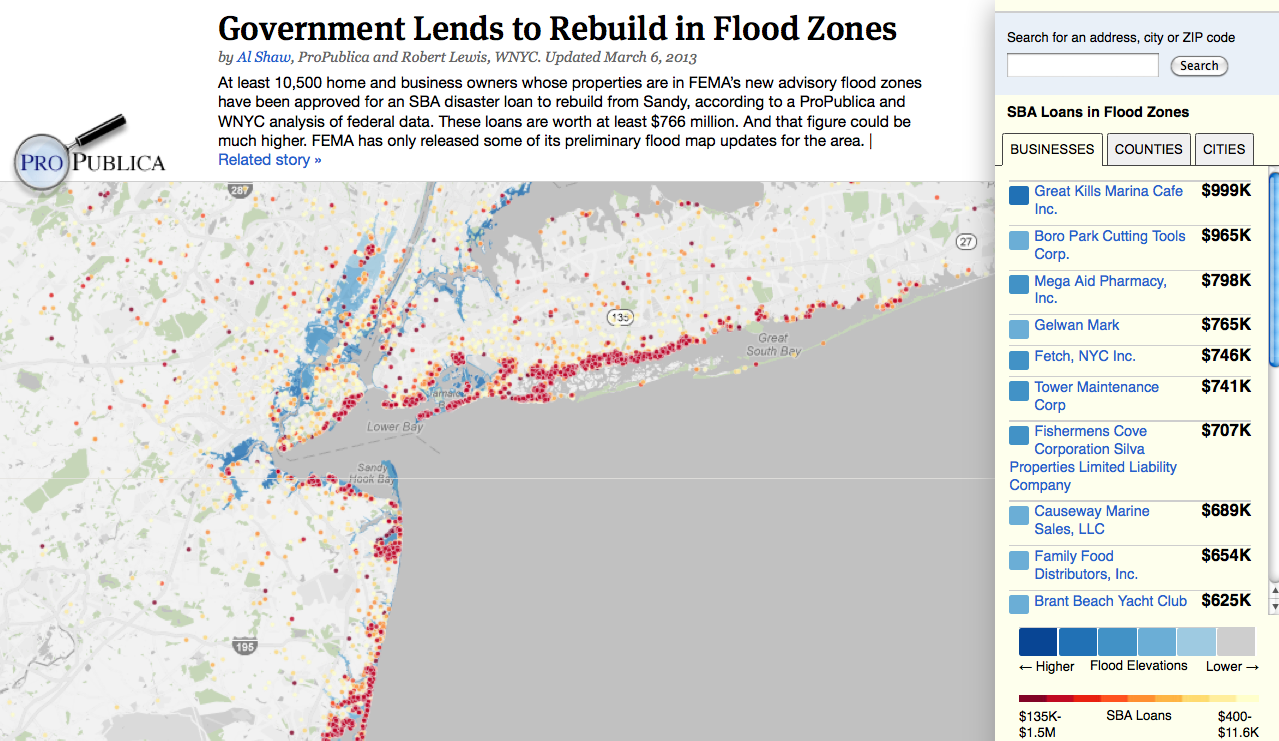
- Rebuilding in Flood Zones
- Why Investors Should Ignore Politics & Economics
- Here’s The Thing: Brian Williams
- March 8 Week in Review: Overbought/Oversold Markets
- Defending Wall Street Bonuses
- 10 Sunday Reads
| Painless and Easy Ways to Cut $83 Billion Posted: 11 Mar 2013 03:00 AM PDT Fed Spends As Much Each MONTH as Sequestration Budget Cuts Cost In a YEAR
Stopping the failed war on drugs would more than pay for the $83 billion dollars in "sequestration" budget cuts. Congressman Grayson notes that we could replace the sequestration cuts by ending the Afghanistan war early. We could pay for the budget cuts – and save a lot more money – by cutting down on waste and fraud. And the Fed is buying $85 billion dollars – the amount of annual sequestration cuts – each month to carry out "quantitative easing" … a policy which benefits the super-elite but hurts the American people and the economy as a whole. Stop the Fed's quantitative easing program, and we'll be in much better shape. Note: Admittedly, the Fed does get something for its money, so $85 billion is a gross -not net – figure. But it's getting is worth a lot less than $85 billion a month. And there are much cheaper and much more effective ways to help the economy. For example:
|
| Louis C.K. – Oh My God Trailer (HBO Special) Posted: 10 Mar 2013 02:44 PM PDT Tune in on Saturday, April 13th at 10PM for Louis C.K.’s new HBO Comedy special.
Connect with HBO on Facebook and Twitter: |
| Posted: 10 Mar 2013 01:30 PM PDT WARREN QUESTIONS: “if you’re caught with an ounce of cocaine, the chances are good you’re going to go to jail…But evidently, if you launder nearly a billion dollars for drug cartels and violate … WARREN: Thank you Mr. Chairman, and thank you all three for being here today. As Senator Reed just pointed out, the United States government takes money laundering very seriously for a very good reason. And it puts very strong penalties in place. In addition to monetary penalties, it’s possible to shut down a bank that’s been involved in money laundering. Individuals can be banned from ever participating in financial services again. And people can be sent to prison. Now in December, HSBC admitted to money laundering. To laundering $881 million that we know of for Mexican and Colombian drug cartels. And also admitted to violating our sanctions for Iran, Libya, Cuba, Burma, the Sudan. And they didn’t do it just one time. It wasn’t like a mistake. They did it over and over and over again across a period of years. And they were caught doing it. Warned not to do it. And kept right on doing it. And evidently making profits doing it. Now HSBC paid a fine, but no one individual went to trial. No individual was banned from banking. And there was no hearing to consider shutting down HSBC’s activities here in the United States. So what I’d like is, you’re the experts on money laundering. I’d like your opinion. What does it take? How many billions of dollars do you have to launder for drug lords and how many economic sanctions do you have to violate before someone will consider shutting down a financial institution like this? Mr. Cohen, can we start with you? COHEN: Certainly Senator. No question the activity that was the subject of the enforcement action against HSBC was egregious. Both in the money laundering that was going on at HSBC and the sanctions violations. For our part, we imposed on HSBC the largest penalties that we had ever imposed on any financial institution. We looked at the facts, and determined that the appropriate response there was a very, very significant penalty against the institution. WARREN: But let me just move you along here on the point Mr. Cohen. My question is, given that this is what you did, what does it take to get you to move towards even a hearing? Even considering shutting down banking operations for money laundering? COHEN: Senator, we at the Treasury Department under OFAC and (ph) authority, we don’t have the authority to shut down a financial institution. WARREN: I understand that. I’m asking, in your opinion, you are the ones who are supposed to be the experts on money laundering. You work with everyone else, including the Department of Justice. In your opinion, how many billions of dollars do you have to launder for drug lords, before somebody says, we’re shutting you down? COHEN: Well I think the authority to pull a license, pull the charter, is authority that is committed to the supervisors, to the OCC, the (ph) of the supervisor may be. We take these issues extraordinarily seriously. We aggressively prosecute and impose penalties against the institutions to the full extent of our authority. And as I said earlier, one of the issues that we’re looking at - WARREN: I’m not hearing your, I’m sorry, I don’t mean to interrupt. And I just need to move this along. But I’m not hearing your opinion on this. You’re supposed to be, Treasury is supposed to be, one of the, you are the leaders in how we understand and work together to stop money laundering. And I’m asking, what does it take, even to say, here’s where the line is. We’re going to draw a line here, and if you cross that line, you’re at risk for having your bank closed? COHEN: So Senator, we’re mindful of what our authorities are, mindful of what the Supervisor’s authorities are. We will, and have, and will continue to exercise our authorities to the full extent of the law. The question of pulling a bank’s license is a question for the regulators. WARREN: So you have no opinion on that? You sit in Treasury and you try to enforce these laws, and I’ve read all of your testimony. You tell me how vigorously you want to enforce these laws. But you have no opinion on when it is that a bank should be shut down for money laundering? Not even an opinion? COHEN: Of course we have views on - WARREN: That’s what I asked you for. Your views. COHEN: But I’m not going to get into some hypothetical line drawing exercise. WARREN: Well it’s somewhere beyond $881 million of drug money. COHEN: Well Senator the actions, and I’m sure the regulators can address this issue. The actions that we took in the HSBC case, we thought were appropriate in that instance. WARREN: Governor Powell, perhaps you can help me out here? POWELL: Sure. So the authority to shut down an institution or hold a hearing about it, I believe is triggered by a criminal conviction. And that is not something, we don’t do criminal investigation. We don’t do trials or anything like that. We do civil enforcement. And in the case of HSBC we, we gave essentially the statutory maximum - WARREN: So - POWELL: Civil money penalties. And we gave very stringent cease and desist orders. And we did what we have the legal authority to do. WARREN: I appreciate that Mr. Powell. So you’re saying you have no advice to the Justice Department on whether or not this was an appropriate case for a criminal action? POWELL: So the way it works is, the Justice Department has total authority. WARREN: I understand that. POWELL: This is the heart of what they do. It’s the heart of their jurisdiction to decide who gets prosecuted and for what. It’s not our jurisdiction. They don’t do monetary policy. They don’t give us advice on that. We cooperate with them and we, we discuss with them. We collaborate with them, and we did on HSBC. They ask us specific questions, how does this statute apply? What would happen if we did this? We answer those questions. That’s what we do. WARREN: So what you’re saying to me is you are responsible for these banks, and again, I read your testimony and you talk about the importance of vigorous enforcement here. But you’re telling me you have no view when it’s appropriate to consider even a hearing to raise the question of whether or not these banks should have to close their operations when they engage in money laundering for drug cartels? POWELL: I’ll tell you exactly when it’s appropriate. It’s appropriate where there’s a criminal conviction. WARREN: And so you have no view on it, until after the Justice Department has done it? POWELL: Again we, the Justice Department makes that decision. We play our role in that. We have a constant dialogue with them around, not just, essentially many, a broad range of violations that take place. We always have the Justice Department involved. But when they, when they make these decisions, they make them themselves. WARREN: I understand that I’m over my time. And I’ll just say here, if you’re caught with an ounce of cocaine, the chances are good you’re going to go to jail. If it happens repeatedly you may go to jail for the rest of your life. But evidently, if you launder nearly a billion dollars for drug cartels and violate our international sanctions, your company pays a fine and you go home and sleep in your own bed at night. Every single individual associated with this. I just, I think that’s fundamentally wrong. Source: |
| Posted: 10 Mar 2013 12:00 PM PDT Click for interactive graphic
Very cool graphic from ProPublica showing where government funding is paying for building in flood zones.
|
| Why Investors Should Ignore Politics & Economics Posted: 10 Mar 2013 07:00 AM PDT
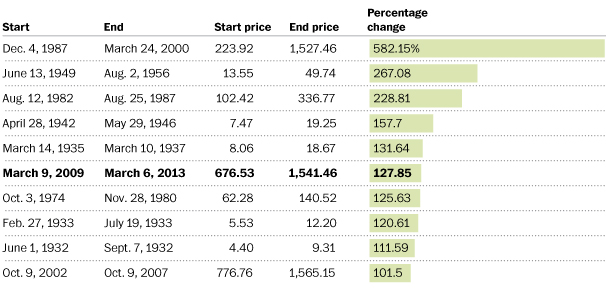
> My Sunday Washington Post column this week looks at two of the major topics of financial news – Politics & Economics. The column draws the counter-intuitive conclusion that these aspects of daily life are mostly meaningless to investors much of the time. Under the headline Voters should pay attention to politics. Investors should ignore it, it looks at a few historical events that have been much more emotionally resonant than impactful to investments. These include wars, tumultuous presidential events, oh, and silly little non-events like the debt-ceiling debate of 2011 and the sequester of 2013. Here’s an excerpt from the column:
While investors pay too much attention to Politics and Economics, they don’t pay enough attention to valuation and the development of bubbles.
Source: |
| Here’s The Thing: Brian Williams Posted: 10 Mar 2013 06:00 AM PDT
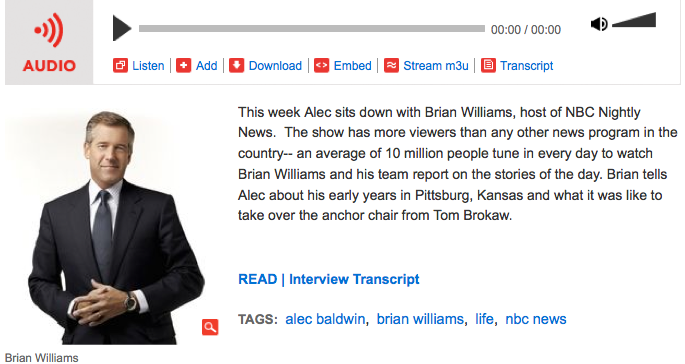
Alec sits down with Brian Williams, host of NBC Nightly News — more viewers than any other news program in the country — an average of 10 million people tune in every day to watch Brian Williams and his team report on the stories of the day. Brian tells Alec about his early years in Pittsburg, Kansas and what it was like to take over the anchor chair from Tom Brokaw.
|
| March 8 Week in Review: Overbought/Oversold Markets Posted: 10 Mar 2013 05:30 AM PDT The Relative Strength Index (RSI) is a momentum oscillator that measures the speed and change of price moves. The RSI moves between zero and 100 and is considered overbought with a reading above 70 and oversold when below 30. Note the RSI can sustain an overbought (oversold) reading in a strong up (down) trend.
Click chart to enlarge.
|
| Posted: 10 Mar 2013 04:00 AM PDT I’m not sure I agree with everything in this, but its interesting: It’s one thing to oppose the high overall salaries of Wall Street employees — arguably many of them are overpaid. But reducing bonus checks won’t actually change anything. |
| Posted: 10 Mar 2013 03:30 AM PDT Good Sunday morning. Our eclectic weekend reads, warmed up for your brunch enjoyment:
What’s for brunch today?
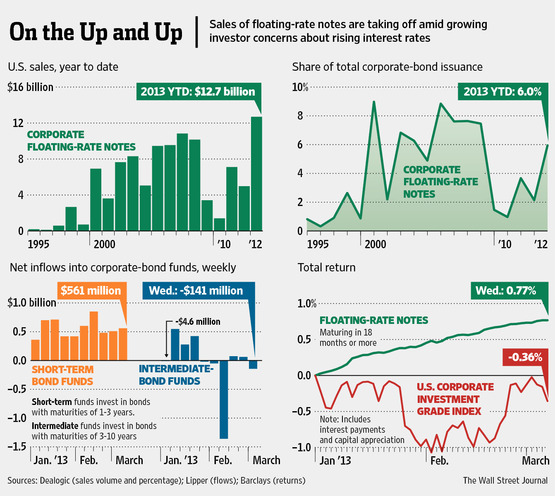
Showdown Over Notes That Float |



| You are subscribed to email updates from The Big Picture To stop receiving these emails, you may unsubscribe now. | Email delivery powered by Google |
| Google Inc., 20 West Kinzie, Chicago IL USA 60610 | |



0 comments:
Post a Comment