


The Big Picture |

- Seib & Wessel: The Fed’s Balancing Act
- Discuss: Customers Who Distrust Their Banks
- 10 Monday PM Reads
- Hoenig: A Strong Voice Against Big Banks
- F-35: The Most Expensive Fighter Jet Ever Built
- Sequestration Impact on Top 10 US Military Contractors
- Report from Paris
- 10 Monday Reads
- The Cyprus File – Why it Matters, Even to Americans!
- Watch the Cyprus Bombast
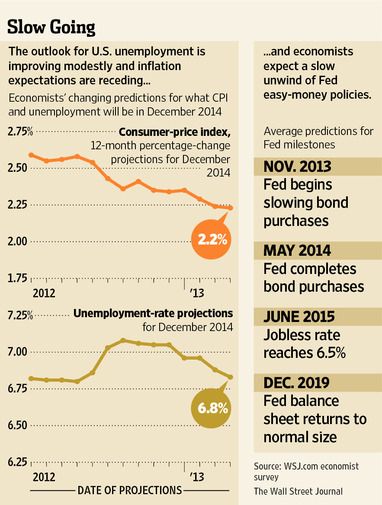
| Seib & Wessel: The Fed’s Balancing Act Posted: 19 Mar 2013 01:00 AM PDT WSJ’s Jon Hilsenrath says the Federal Reserve, which meets next week, is keeping an eye on potential asset bubbles — but don’t expect a tightening in monetary policy anytime soon, as unemployment remains high, and inflation fears are low. |
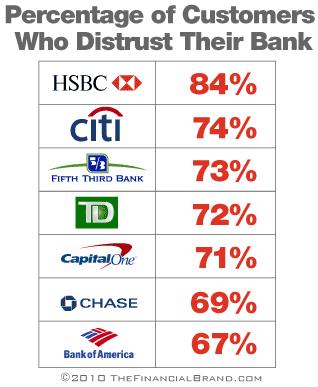
| Discuss: Customers Who Distrust Their Banks Posted: 18 Mar 2013 05:00 PM PDT
Click to enlarge Source: The Financial Brand
Amongst all of the Big Bank brands, there is a commensurate degree of Big Consumer dislike. Discuss. |
| Posted: 18 Mar 2013 01:30 PM PDT My afternoon train reads:
What are you reading?
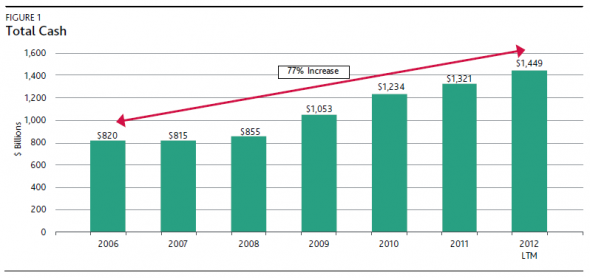
US non-financial cash pile finished 2012 at $1.45 trillion |
| Hoenig: A Strong Voice Against Big Banks Posted: 18 Mar 2013 01:00 PM PDT The Times's Louise Story talks to Thomas Hoenig, the vice chairman of the Federal Deposit Insurance Corporation, who says he is not alone in calling for a breakup of banks too large to regulate. The five that need to be shrunk JPM, Wells Fargo, Goldman Sachs, Citigroup, Morgan Stanley (Bank of America was not mentioned int his interview buy was discussed previously):
|
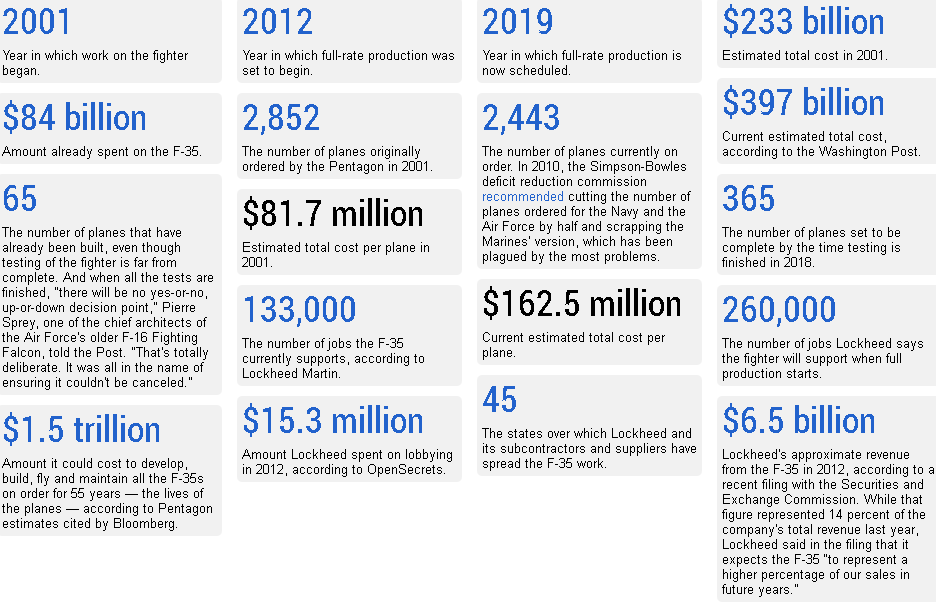
| F-35: The Most Expensive Fighter Jet Ever Built Posted: 18 Mar 2013 12:00 PM PDT Let’s continue our Military spending / Sequester theme today: Pro Publica by the Numbers look at the F-35
click for interactive graphic |
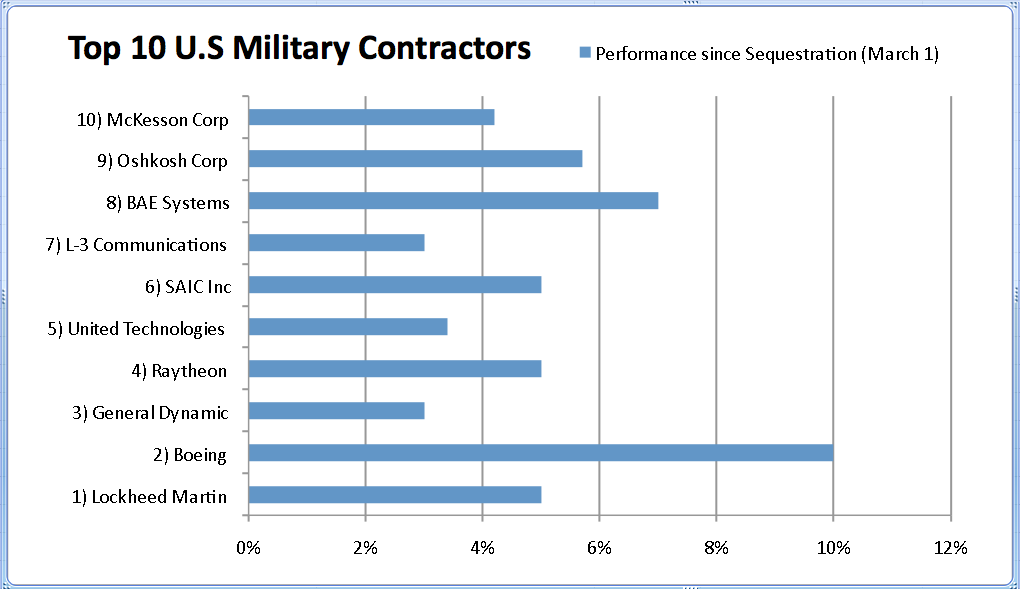
| Sequestration Impact on Top 10 US Military Contractors Posted: 18 Mar 2013 09:00 AM PDT click for larger graphic
Here’s a little surprise: The top military contractors have all been doing pretty well since Sequestration hit. I know what you’re thinking: They already got hit in anticipation of Sequestration. Only they didn’t. Boeing (BA) and Oshkosh OSK are near 52 week highs, while United Technologies (UTX) and McKesson (MCK) 20% are at all time highs. (Table below) So much for the impact of these government cutbacks on Military contractors . . .
See also: The case for the sequester's defense cuts (WonkBlog) McKeon 'Very Concerned' About Sequester's Military Impact (Washington Wire)
|
| Posted: 18 Mar 2013 08:30 AM PDT Report from Paris
Several world travelers are sitting at lunch in Paris, immersed in speculation. Greek banks in Cyprus were ring-fenced. Cypriot banks were not. Why? If Greek banks with branches in Cyprus are punished, the euro group has to offer more money to bail them out. So why magnify the loss by including the Greek banks' branches in Cyprus? Next, think of the geography here. Cyprus is divided: half its people are Turkish and half are Greek. There is ancient enmity at work here. Why exacerbate that? Now get to the issue of Turkey. Turkey has been baited about the European Union for decades. It is neither in nor out. Some premiers such as former French presidents say things like, "Someday they will qualify." Look at Turkey's shared borders with countries like Syria, Iran, and Iraq. Think of what the world looks like today. Think of Turkey as a very strong growth emerging market. If you had to handle a banking crisis involving substantial Russian deposits in the European Union and Eurozone and denominated in the euro, what construction would you use? Now we are in the throes of this mess in Europe. No one knows how this will turn out. Add to that the prospect of Russian retaliation. Does it come in the form of higher energy prices? Does it come with taxation or imposition of fees on the electrical grid that runs through Eastern Europe? No one knows. The decision to impose taxation and revise the formula in order to maintain parliamentary passage, thus enabling the Russians to pay the price, is fraught with risk. It is Paris and it is cold. Lunch and the conversation are exciting. ~~~ David R. Kotok, Chairman and Chief Investment Officer, Cumberland Investors |
| Posted: 18 Mar 2013 06:45 AM PDT My morning reads:
What are you reading?
Easy-Money Era a Long Game for Fed |
| The Cyprus File – Why it Matters, Even to Americans! Posted: 18 Mar 2013 05:30 AM PDT Satyajit Das is author of Traders, Guns and Money (2006) and Extreme Money: Masters of the Universe and the Cult of Risk (2102) ~~~ It would be ironic if Cyprus, one the smallest countries in Europe with little over 1 million people and about 0.5% of the European Union ("EU") economically, were to prove a key inflexion point in the crisis. Since June 2012, it has been known that Cyprus needs around Euro 17-18 billion to recapitalise its banks (around Euro 10 billion) and for general government operations including debt servicing (around Euro 7-8 billion). While small in nominal terms and well within EU's resources, the amount is large relative to Cyprus' Gross Domestic Product ("GDP") of Euro 18 billion. It is unlikely that Cyprus can realistically repay it, in the absence of a dramatic change in its circumstances such as the mooted oil and gas reserves in the Eastern Mediterranean. The various options considered to generate the required funding included: privatisation of state assets, increases in corporate taxes (from 10% to 12.5%) and withholding taxes on capital income (to 28%) and restructuring of existing bank or sovereign debt. Debt restructuring options included a "bail-in" of creditors (the new fashionable term for a write off of principal). It would also entail easing terms and lengthening maturities of (up to) Euro 30 billion in loans from Russian banks to Cypriot companies of Russian origin. The package proposed by the EU incorporates almost all of the above measures. Most controversially, ordinary depositors will face a "tax" on Cypriot bank deposits, amounting to a permanent write down in the nominal value of their deposits. The deposit levy will be 6.75% on deposits of less than Euro 100,000 (the ceiling for European Union account insurance) and 9.9% for deposits above that amount. In return, the depositors will receive shares in the relevant banks. The unprecedented write down of bank deposits expected to raise around Euro 5.8 billion is motivated by a number of factors. Firstly, International Monetary Fund ("IMF") participation requires the debt level to be sustainable. The write off of depositors reduces debt and also the size of the required bailout package to Cyprus to Euro 10 billion. Secondly, Cypriot banks have limited amounts of subordinated or senior unsecured debt. This means that a write down of bondholders would only raise between Euro 1 and 2 billion, below the required amount. Thirdly, the European Central Bank ("ECB") has major exposures to Cypriot banks via its Emergency Lending Assistance ("ELA") Program whereby it provides funding to Euro-Zone Central Banks. Based on the accounts of the Cypriot central bank, the ECB may have provided as much as Euro 10 billion, a very high levels relative to the size of the Cypriot economy. As in the case of the 2012 Greek debt restructuring, the ECB and other official lenders are unwilling to take losses on their exposure, requiring the depositors to take a haircut. Fourthly, restructuring the sovereign debt of Cyprus is risky because many of the bonds are governed by English law. Any attempt to restructure these whilst insulating official creditors from losses would invite litigation. Cypriot domestic-law sovereign debt is held by local banks. So write downs would aggravate their problems, requiring the sovereign to intervene in any case. Fifthly, Germany, Finland and Holland are increasingly concerned about losses on bailout loans. German Chancellor Angela Merkel does not want concern about actual cash losses to German taxpayers to affect her prospects in September 2013 elections. She also does not want the ECB to take losses which might trigger the need for Germany to inject additional capital. Sixthly, Germany wants to prevent any bailout fund flowing to Russian depositors, such as oligarchs or organised criminals who have used Cypriot banks to launder money. Carsten Schneider, a SPD politician, spoke gleefully about burning "Russian black money". However, as of January 2013 Euro 43 billion of the Euro 68 billion in Cypriot bank deposits were from domestic residents, while Euro 20 billion were from the rest of the world, believed to be primarily from Russia. The tax on depositors is a significant expansion of the principal of PSI (private sector involvement), which was applied in the case of Greece and presented by the EU as a "one off" measure. Whereas in Greece, losses were allocated to sovereign as well as junior and subordinated bank bond holders, the Cyprus measures extend burden-sharing further to ordinary small depositors. The EU will argue that depositors (and especially foreign depositors) funded the over-extension of the Cypriot banking system domestically and abroad, with reached around five times GDP. They would argue that depositors should bear losses, contributing to the bail out. The EU will also argue the risk of moral hazard in bailing out depositors. They would also argue that there was no other option in reality. Whatever the case for the Cyprus package, it risks significant side effects. Firstly, it may trigger capital flight from banks in Greece, Portugal, Ireland, Italy and Spain, based on depositor concerns about loss of capital in any future debt restructuring. Europe has total bank deposits of around Euro 8 trillion, including around Euro 6 trillion in retail deposits. Around Euro 1.5-2 trillion of these deposits are in banks in peripheral countries. In the period leading up to July 2012 banks, these peripheral countries lost between 10% and 20% of their deposits. This only abated when the ECB made its extraordinary announcement in July 2013 that it would do whatever it takes to safeguard the Euro. If depositors withdraw funds in significant size and capital flight accelerates, then the ECB, national central banks and governments will have intervene, funding affected banks and potentially restricting withdrawals, electronic funds transfers and imposing cross-border capital controls. Secondly, the Cyprus bail-in provision will make it increasingly difficult for European banks, especially in vulnerable countries to raise new deposits or issue bonds. There will be increasing concern about the risk of loss but also subordination to claims to official lenders. The ECB, national central banks and governments will have to cover any funding shortfalls. Thirdly, the Cyprus arrangements undermine the credibility of the ECB and EU and measures announced last year to combat the crisis, which have underpinned the recent relative stability. The ECB's OMT (Outright Monetary Transactions) facility allows it to purchase sovereign bonds to assist nations to finance and lower their cost of borrowing. The facility which is yet to be used requires the affected country to apply for assistance. After Cyprus, it will be politically difficult for countries like Italy and Spain to ask for assistance if required, knowing that if a future debt restructuring is necessary then domestic taxpayers face a loss on their bank deposits. The EU's much vaunted banking union was rightly criticised for failing to provide sufficient funds to undertake any required re-capitalisation of banks as well as the lack of a Euro-Zone wide consistent deposit protection scheme. Cyprus highlights these shortcomings. Fourthly, the Cyprus package highlights the increasing reluctance of countries like Germany, Finland and the Netherlands to support weaker Euro-Zone members. There are also broader geo-political ramifications of the measures. British military personnel and government officials based in Cyprus, who are believed to have over Euro 1.5 billion in local bank accounts, will be affected by the tax. The UK government have announced that they, but not other UK depositors, would be compensated. The unexpected cost and approach to the bailout will increase the divisions between Britain and Euro-Zone. The Russian reaction is also unknown. Cyprus's finance minister is scheduled to fly to Moscow to discuss extension of loans, which is one element of the package. If Russia refuses then the entire deal may need re-consideration. As a major supplier of gas to Europe, Russia's reaction to its citizens being asked to take losses of around Euro 2 billion is difficult to predict. The ability of the recently elected Cyprus government of Prime Minister Nicos Anastasiades to pass the necessary enabling legislation is unclear, given a lack of clear parliamentary majority. He may face difficulties persuading reluctant lawmakers, especially since he pledged that he would "never" accept a haircut of deposits as a condition for a bailout. If Cyprus does not agree, then a default is likely and the economy may collapse very rapidly. Businesses would face bankruptcy. Many banks would fail with most Cypriots losing their savings. But even if they agree, the package would stave off immediate collapse but may not address Cyprus' problem. As in Greece and Portugal, privatisation proceeds and the revenue from increased taxes may not reach targets. The imposition of the tax may not raise sufficient funds. But it will encourage remaining deposits to flee Cyprus, As with Greece, there is a risk that Cyprus will need additional assistance, entailing further write-offs in depositor's fund. Irrespective of the fate of Cyprus, the solution adopted will exacerbate the European debt crisis. As several commentators have noted, a debt crisis, especially on the current scale, cannot be dealt without other than by financial repression. To date, it has taken the form of higher taxes, interest rates below the rate of inflation, directed investment and increased government intervention in the economy. Cyprus marks a new phase of financial repression, shifting the burden increasingly onto savers directly by confiscating savings. In any debt crisis, there are several possible methods of allocating losses. The borrower bears the losses, either through austerity or bankruptcy. The lenders bear the losses. Some rich sugar daddy (in Europe read Germany) bails out the indebted borrower. Another option is to just ignore issues, fudge the numbers, and hope that fortunate events will remedy the problems. Europe has now tried all of the above. Unfortunately, in attempted resolution, as shown by the proposed Cyprus package, the measures have become the problem rather than a solution. Albert Einstein observed that "we cannot solve our problems with the same thinking we used when we created them". Unfortunately, Europeans continue to believe they are the exception that proves the rule. |
| Posted: 18 Mar 2013 04:30 AM PDT I do not have a whole lot to say about the Cyprus story, but I do want to point out some of the already more ridiculous comparisons that have been made. This is not about punishing savers. It is about a 1 million person island that has become a tax haven for Russian oligarchs.It is not another MF Global. I expect to see a run of very serious articles about “Confiscation” and “Moral Hazard” and other such empty headed filler. I plan on ignoring much of the blather, choosing to focus my limited time and attention on smart analysis and commentary. Like this and this. No one is confiscating things in France of Italy — but just you wait, we are told. An important skill to develop is the ability to read critically and think analytically. After years of practice — I taught the GMAT & LSAT while in grad school — it becomes second nature. I can tell in a sentence or three if something is worth reading further. Perhaps this accounts for the popularity of the AM and PM my reads. Regardless, before you get yourself worked up into a frenzy over this story, try to take a deep breath and put it into context. I am not at all suggesting that this is not potentially a significant development; I am saying that the usual suspects have blown up describing it the way they often do — turning a backyard pit BBQ into a nuclear conflagration. Yes, a room full of gas fumes is very dangerous — especially when it meets an open flame. Ask yourself if that is the situation at present, and make your plans accordingly. |
| You are subscribed to email updates from The Big Picture To stop receiving these emails, you may unsubscribe now. | Email delivery powered by Google |
| Google Inc., 20 West Kinzie, Chicago IL USA 60610 | |



0 comments:
Post a Comment