


The Big Picture |

- Federal Reserve Bank of St. Louis Annual Report 2012
- Ewan Dobson – Time 2 Guitar
- 10 Monday PM Reads
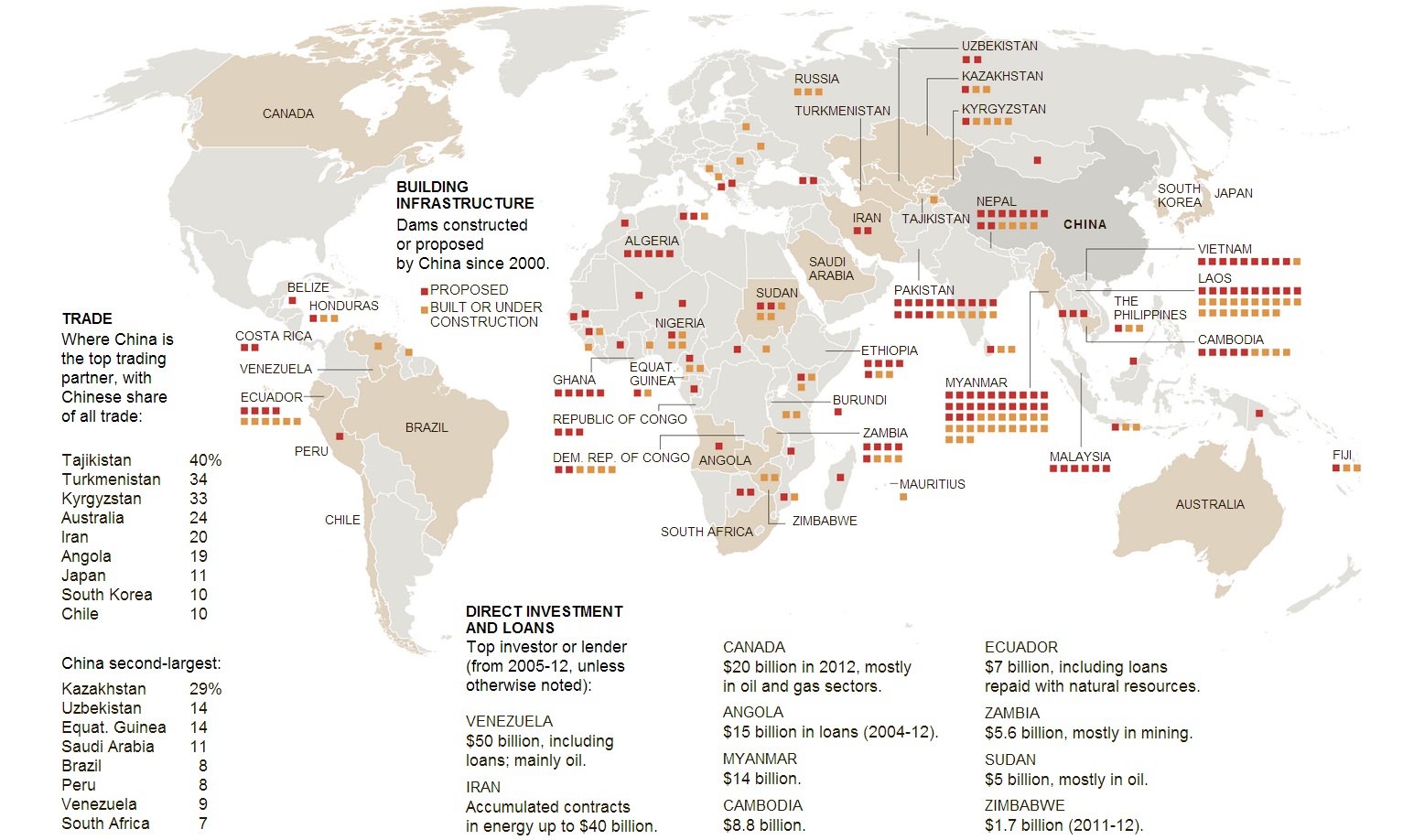
- Building Infrastructure: China’s Global Reach
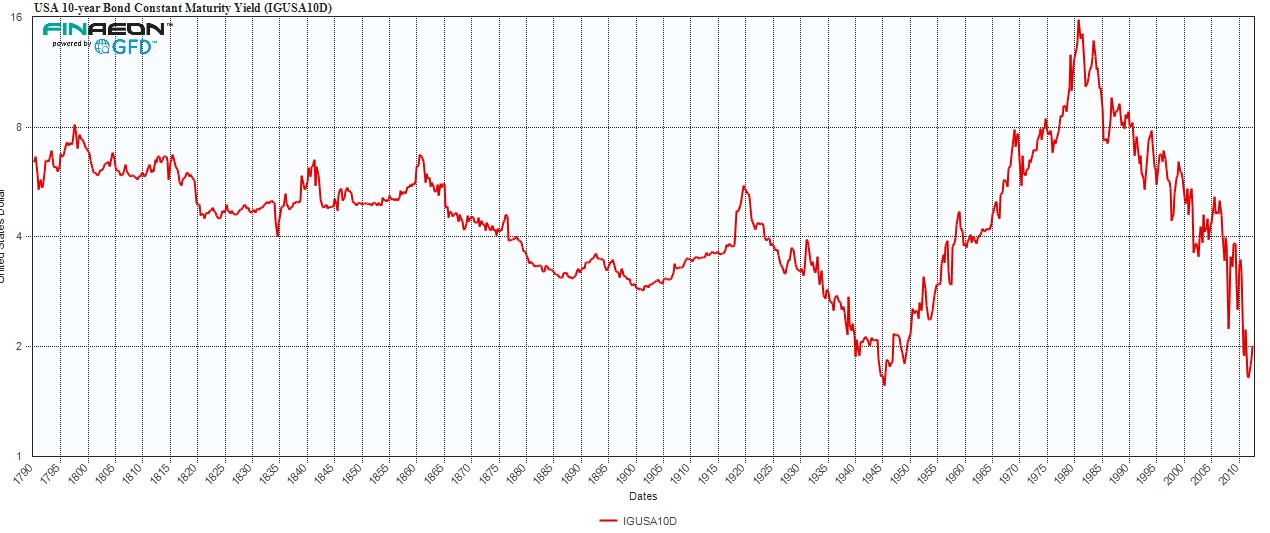
- U.S. 10 Year Bond Yields in Perspective (1790-Present)
- 10 Monday Reads
- Are You Trying to Get Rich — Or Stay Rich?
- Faking Prosperity for the G8 Summit
- Bernanke: Ten Suggestions for Graduates
| Federal Reserve Bank of St. Louis Annual Report 2012 Posted: 04 Jun 2013 02:00 AM PDT |
| Posted: 04 Jun 2013 01:00 AM PDT
hat tip Kris V Visit Ewan Dobson at http://www.facebook.com/ewandobsonfan On-line Guitar Instructional “In The Style of Ewan Dobson Volume 1 and 2″ http://www.dc-musicschool.com/catalogue/video-lessons/in-the-style-of-ewan-dobson-vol-1/ |
| Posted: 03 Jun 2013 01:30 PM PDT My afternoon train reads:
What are you reading?
For Twitter, the Challenge Is to Keep It All Simple |
| Building Infrastructure: China’s Global Reach Posted: 03 Jun 2013 11:30 AM PDT Click to enlarge |
| U.S. 10 Year Bond Yields in Perspective (1790-Present) Posted: 03 Jun 2013 09:30 AM PDT The US 10 yr Constant Maturity Yield
The move in the 10 year yields has led to all sorts of speculation as to the underlying cause. Since none of this is within our my control, all we can do is look at this from a longer term perspectives to put this into broader context . Three takeaways:
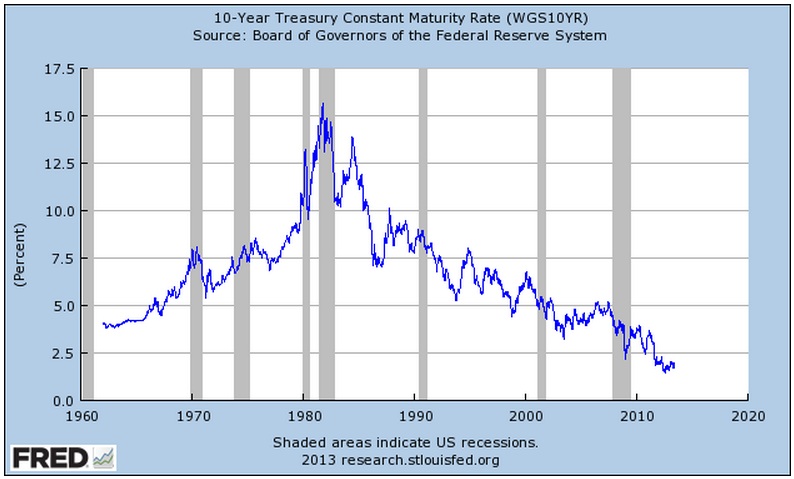
Looking at yields from an historical perspective, there is still plenty of room for yields to rise if they simply “normalize.” The chart below put the past 5 decades into sharp focus:
1980-2013 10 Year Yield Constant Maturity
|
| Posted: 03 Jun 2013 07:00 AM PDT My morning reads to start your week:
What are you reading?
Risk-Averse Culture Infects U.S. Workers, Entrepreneurs? |
| Are You Trying to Get Rich — Or Stay Rich? Posted: 03 Jun 2013 04:15 AM PDT Last week, Bloomberg caused a minor stir with their story on C/NET founder Halsey Minor (How Halsey Minor Blew Tech Fortune on Way to Bankruptcy):
This tale of foolishness and excess is worth discussing, if for no other reason it is strewn with lessons for others. Not just for dot com millionaires, but for anyone else who suddenly finds themselves with much more money they had the prior year. This goes for professional athletes, entrepreneurs, actors, rock stars and lottery winners. Even those kids of baby boomers who find themselves with a minor inheritance can find lessons to learn from Halsey’s follies. The key is recognizing that your new found wealth is not an ongoing revenue stream, but more typically reflects a one time (or short term) windfall. Why is that? Because you never not know what the future holds. Post IPO stock prices can falter, athletes suffer from career ending injuries, artists may be one hit wonders. An old Yiddish proverb states “Man plans and God laughs.” How do you plan and not tickle the funny bone of major deities? Be aware of what I call The Fallacy of Competency Transference. This occurs when someone successful in one field jumps in to another and fails miserably. The most widely known example is Michael Jordan, the greatest basketball player the game has ever known, deciding he was also a baseball player. He was a .200 minor league hitter. I have had repeated conversations with Medical Doctors about this: They are extremely intelligent accomplished people who often assume they can do well in markets. (After all, they conquered what I consider a much more challenging field of medicine). The problem they run into is that competency transference. After 4 years of college (mostly focused on pre-med courses), they spend 4 years in Medical school; another year as an Interns, then as many as 8 years in Residency. Specialized fields may require training beyond residency, tacking on another 1-3 years. This process is at least 12, and as many as 20 years (if we include Board certification). What I try to explain to these highly educated, highly intelligent people is that they absolutely can achieve the same success in markets that they have as medical professionals — they just have to put the requisite time in, immersing themselves in finance (like they did in medicine) for a decade or so. It is usually around this moment that the light bulb goes off, and the cause of prior mediocre performance becomes understood. Which brings us back to Halsey Minor: Without the expertise, without putting the time in, without much more than capital, he jumped into 3 different fields he had little or no knowledge of:
All of these purchases were eventually unwound at a fraction of their original purchase price in order to pay off creditors. Which leads us directly to a few rules about dealing with sudden wealth:
There are many more rules we can derive from this tale of woe, but perhaps the single most important one is the importance of living within your means. This is true whether you have $500 in the bank or $500 million. Insolvency occurs when your liabilities exceed your assets and cash flow, regardless of how many zeros are on either side of the balance sheet . . .
Source: |
| Faking Prosperity for the G8 Summit Posted: 03 Jun 2013 04:00 AM PDT Gee, why is our policy so bad? Maybe its because our leaders are so insulated from reality:
Source:
|
| Bernanke: Ten Suggestions for Graduates Posted: 03 Jun 2013 03:00 AM PDT Chairman Ben S. Bernanke
The Ten Suggestions It’s nice to be back at Princeton. I find it difficult to believe that it’s been almost 11 years since I departed these halls for Washington. I wrote recently to inquire about the status of my leave from the university, and the letter I got back began, “Regrettably, Princeton receives many more qualified applicants for faculty positions than we can accommodate.”1 I’ll extend my best wishes to the seniors later, but first I want to congratulate the parents and families here. As a parent myself, I know that putting your kid through college these days is no walk in the park. Some years ago I had a colleague who sent three kids through Princeton even though neither he nor his wife attended this university. He and his spouse were very proud of that accomplishment, as they should have been. But my colleague also used to say that, from a financial perspective, the experience was like buying a new Cadillac every year and then driving it off a cliff. I should say that he always added that he would do it all over again in a minute. So, well done, moms, dads, and families. This is indeed an impressive and appropriate setting for a commencement. I am sure that, from this lectern, any number of distinguished spiritual leaders have ruminated on the lessons of the Ten Commandments. I don’t have that kind of confidence, and, anyway, coveting your neighbor’s ox or donkey is not the problem it used to be, so I thought I would use my few minutes today to make Ten Suggestions, or maybe just Ten Observations, about the world and your lives after Princeton. Please note, these points have nothing whatsoever to do with interest rates. My qualification for making such suggestions, or observations, besides having kindly been invited to speak today by President Tilghman, is the same as the reason that your obnoxious brother or sister got to go to bed later–I am older than you. All of what follows has been road-tested in real-life situations, but past performance is no guarantee of future results. 1. The poet Robert Burns once said something about the best-laid plans of mice and men ganging aft agley, whatever “agley” means. A more contemporary philosopher, Forrest Gump, said something similar about life and boxes of chocolates and not knowing what you are going to get. They were both right. Life is amazingly unpredictable; any 22-year-old who thinks he or she knows where they will be in 10 years, much less in 30, is simply lacking imagination. Look what happened to me: A dozen years ago I was minding my own business teaching Economics 101 in Alexander Hall and trying to think of good excuses for avoiding faculty meetings. Then I got a phone call . . . In case you are skeptical of Forrest Gump’s insight, here’s a concrete suggestion for each of the graduating seniors. Take a few minutes the first chance you get and talk to an alum participating in his or her 25th, or 30th, or 40th reunion–you know, somebody who was near the front of the P-rade. Ask them, back when they were graduating 25, 30, or 40 years ago, where they expected to be today. If you can get them to open up, they will tell you that today they are happy and satisfied in various measures, or not, and their personal stories will be filled with highs and lows and in-betweens. But, I am willing to bet, those life stories will in almost all cases be quite different, in large and small ways, from what they expected when they started out. This is a good thing, not a bad thing; who wants to know the end of a story that’s only in its early chapters? Don’t be afraid to let the drama play out. 2. Does the fact that our lives are so influenced by chance and seemingly small decisions and actions mean that there is no point to planning, to striving? Not at all. Whatever life may have in store for you, each of you has a grand, lifelong project, and that is the development of yourself as a human being. Your family and friends and your time at Princeton have given you a good start. What will you do with it? Will you keep learning and thinking hard and critically about the most important questions? Will you become an emotionally stronger person, more generous, more loving, more ethical? Will you involve yourself actively and constructively in the world? Many things will happen in your lives, pleasant and not so pleasant, but, paraphrasing a Woodrow Wilson School adage from the time I was here, “Wherever you go, there you are.” If you are not happy with yourself, even the loftiest achievements won’t bring you much satisfaction. 3. The concept of success leads me to consider so-called meritocracies and their implications. We have been taught that meritocratic institutions and societies are fair. Putting aside the reality that no system, including our own, is really entirely meritocratic, meritocracies may be fairer and more efficient than some alternatives. But fair in an absolute sense? Think about it. A meritocracy is a system in which the people who are the luckiest in their health and genetic endowment; luckiest in terms of family support, encouragement, and, probably, income; luckiest in their educational and career opportunities; and luckiest in so many other ways difficult to enumerate–these are the folks who reap the largest rewards. The only way for even a putative meritocracy to hope to pass ethical muster, to be considered fair, is if those who are the luckiest in all of those respects also have the greatest responsibility to work hard, to contribute to the betterment of the world, and to share their luck with others. As the Gospel of Luke says (and I am sure my rabbi will forgive me for quoting the New Testament in a good cause): “From everyone to whom much has been given, much will be required; and from the one to whom much has been entrusted, even more will be demanded” (Luke 12:48, New Revised Standard Version Bible). Kind of grading on the curve, you might say. 4. Who is worthy of admiration? The admonition from Luke–which is shared by most ethical and philosophical traditions, by the way–helps with this question as well. Those most worthy of admiration are those who have made the best use of their advantages or, alternatively, coped most courageously with their adversities. I think most of us would agree that people who have, say, little formal schooling but labor honestly and diligently to help feed, clothe, and educate their families are deserving of greater respect–and help, if necessary–than many people who are superficially more successful. They’re more fun to have a beer with, too. That’s all that I know about sociology. 5. Since I have covered what I know about sociology, I might as well say something about political science as well. In regard to politics, I have always liked Lily Tomlin’s line, in paraphrase: “I try to be cynical, but I just can’t keep up.” We all feel that way sometime. Actually, having been in Washington now for almost 11 years, as I mentioned, I feel that way quite a bit. Ultimately, though, cynicism is a poor substitute for critical thought and constructive action. Sure, interests and money and ideology all matter, as you learned in political science. But my experience is that most of our politicians and policymakers are trying to do the right thing, according to their own views and consciences, most of the time. If you think that the bad or indifferent results that too often come out of Washington are due to base motives and bad intentions, you are giving politicians and policymakers way too much credit for being effective. Honest error in the face of complex and possibly intractable problems is a far more important source of bad results than are bad motives. For these reasons, the greatest forces in Washington are ideas, and people prepared to act on those ideas. Public service isn’t easy. But, in the end, if you are inclined in that direction, it is a worthy and challenging pursuit. 6. Having taken a stab at sociology and political science, let me wrap up economics while I’m at it. Economics is a highly sophisticated field of thought that is superb at explaining to policymakers precisely why the choices they made in the past were wrong. About the future, not so much. However, careful economic analysis does have one important benefit, which is that it can help kill ideas that are completely logically inconsistent or wildly at variance with the data. This insight covers at least 90 percent of proposed economic policies. 7. I’m not going to tell you that money doesn’t matter, because you wouldn’t believe me anyway. In fact, for too many people around the world, money is literally a life-or-death proposition. But if you are part of the lucky minority with the ability to choose, remember that money is a means, not an end. A career decision based only on money and not on love of the work or a desire to make a difference is a recipe for unhappiness. 8. Nobody likes to fail but failure is an essential part of life and of learning. If your uniform isn’t dirty, you haven’t been in the game. 9. I spoke earlier about definitions of personal success in an unpredictable world. I hope that as you develop your own definition of success, you will be able to do so, if you wish, with a close companion on your journey. In making that choice, remember that physical beauty is evolution’s way of assuring us that the other person doesn’t have too many intestinal parasites. Don’t get me wrong, I am all for beauty, romance, and sexual attraction–where would Hollywood and Madison Avenue be without them? But while important, those are not the only things to look for in a partner. The two of you will have a long trip together, I hope, and you will need each other’s support and sympathy more times than you can count. Speaking as somebody who has been happily married for 35 years, I can’t imagine any choice more consequential for a lifelong journey than the choice of a traveling companion. 10. Call your mom and dad once in a while. A time will come when you will want your own grown-up, busy, hyper-successful children to call you. Also, remember who paid your tuition to Princeton. Those are my suggestions. They’re probably worth exactly what you paid for them. But they come from someone who shares your affection for this great institution and who wishes you the best for the future. Congratulations, graduates. Give ‘em hell. 1. Note to journalists: This is a joke. My leave from Princeton expired in 2005. Return to text
~~~ Source: Federal Reserve |

| You are subscribed to email updates from The Big Picture To stop receiving these emails, you may unsubscribe now. | Email delivery powered by Google |
| Google Inc., 20 West Kinzie, Chicago IL USA 60610 | |



2 comments:
Hey there would you mind letting
me know which hosting company you're working with? I've
loaded your blog in 3 completely different web browsers and I must say this blog
loads a lot faster then most.
Can you recommend a good web hosting provider at a honest
price? Many thanks, I
appreciate it!
Here is my homepage; wholefoods
MINIMAL LIVE SETS DJ'S ELECTRONIC MUSIC TECHNO TECH
www.uploaded.lt
www.0daymusic.eu
www.0dayvinyls.org
2013.0daymusic.org
www.filestube.eu
www.filestube.lt
www.mediafire.lt
www.oron.cz
www.oron.dk
www.oron.ee
www.oron.lt
www.oron.se
Here is my web page - Dance Hall
Post a Comment