


The Big Picture |
- Did Bernanke Study The First Bank of the United States?
- 50 Powerful Tech Mega Trend Statistics
- Welcome to the Security State, America
- No, the Fall of Lehman Didn’t Cause the Financial Crisis
- 10 Weekend Reads
- 2014 Ferrari F12 Berlinetta vs 2014 Chevrolet Corvette C7 vs 2013 Porsche Carrera 4S
- Anti-Angiogenensis: Can we eat to starve cancer?
- Cheat Sheet on Inequality
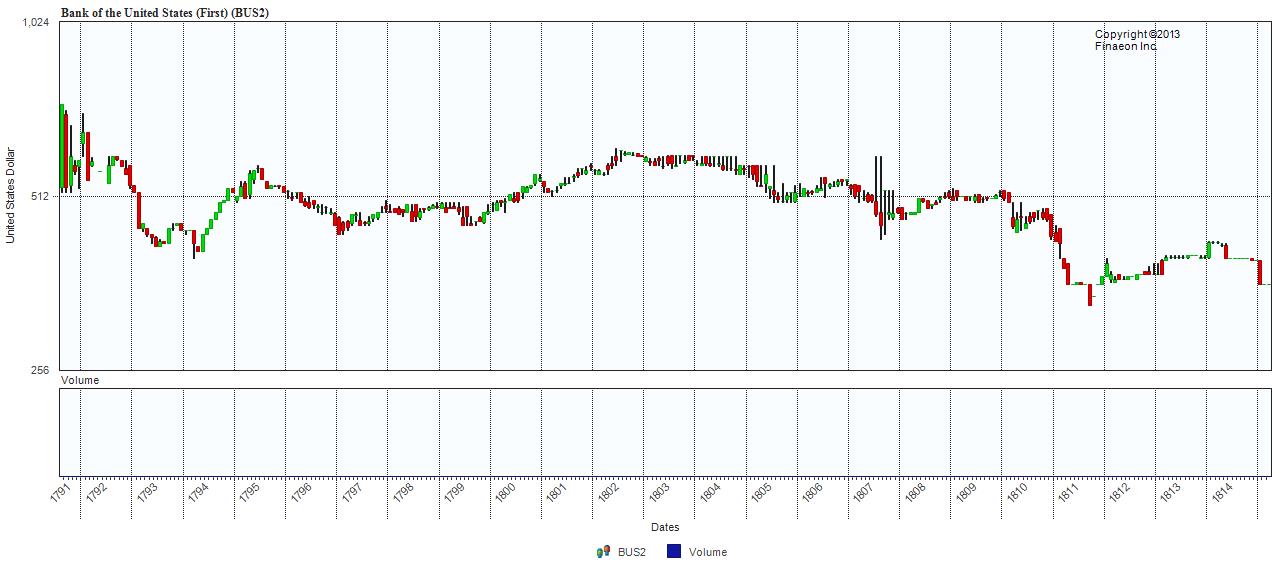
| Did Bernanke Study The First Bank of the United States? Posted: 29 Sep 2013 02:00 AM PDT Click to enlarge Dr Bryan Taylor, Chief Economist Global Financial Data The President, Directors and Company, of the Bank of the United States, or the First Bank of the United States, as it is more commonly known, was chartered for a term of twenty years, by the United States Congress on February 25, 1791. The bank was part of Alexander Hamilton's plan for stabilizing and improving the nation's credit by establishing a central bank, a mint, and introducing excise taxes. The Bank of the United States was to have $10 million in capital, of which $2 million would be subscribed by the government. The $8 million in shares sold to the public (20,000 shares at $400) were quickly purchased and the price of the stock initially rose to $600. Of the first $8 million in shares that were sold, one quarter had to be paid in gold or silver. The rest could be paid in bonds, scrip, etc. Shares sold for $400, and to understand how much money this was by today's standard, the per capita income in the United States in 1791 was only $50 (vs. over $50,000 today), so one share of stock cost the equivalent of $400,000 in today's dollars, making Berkshire Hathaway Class A stock cheap by comparison. Hamilton modeled the Bank of the United States on the Bank of England. The bank could be a depository for collected taxes, make short-term loans to the government, and could serve as a holding site for incoming and outgoing money. Nevertheless, Hamilton saw the main goal of the bank as a way of promoting commercial and private interests by making sound loans to the private sector, and most of its activities were commercial, not public. The Bank of the United States was a privately-owned bank and was the only Federal Bank, though states could also charter banks. The bank had a 20-year charter; foreigners could be stockholders (and owned about three-fourths of the stock), but could not vote; and the Secretary of the Treasury had the right to inspect the bank's books as often as once a week. There were a couple ways, however, in which the First Bank of the United States differed significantly from the Federal Reserve Bank. The Bank of the United States could not buy government bonds, and the bank could neither issue notes nor incur debts beyond its actual capitalization. Alexander Hamilton would have been a strong opponent of Bernanke's quantitative easing, and if Bernanke had studied the First Bank of the United States rather than the Great Depression, he might not be Fed Chairman today. The same battles that exist today between tight-money and easy-money factions existed when the Bank of the United States was established and will always exist. The "moneyed interests" of the northern, commercial businesses generally favored the bank while the southern, agricultural groups opposed it. The reason for this is quite clear. Since farmers had to borrow money to fund their crops and people in the southern and western United States needed capital to buy land and establish new communities, they wanted interest rates as low as possible. Lenders of money wanted to keep interest rates higher and provide sound money. Since the wealthy had suffered from the depreciation of the Continental Dollar, which lost 99.9% of its value during the Revolutionary War, lenders wanted to avoid another debasing of the currency. Moreover, the Bank of the United States was the largest bank in the country, so state banks were naturally opposed to this competition. When the Bank's charter came up for renewal in 1811, the Democrats, who opposed the bank, were in control of Congress, while the Federalists, who had set up the bank, were not. The vote to renew the charter failed by one vote in both the House (65-64) and in the Senate where the vote was deadlocked at 17 and Vice-President Clinton cast the deciding vote against the renewal of the charter. The Bank of the United States was born of politics and died of politics. Votes along party lines are nothing new in Congress. This battle between lenders and borrowers continued for the rest of the century. It occurred again when the Second Bank of the United States was established in 1817, and when William Jennings Bryan ran for President three times at the end of the nineteenth century and made his "Cross of Gold" speech. Today, in the twenty-first century, the same battle lines are drawn between easy-money advocates in favor of quantitative easing, and tight-money opponents who believe these policies will lead to another bubble and financial crash. No doubt, two hundred years from now, the same battle lines will be drawn. For shareholders, the Bank of the United States was a good investment. While U.S. Government bonds paid 6% interest, Bank of the United States stock paid an 8% dividend. When the Bank's charter was not renewed, the bank liquidated and paid off investors in full. Stephen Girard purchased most of the bank's stock as well as the building in Philadelphia where the Bank had its headquarters. Philadelphia and not New York was the financial capital of the United States at that time, and Philadelphia was also the capital of the United States from 1790 to 1800 before the capital was moved to Washington, D.C. Global Financial Data not only has price data for the First Bank of the United States, but a complete record of dividend payments for the bank as well. The price of the stock fluctuated between $400 and $600, and the bank paid $634 in dividends on the original $400 investment. The Bank of the United States was succeeded by Girard's Bank in 1811. Girard's Bank was chartered by Pennsylvania on September 1, 1832, was chartered under the National Bank Act on November 30, 1864 as the Girard National Bank, and was closed on March 31, 1926. Girard's Bank spun off the Girard Life Insurance Annuity and Trust Co. which incorporated on March 17, 1836 and merged into Mellon National Corp. on April 6, 1983. Although Ben Bernanke wouldn't admit it, Alexander Hamilton probably would have voted against Bernanke's quantitative easing, but since the easy-money interests were able to prevent the charters of both Banks of the United States from being renewed, that should come as no surprise. Source: |
| 50 Powerful Tech Mega Trend Statistics Posted: 28 Sep 2013 03:00 PM PDT There are five mega trends impacting the IT departments of every company: Mobile, Social, Cloud, Apps and Big Data. In this presentation, Vala Afshar reveals ten startling stats for each mega trend. 50 Powerful Statistics About Tech Mega Trends Affecting Every Business by ValaAfshar on Sep 23, 2013 |
| Welcome to the Security State, America Posted: 28 Sep 2013 01:00 PM PDT
Here’s the details:
Welcome Comrade Putin to our Capitalist paradise! |
| No, the Fall of Lehman Didn’t Cause the Financial Crisis Posted: 28 Sep 2013 06:30 AM PDT Lehman didn't cause the financial crisis, no matter what the partisans say
To many people, the 2008-09 financial crisis was a complex, fast- It is vitally important that we understand what really happened. Let's put to rest some of the sillier ideological narratives that have been pushed by partisans. And let's start here: Five years on, it's clear that the collapse of Lehman Brothers signaled a deep and enduring global financial crisis. Lehman's failure did not, however, cause the crisis. The counterfactual argument goes something like this: If only the government had rescued Lehman, things would never have gotten so bad. Rather than dwell in this fantasyland of what if, let's study the history. The decades leading to the crisis were a unique period in American history. Under Alan Greenspan, the Federal Reserve lowered interest rates to below 2 percent for three years and to 1 percent for more than a year. This monetary policy was unprecedented, and it had huge ramifications worldwide. The U.S. dollar took a hit; from the start of those low rates in 2001 until 2007, the world's reserve currency lost 41 percent of its value. This affected anything priced in dollars or credit. Prices of oil, gold and foodstuff skyrocketed. Home construction and housing sales and prices boomed. There was a land rush, as many banks abandoned traditional lending standards to stake their claim. The low rates had sent bond managers scrambling for higher-yielding fixed- The second was a new class of lenders — Greenspan called them "financial innovators" — that were not traditional depository banks but were mortgage originators only. Their business was strictly making loans for the sole purpose of selling them to Wall Street securitizers. They did not hold the mortgages longer than a few weeks, and they sold these 30-year loans with warranties of only 90 or 180 days. The third element was the corruption of the ratings agencies. They blessed this junk subprime paper with a pristine AAA rating. "Just as safe as a U.S. Treasury," they claimed, while failing to disclose that they were paid large fees by the underwriting banks for those ratings. How could this occur? In the years before, the banking sector helped push through an orgy of radical deregulation. The usual watchdogs had been defanged and defunded. At the same time, the Fed had all but abandoned its role as chief regulator of banks. Hence, the banking sector had become a kind of self-regulating organization, writing its own legislation, weighing in on key appointments to oversight bodies. Similarly, nearly all of the major investment partnerships had become publicly traded companies. This radically shifted the liability for failure. It put an end to "joint and several liability" — meaning that each partner was responsible for what any of his partners did, which focused the firm intensely on avoiding extreme risk-taking. Once they became public companies, the liability dropped from around the necks of the partners to the shareholders. Guess what happened to serious risk-taking? It was embraced by management, which no longer worried quite so much about reckless colleagues. This dramatically changed the incentives and risks for bank management. Indeed, bankers embraced risk with a reckless abandon. The five largest U.S. investment banks lobbied the Securities and Exchange Commission — and won — a waiver of their "net capital" rules, which had kept their total leverage to a 12-to-1 ratio of assets versus liabilities. Suddenly their leverage ramped up to 20-, 30-, even 40-to-1. This was the backdrop for a terrific storm. Bear Stearns was the first to go down. Fannie Mae and Freddie Mac were next, seized by the government in a dramatic intervention. Lehman was merely the next bank in the financial trailer park to be ravaged by the tornado. That's the broad context. Now let's see if I can dazzle you with some details about Lehman that you probably don't know:
Some of us who were watching this closely at the time realized that Bear Stearns and Lehman were not merely "one-offs." They suffered the same disease as others: Too much junk paper, too much leverage, too little capital and zero risk controls. The storm that tore through the financial sector was far greater than any one company or person or event. And it made the teetering of firms such as AIG, Washington Mutual, Wachovia, Bank of America and Citigroup all but inevitable. ~~~ Ritholtz is chief investment officer of Ritholtz Wealth Management. He is the author of "Bailout Nation" and runs a finance blog, the Big Picture. Follow him on Twitter at @Ritholtz. |
| Posted: 28 Sep 2013 04:30 AM PDT Here are my longer form, weekend reading materials:
What are you doing this weekend?
Q4 Seasonality: The Most Wonderful Time of the Year |
| 2014 Ferrari F12 Berlinetta vs 2014 Chevrolet Corvette C7 vs 2013 Porsche Carrera 4S Posted: 28 Sep 2013 03:30 AM PDT
On this episode of Head 2 Head, Carlos Lago and Randy Pobst restage our annual Best Driver’s Car competition with this year’s winning Porsche 911 Carrera 4S plus two contenders that missed the initial dance, the all-new Chevrolet Corvette Stingray and the explosive, exotic Ferrari F12 Berlinetta. The Ferrari is the most powerful car we’ve ever taken around Mazda Raceway Laguna Seca with its ferocious 6.3-liter 731 horsepower V-12. The Corvette comes packing the latest version of GM’s venerable small block, a 6.2-liter cam-in-block V-8 that kicks out 460 hp and 465 pound-feet of torque. The Porsche and its relatively tiny 3.8-liter flat-6 might seem out gunned, but remember that for the last two years the 911 has beaten back every BDC challenger we’ve thrown at it. Does the Corvette have what it takes to dethrone the 911? Does the wailing Ferrari? Watch and find out! |
| Anti-Angiogenensis: Can we eat to starve cancer? Posted: 28 Sep 2013 03:00 AM PDT William Li heads the Angiogenesis Foundation, a nonprofit that is re-conceptualizing global disease fighting.
|
| Posted: 28 Sep 2013 02:00 AM PDT The Stunning Truth About Inequality In America
Talk about inequality has been in the news recently, but you won't believe what's really happening in America today:
|

| You are subscribed to email updates from The Big Picture To stop receiving these emails, you may unsubscribe now. | Email delivery powered by Google |
| Google Inc., 20 West Kinzie, Chicago IL USA 60610 | |



0 comments:
Post a Comment