.

{2} GoogleTranslate (H)

English French German Spanish Italian Dutch Russian Portuguese Japanese Korean Arabic Chinese Simplified

Our New Stuff

{3} up AdBrite + eToro

Your Ad Here

Sunday, October 20, 2013

The Big Picture

The Big Picture


The Cost of Crisis-Driven Fiscal Policy

Posted: 20 Oct 2013 02:00 AM PDT

Americans Have Lost VIRTUALLY ALL of Our Constitutional Rights

Posted: 19 Oct 2013 10:30 PM PDT

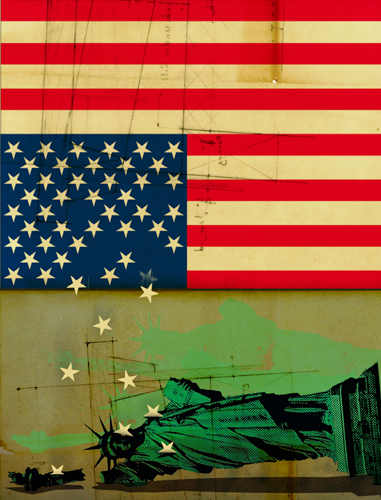
http://www.theispot.com/images/source/FredaLibertyUpended1.jpgPainting by Anthony Freda: www.AnthonyFreda.com

How Many Constitutional Freedoms Have We Lost?

This post explains the liberties guaranteed in the Bill of Rights – the first 10 amendments to the United States Constitution – and provides a scorecard on the extent of the loss of each right.  (This is an updated version of an essay we wrote in February.  Unfortunately, a lot of information has come out since then.)

First Amendment

The 1st Amendment protects speech, religion, assembly and the press:

Congress shall make no law respecting an establishment of religion, or prohibiting the free exercise thereof; or abridging the freedom of speech, or of the press; or the right of the people peaceably to assemble, and to petition the Government for a redress of grievances.

The Supreme Court has also interpreted the First Amendment as protecting freedom of association.

However, the government is arresting those speaking out … and violently crushing peaceful assemblies which attempt to petition the government for redress.

A federal judge found that the law allowing indefinite detention of Americans without due process has a "chilling effect" on free speech. And see this and this.

There are also enacted laws allowing the secret service to arrest anyone protesting near the president or other designated folks (that might explain incidents like this).

Mass spying by the NSA violates our freedom of association.

The threat of being labeled a terrorist for exercising our First Amendment rights certainly violates the First Amendment. The government is using laws to crush dissent, and it's gotten so bad that even U.S. Supreme Court justices are saying that we are descending into tyranny.

For example, the following actions may get an American citizen living on U.S. soil labeled as a "suspected terrorist" today:

And holding the following beliefs may also be considered grounds for suspected terrorism:

Of course, Muslims are more or less subject to a separate system of justice in America.

And 1st Amendment rights are especially chilled when power has become so concentrated that the same agency which spies on all Americans also decides who should be assassinated.

Second Amendment

The 2nd Amendment states:

A well regulated Militia, being necessary to the security of a free State, the right of the people to keep and bear Arms, shall not be infringed.

Gun control and gun rights advocates obviously have very different views about whether guns are a force for violence or for good.

But even a top liberal Constitutional law expert reluctantly admits that the right to own a gun is as important a Constitutional right as freedom of speech or religion:

Like many academics, I was happy to blissfully ignore the Second Amendment. It did not fit neatly into my socially liberal agenda.

***

It is hard to read the Second Amendment and not honestly conclude that the Framers intended gun ownership to be an individual right. It is true that the amendment begins with a reference to militias: "A well regulated militia, being necessary to the security of a free state, the right of the people to keep and bear arms, shall not be infringed." Accordingly, it is argued, this amendment protects the right of the militia to bear arms, not the individual.

Yet, if true, the Second Amendment would be effectively declared a defunct provision. The National Guard is not a true militia in the sense of the Second Amendment and, since the District and others believe governments can ban guns entirely, the Second Amendment would be read out of existence.

***

More important, the mere reference to a purpose of the Second Amendment does not alter the fact that an individual right is created. The right of the people to keep and bear arms is stated in the same way as the right to free speech or free press. The statement of a purpose was intended to reaffirm the power of the states and the people against the central government. At the time, many feared the federal government and its national army. Gun ownership was viewed as a deterrent against abuse by the government, which would be less likely to mess with a well-armed populace.

Considering the Framers and their own traditions of hunting and self-defense, it is clear that they would have viewed such ownership as an individual right — consistent with the plain meaning of the amendment.

None of this is easy for someone raised to believe that the Second Amendment was the dividing line between the enlightenment and the dark ages of American culture. Yet, it is time to honestly reconsider this amendment and admit that … here's the really hard part … the NRA may have been right. This does not mean that Charlton Heston is the new Rosa Parks or that no restrictions can be placed on gun ownership. But it does appear that gun ownership was made a protected right by the Framers and, while we might not celebrate it, it is time that we recognize it.

The gun control debate – including which weapons and magazines are banned – is still in flux …

Third Amendment

The 3rd Amendment prohibits the government forcing people to house soldiers:

No Soldier shall, in time of peace be quartered in any house, without the consent of the Owner, nor in time of war, but in a manner to be prescribed by law.

While a recent lawsuit by a Nevada family – covered by (Mother Jones, Fox News and Courthouse News – alleges violation of the Third Amendment, this appears to be an isolated incident and an aberration.

So we'll count this as an Amendment which is still being honored! Score one for We the People!
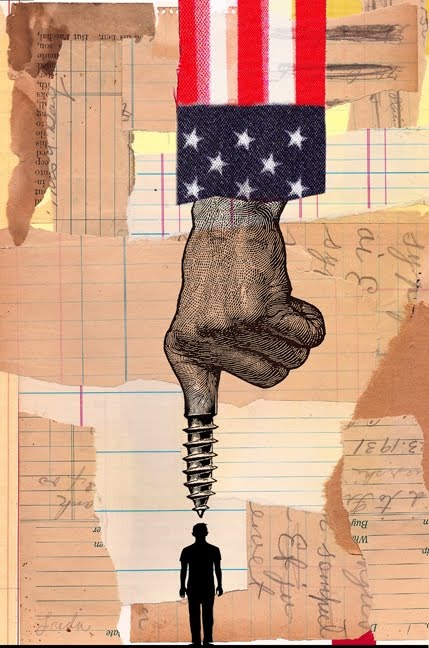
 In America, Journalists Are Considered Terrorists
Painting by Anthony Freda: www.AnthonyFreda.com.

Fourth Amendment

The 4th Amendment prevents unlawful search and seizure:

The right of the people to be secure in their persons, houses, papers, and effects, against unreasonable searches and seizures, shall not be violated, and no Warrants shall issue, but upon probable cause, supported by Oath or affirmation, and particularly describing the place to be searched, and the persons or things to be seized.

But the government is spying on everything we dowithout any real benefit or justification.

Indeed, experts say that the type of spying being carried out by the NSA and other agencies is exactly the kind of thing which King George imposed on the American colonists … which led to the Revolutionary War.

And many Constitutional experts – such as Jonathan Turley – think that the police went too far in Boston with lockdowns and involuntary door-to-door searches.


Paintings by Anthony Freda: www.AnthonyFreda.com.

Fifth Amendment

The 5th Amendment addresses due process of law, eminent domain, double jeopardy and grand jury:

No person shall be held to answer for a capital, or otherwise infamous crime, unless on a presentment or indictment of a Grand Jury, except in cases arising in the land or naval forces, or in the Militia, when in actual service in time of War or public danger; nor shall any person be subject for the same offense to be twice put in jeopardy of life or limb; nor shall be compelled in any criminal case to be a witness against himself, nor be deprived of life, liberty, or property, without due process of law; nor shall private property be taken for public use, without just compensation.

But the American government has shredded the 5th Amendment by subjecting us to indefinite detention and taking away our due process rights.

The government claims the right to assassinate or indefinitely detain any American citizen on U.S. citizen without any due process. And see this.

As such, the government is certainly depriving people of life, liberty, or property, without due process of law.

There are additional corruptions of 5th Amendment rights – such as property being taken for private purposes.

The percentage of prosecutions in which a defendant is denied a grand jury is difficult to gauge, as there is so much secrecy surrounding many terrorism trials.

Protection against being tried twice for the same crime after being found innocent ("double jeopardy") seems to be intact.  Hey … that's two Constitutional rights which are still intact!

HUNG LIBERTY (NYSE)Image by William Banzai

Sixth Amendment

The 6th Amendment guarantees the right to hear the criminal charges levied against us and to be able to confront the witnesses who have testified against us, as well as speedy criminal trials, and a public defender for those who cannot hire an attorney:

In all criminal prosecutions, the accused shall enjoy the right to a speedy and public trial, by an impartial jury of the State and district wherein the crime shall have been committed, which district shall have been previously ascertained by law, and to be informed of the nature and cause of the accusation; to be confronted with the witnesses against him; to have compulsory process for obtaining witnesses in his favor, and to have the Assistance of Counsel for his defence.

Subjecting people to indefinite detention or assassination obviously violates the 6th Amendment right to a jury trial. In both cases, the defendants is "disposed of" without ever receiving a trial … and often without ever hearing the charges against them.

More and more commonly, the government prosecutes cases based upon "secret evidence" that they don't show to the defendant … or sometimes even the judge hearing the case.

The government uses "secret evidence" to spy on Americans, prosecute leaking or terrorism charges (even against U.S. soldiers) and even assassinate people. And see this and this.

Secret witnesses are being used in some cases. And sometimes lawyers are not even allowed to read their own briefs.

Indeed, even the laws themselves are now starting to be kept secret. And it's about to get a lot worse.

True – when defendants are afforded a jury trial – they are provided with assistance of counsel. However, the austerity caused by redistribution of wealth to the super-elite is causing severe budget cuts to the courts and the public defenders' offices nationwide.

Moreover, there are two systems of justice in America … one for the big banks and other fatcats, and one for everyone else. The government made it official policy not to prosecute fraud, even though fraud is the main business model adopted by Wall Street. Indeed, the biggest financial crime in world history, the largest insider trading scandal of all time, illegal raiding of customer accounts and blatant financing of drug cartels and terrorists have all been committed recently without any real criminal prosecution or jail time.

On the other hand, government prosecutors are using the legal system to crush dissent and to silence whistleblowers.

And some of the nation's most powerful judges have lost their independence … and are in bed with the powers-that-be.

Seventh Amendment

The 7th Amendment guarantees trial by jury in federal court for civil cases:

In Suits at common law, where the value in controversy shall exceed twenty dollars, the right of trial by jury shall be preserved, and no fact tried by a jury, shall be otherwise re-examined in any Court of the United States, than according to the rules of the common law.

As far as we know, this right is still being respected (that's three rights still being followed).

However – as noted above – the austerity caused by redistribution of wealth to the super-elite is causing severe budget cuts to the courts, resulting in the wheels of justice slowing down considerably.

Painting by Anthony Freda: www.AnthonyFreda.com

Eighth Amendment

The 8th Amendment prohibits cruel and unusual punishment:

Excessive bail shall not be required, nor excessive fines imposed, nor cruel and unusual punishments inflicted.

Indefinite detention and assassination are obviously cruel and unusual punishment.

The widespread system of torture carried out in the last 10 years – with the help of other countriesviolates the 8th Amendment. Many want to bring it back … or at least justify its past use.

While Justice Scalia disingenuously argues that torture does not constitute cruel and unusual punishment because it is meant to produce information – not punish – he's wrong. It's not only cruel and unusual … it is technically a form of terrorism.

And government whistleblowers are being cruelly and unusually punished with unduly harsh sentences meant to intimidate anyone else from speaking out.

Ninth Amendment

The 9th Amendment provides that people have other rights, even if they aren't specifically listed in the Constitution:

The enumeration in the Constitution, of certain rights, shall not be construed to deny or disparage others retained by the people.

We can debate what our inherent rights as human beings are. I believe they include the right to a level playing field, and access to non-toxic food and water. You may disagree.

But everyone agrees that the government should not actively encourage fraud and manipulation. However, the government – through its malignant, symbiotic relation with big corporations – is interfering with our aspirations for economic freedom, safe food and water (instead of arsenic-laden, genetically engineered junk), freedom from undue health hazards such as irradiation due to government support of archaic nuclear power designs, and a level playing field (as opposed to our crony capitalist system in which the little guy has no shot due to redistribution of wealth from the middle class to the super-elite, and government support of white collar criminals).

By working hand-in-glove with giant corporations to defraud us into paying for a lower quality of life, the government is trampling our basic rights as human beings.

Tenth Amendment

The 10th Amendment provides that powers not specifically given to the Federal government are reserved to the states or individual:

The powers not delegated to the United States by the Constitution, nor prohibited by it to the States, are reserved to the States respectively, or to the people.

Two of the central principles of America's Founding Fathers are:

(1) The government is created and empowered with the consent of the people

and

(2) Separation of powers

Today, most Americans believe that the government is threatening – rather than protecting – freedom.  We've become more afraid of our government than of terrorists, and believe that the government is no longer acting with the "consent of the governed".

And the federal government is trampling the separation of powers by stepping on the toes of the states and the people. For example, former head S&L prosecutor Bill Black – now a professor of law and economics – notes:

The Federal Reserve Bank of New York and the resident examiners and regional staff of the Office of the Comptroller of the Currency [both] competed to weaken federal regulation and aggressively used the preemption doctrine to try to prevent state investigations of and actions against fraudulent mortgage lenders.

Indeed, the federal government is doing everything it can to stick its nose into every aspect of our lives … and act like Big Brother.

Conclusion: While a few of the liberties enshrined in the Bill of Rights still exist, the vast majority are under heavy assault.

Other Constitutional Provisions … and The Declaration of Independence

In addition to the trampling of the Bill of Rights, the government has also trashed the separation of powers enshrined in the main body of the Constitution.

The government is also engaging in activities which the Founding Fathers fought against, such as taxation without representation (here and here), cronyism, deference to central banks, etc.

As thethe preamble to the Declaration of Independence shows, the American government is still carrying out many of the acts the Founding Fathers found most offensive:

He has kept among us, in times of peace, Standing Armies without the Consent of our legislatures. [Background]

He has affected to render the Military independent of and superior to the Civil power. [Background here, here and here]

***

He has combined with others to subject us to a jurisdiction foreign to our constitution, and unacknowledged by our laws; giving his Assent to their Acts of pretended Legislation: [Background]

***

For transporting us beyond Seas to be tried for pretended offences [Background]

***

He is at this time transporting large Armies of foreign Mercenaries to compleat the works of death, desolation and tyranny, already begun with circumstances of Cruelty & perfidy scarcely paralleled in the most barbarous ages, and totally unworthy the Head of a civilized nation. [Background]

***

He has abdicated Government here, by declaring us out of his Protection and waging War against us. [Background here, here and here]

Scorsese, DiCaprio, Hill on Wolf

Posted: 19 Oct 2013 04:00 PM PDT

Our Saturday Night Cinema this week has Martin Scorsese, Leonardo DiCaprio and Jonah Hill Discuss ‘The Wolf of Wall Street’

Five-time collaborators Martin Scorsese and Leonardo DiCaprio have teamed up with actor Jonah Hill to film the most audacious movie about Wall Street ever made.

WSJ:

THE FIRST COUPLE DAYS of rehearsal were extremely, extremely intimidating,” says the actor Jonah Hill of working on set with director Martin Scorsese and costar Leonardo DiCaprio for The Wolf of Wall Street. “I definitely felt like I was invading somebody else’s space. To watch a director and an actor have the connection that Marty and Leo have is unlike anything I’ve ever seen.”

In theaters next month, the glitzy, audacious blockbuster is based on real-life rogue trader Jordan Belfort’s memoir of his 1990s pump-and-dump flameout, during which he launched the infamous Stratton Oakmont “boiler room” brokerage, inflicted over $200 million of losses on investors and sunk a 167-foot yacht—all on his way to a federal indictment for securities fraud and money laundering and 22 months in prison. (Belfort is currently working toward building a career as a motivational speaker and paying $110 million back to investors.) The film will be the fifth collaboration between Scorsese and DiCaprio, following Gangs of New York, The Departed, The Aviator and Shutter Island. And by all accounts, filming it was an act of deep mutual trust: their most adult, debauched project to date. “[Our relationship has] evolved in the sense that with every new picture, we get to know each other a little better, trust each other a little more and go a little further,” says Scorsese.

“It’s gotten better and better as the years have gone by,” says DiCaprio, who notes that the film is their most improvisatory, “simply because the trust level’s there.”

Ben Younger’s tightly focused 2000 drama Boiler Room covered a sliver of Belfort’s story, but if that low-budget film was a penny stock, The Wolf of Wall Street is pure blue chip. To capture the criminal spectacle of the era, the duo aimed to make a film every bit as excessive as Belfort’s ego. However, it takes money to make movies about money: vintage Lamborghinis, sprawling casts and Manhattan locations don’t come cheap. “It was a very difficult movie to finance,” says DiCaprio. “It’s an R-rated film, and it needed to have a certain amount of scale and scope.”

Arguably Hollywood’s most bankable star, DiCaprio spent over five years developing the film—and, somewhat ironically, convincing Wall Street financiers to fund what he sees as a portrait of “the real epitome of American greed.” The long development period may have actually improved the film, since it allowed DiCaprio to spend more time with Belfort, who was “incredibly open about his life, especially the most embarrassing parts,” says DiCaprio. “I spent a long time with Jordan. I interviewed him incessantly and tried to pull out every detail I possibly could. We incorporated a lot of other stories that weren’t even in the book into the movie.”


Source:
Martin Scorsese, Leonardo DiCaprio and Jonah Hill Discuss ‘The Wolf of Wall Street’
Logan Hill
WSJ, Oct. 11, 2013 
http://online.wsj.com/news/articles/SB10001424052702304213904579095221019867200

Blockbusters

Posted: 19 Oct 2013 12:00 PM PDT

Excerpt

“According to Nielsen, from data provided by managers at Nielsen SoundScan, which collects recorded-music sales information, of the eight million unique digital tracks sold in 2011 (the large majority for $0.99 or $1.29 through the iTunes Store), 94 percent – 7.5 million tracks – sold fewer than one hundred units, and an astonishing 32 percent sold only one copy. Yes, that’s right: of all the tracks that sold at least one copy, about a third sold EXACTLY one copy. (One has to wonder how many of those songs were purchased by the artists themselves, just to test the technology, or perhaps by their moms out of a sense of loyalty.) And the trend is the opposite of what Anderson (Chris Anderson, author of ‘The Long Tail’) predicted: the recorded music tail is getting thinner and thinner over time. Two years earlier, in 2009, 6.4 million unique tracks were sold; of those, 93 percent sold fewer than one hundred copies and 27 percent sold only one copy. Two years earlier still, of the 3.9 million tracks that were sold, 91 percent sold fewer than one hundred units and 24 percent sold only one copy. The trend is clear: as the market for digital tracks grow, the share of titles that sell far too few copies to be lucrative investments is growing as well. More and more tracks sell next to nothing.

Equally remarkable is what is happening in the head of industry’s demand curve. In 2011, 102 tracks sold more than a million units each, accounting for 15 percent of total sales. That is not a typo: 0.00001 percent of the eight million tracks sold that year generated almost a sixth of all sales. It is hard to overstate the importance of those few blockbusters in the head of the curve. And the trend suggests that hits are gaining in relevance. In 2007, 36 tracks each sold more than a million copies, together these tracks accounted for 7 percent of total market volume. In 2009, 79 tracks reached that milestone; together they make up 12 percent of the sales volume.

The level of concentration in these markets is so astounding, in fact, that it is nearly impossible to depict the demand curve: it disappears entirely into the axes… It is staggering to see how few titles at the top contribute to a significant portion of sales, and how many titles at the bottom fail to do the same. Those are the realities of digital markets. Assortments may become more and more expansive, but the importance of the few titles at the very top keeps growing, while average sales for the lowest sellers are going down.

The same patterns are visible in album sales. …out of a total of 870,000 albums that sold at least one copy in 2011, 13 album titles sold more than a million copies each, together accounting for 19 million copies sold. That’s 0.001 percent of all titles accounting for 7 percent of sales. The top 1,000 albums generated about half of all the sales, and the top 10,000 albums around 80 percent of sales. Deep in the tail, 513,000 titles or nearly 60 percent of the assortment, sold fewer than 10 copies each, together making up half a percent of total sales.

The numbers certainly do not come close to the trusted ’80/20 rule’ that many managers live by, which supposes that 80 percent of the sales tend to come from 20 percent of the products on offer. For music albums, it is close to an 80/1 rule – if we can speak about a rule at all. Even if we take a conservative estimate of what would be on offer in a bricks-and-mortar store at any given point in time, Anderson’s predictions that long-tail sales will rival those in the head are far off.

Of course the goods in the long tail include not just true niche content but former hits as well. Sales of a blockbuster – even one on the scale of Lady Gaga’s ‘The Fame’ or Maroon 5′s ‘Songs About Jane’ – will eventually dwindle. Such products can now live forever online, even if they have long been cleared from the physical shelves. For old hits, then, digital channels may present a real opportunity. But the large majority of products in the tail were not very successful to begin with. Most of them, in fact, never met the bar for a release through traditional distribution channels. Or, in the case of individual music tracks, they are orphans of unbundling activity: now that online consumers can cherry-pick the most popular tracks on an album, the rest shoot quickly into the long tail.”


Table 1:

“In the recorded-music industry in 2011, more than 8 million unique digital-track titles together sold 1.271 billion copies… For instance, nearly 6 million titles – 74 percent of all unique titles – each sold fewer than 10 copies, accounting for only 1 percent of sales.

102 titles selling 1,000,000 copies or more/189,758,000 copies sold/15%

1,412 titles selling 100,000-999,999 copies/318,473,000 sold/25%

13,492 titles selling 10,000-99,999 copies/374,827,000 copies sold/29%

74,246 titles selling 1,000-9,999 copies/212,571,000 copies sold/17%

382,720 titles selling 100-999 copies/111,117,000 copies sold/9%

1,620,959 titles selling 10-99 copies/48,687,000 copies sold/4%

5,927,729 titles selling fewer than 10 copies/15,722,000 sold/1%”

Table 2:

“In the recorded music industry in 2011, more than 800,000 unique album titles together sold more than 330 million copies (including both physical and digital copies)… For instance, 513,000 titles – 58% of all unique titles – each sold fewer than 10 copies, accounting for only 0.5 percent of sales.

13 titles selling 1,000,000 copies or more/23,287,000 copies sold/7%

387 titles selling 100,000-999,999 copies/93,992,000 copies sold/28%

4,229 titles selling 10,000-99,999 copies/114,949,000 copies sold/35%

21,042 titles selling 1,000-9,999 copies/61,493,000 copies sold/19%

87,986 titles selling 100-999 copies/27,032,000 copies sold/8%

251,566 titles selling 10-99 copies/8,261,000 copies sold/2%

513,146 titles selling fewer than 10 copies/1,558,000 copies sold/0.5%”


From Harvard Business School professor Anita Elberse’s book “Blockbusters: Hit-Making, Risk-Taking, And The Big Business Of Entertainment


41s8IHICalL._SY344_PJlook-inside-v2,TopRight,1,0_SH20_BO1,204,203,200_


Martin Wolf Weatherall Lecture 2013

Posted: 19 Oct 2013 07:30 AM PDT

10 Weekend Reads

Posted: 19 Oct 2013 04:30 AM PDT

Pour a cup of Joe, get comfy in your favorite chair, and settle in for a spell: My longer form, weekend reading:

• What We've Learned from the Financial Crisis (Harvard Business Review)
• Jay Z Has the Room (Vanity Fair)
• The secrets of shopping (Capital Ideas)
• In defense of the EMH (Noahpinion)
• The Year of Living Carlos Dangerously (GQ)
• 5 ways to maximize your cognitive potential (Scientific American)
• The Soaring Cost of a Simple Breath (NYT)
• Ezra Klein: Thus Far, Obamacare a 'Big Failure' (The Corner) but see The Truth About Obamacare and How It Solves the Suffering of the Insured (Vanity Fair)
• Machines Gauging Your Star Potential Automate HR Hiring (Bloomberg)
• What You Need to Know About the Toxins in Your Groceries (Discover)

Whats up for the weekend?


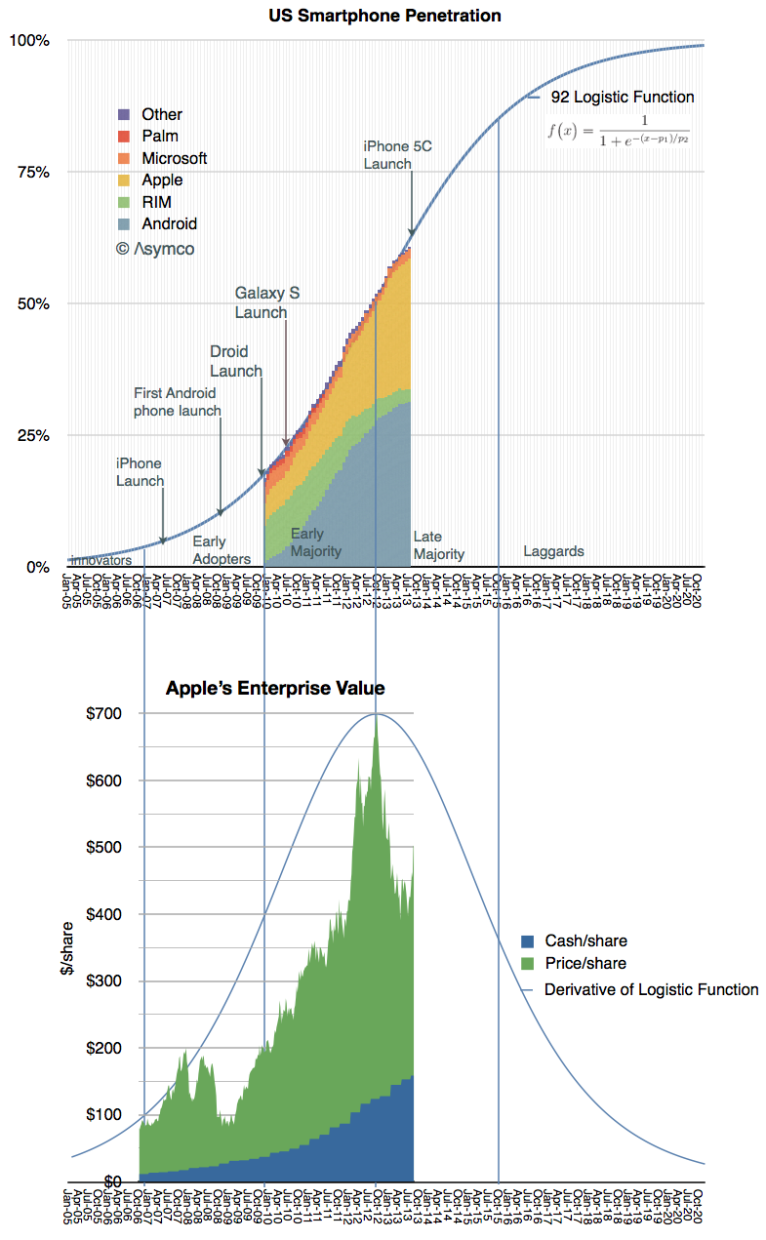
The iPhone company
Chart
Source: Asymco

Evolution of BMW’s M Series

Posted: 19 Oct 2013 03:00 AM PDT

Super cool

click for giant infographic
mpower
Hat tip Jalopnik


The Evolution of the M Series

The Evolution of the M Series Infographic by the team at CarFinance247


.

0 comments:

Post a Comment

previous home Next

{8} chatroll


{9} AdBrite FOOTER

{8} Nice Blogs (Adgetize)