


The Big Picture |
- Crisis Chronicles: The “Not So Great” Re-Coinage of 1696
- Sting’s 60th Birthday Party
- Succinct Summation of Week’s Events (October 4, 2013)
- Credit Suisse Fed Cheat Sheet
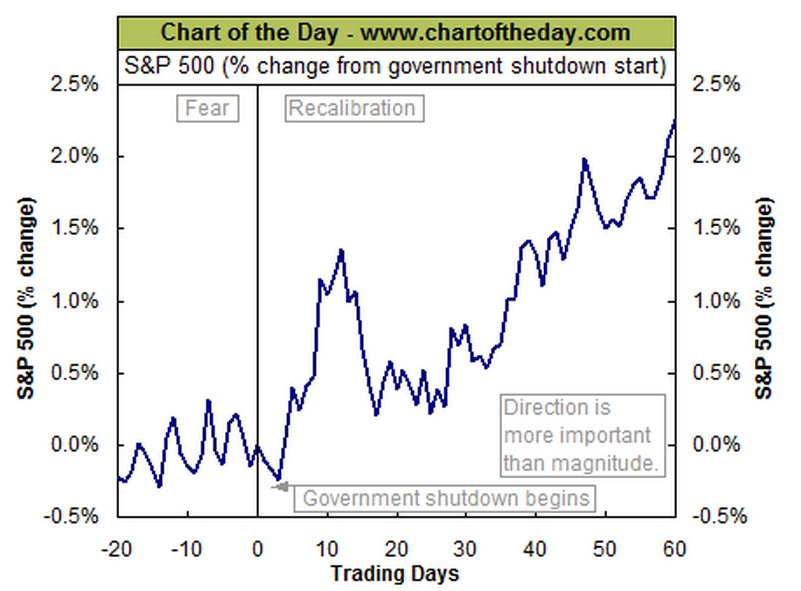
- S&P500 % Change Relative to Government Shutdown
- 10 Friday AM Reads
- Yay! Its a No-NFP Non Farm Payrolls Friday !
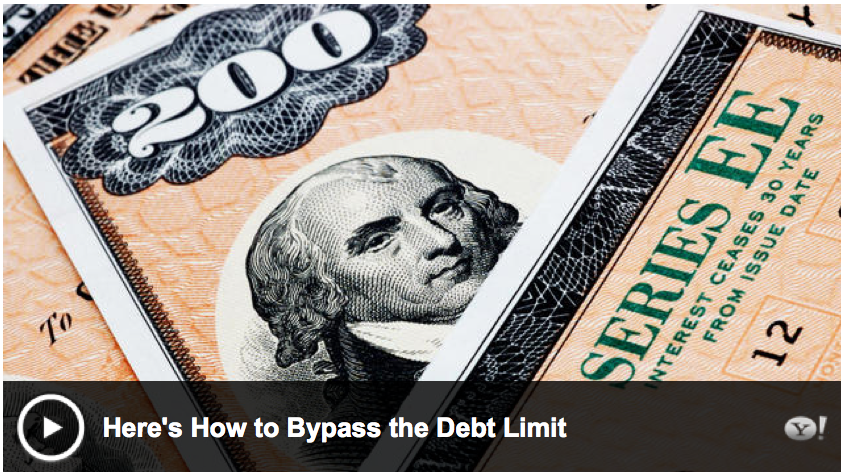
- How to Bypass the Debt Limit
- Constellation of Fornax
| Crisis Chronicles: The “Not So Great” Re-Coinage of 1696 Posted: 05 Oct 2013 02:00 AM PDT Crisis Chronicles: The "Not So Great" Re-Coinage of 1696
In the late 1600s, England operated a bi-metallic monetary system of high-value gold coins and lower-value silver coins. In the early 1690s, however, the market price of silver began to rise at a time when the mint price of gold was higher than the market price. Thus, gold bullion was flowing to the mint while silver coins were flowing to the commodity markets. By 1695, nearly half of the silver specie was missing from coin in circulation in England as coins were "clipped" (shaved) with the result that their face value no longer reflected the metal content. Ironically, low-weight coin was still accepted for tax payments. In this post, we recount England's efforts to remedy the "ill state of the coin of the kingdom" during the re-coinage of 1696. A Bi-metallic Primer The Ill State of the Coin of the Kingdom When the market price of silver began to rise in the 1690s relative to the mint price, silver started flowing from England to the European Continent. So while the difference between the mint price and the market price fueled the incentive to clip silver coin and sell the clippings in the continental commodity markets, the poor mint quality made it even more difficult to detect a clipped coin, leading to a situation reminiscent of the Kipper und Wipperzeit crisis of the 1620s described in our earlier post. At the same time, the Royal Mint was paying more than market price for gold bullion, so gold bullion began to flow from the Continent to England. By 1695, high-value gold coins were plentiful in England but there was a notable shortage of small-denomination silver coins, creating a monetary contraction. This led to a dual problem. First, the monetary contraction inhibited the ability to pay the armies engaged in the Nine Years' War. Second, because silver was used for small-denomination subsidiary coins, the coin shortage impeded everyday transactions between individuals. The Bank of England did not have the authority to intervene in the markets, so a "Commission on the Coinage" was chartered from 1694 to 1695 to deal with the crisis. These developments set the stage for what economist Charles Larkin called "one of the great monetary events in history" in his work The Great Re-Coinage of 1696. During the Commission's debates, many solutions to the crisis were proposed: Treasury Secretary William Lowndes favored devaluation, Treasury advisor Charles Davenant advocated the expansion of credit, and Royal Mint Master Sir Isaac Newton sought to achieve gold and silver mint price parity. Ultimately, a plan to demonetize the existing clipped coins and issue new, full-weight coins—put forward by Commission member and prominent philosopher John Locke—was approved. The William III silver sixpence shown below was minted in 1696 as part of the great re-coinage. It displays the milled edges introduced around 1662 in an effort to reduce clipping. A Classic Bank Run for Specie In the second half of 1696, England's economy essentially stopped, and the ensuing monetary contraction led to massive unemployment, poverty, and civil unrest. The smallest gold coin, the golden guinea, and various forms of credit provided the only remaining liquidity in the market, with the Duke of Beaufort famously being forced to pay for a dinner by entering his name in a book at the height of the crisis. The crisis ultimately spurred a new era of economies driven by a broad set of financial instruments, not just specie, and laid the foundations for the later development of "fiat money," which is backed by full faith and credit in the issuing government, as we'll explore in a future post on the Continental Currency Crisis. So, how great was the great re-coinage? Tell us what you think.
Disclaimer
|
| Posted: 04 Oct 2013 04:30 PM PDT Sting’s 60th birthday party Sting and Robert Downey Jr – Driven to Tears ~~~ Sting feat Lady Gaga – King of pain Guitar: Dominic Miller |
| Succinct Summation of Week’s Events (October 4, 2013) Posted: 04 Oct 2013 12:00 PM PDT Succinct Summations week ending October 4, 2013.
Positives:
Negatives:
|
| Posted: 04 Oct 2013 10:30 AM PDT
|
| S&P500 % Change Relative to Government Shutdown Posted: 04 Oct 2013 08:30 AM PDT S&P 500 (% Change from Government Shutdown Start) |
| Posted: 04 Oct 2013 07:30 AM PDT My morning reading:
What are you reading?
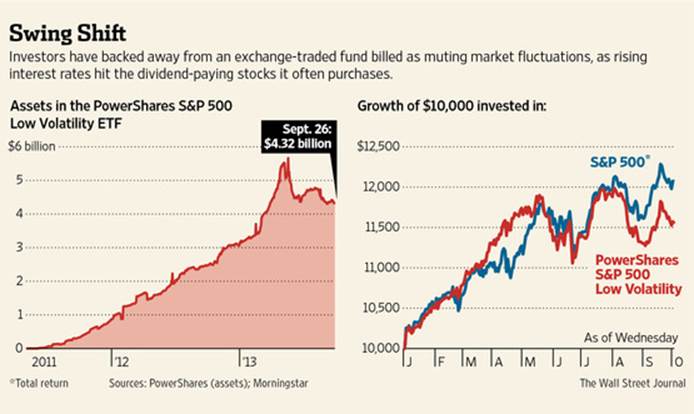
Stock Investors Get a Little Less Defensive |
| Yay! Its a No-NFP Non Farm Payrolls Friday ! Posted: 04 Oct 2013 04:15 AM PDT Okay, so here is the deal: We have no report of the NFP data today. The net impact of this? Nothing. There are two things we need to understand about this report: The first is what makes it significant; the second is the impact to your investments. As we have detailed over and over again, any single monthly datapoint is hardly significant. What matters is the long term trend in employment — is the economy creating jobs or is it losing them? This refers to the trend, not any single noisy month. Most of the time, its fairly innocuous. At major turning points, it suggests either an expansion ending, and potential recession; or at the other end, a recession coming to an end and the eventual recovery. Both of these events will be reflected in consume rsentiment, retail sales and of course, corporate earnings. The second detail is the impact of NFP on your investments. If you are a HFT, then this is a big data point, one that will give your algos a run for their money. If you are a long term investor, the monthly employment situation seems to be lots of noise, with very little signal. So while the usual suspects will trip over themselves trying to explain the horror we face from this missing datapoint, you should be aware that it is far less important than is commonly claimed — unless you have 14 hours of airtime to fill each day.
Previously: Contextualizing the NFP Data (April 1st, 2011) An Unusually Unusual NFP Payroll Day! (June 3rd, 2011)
"What's Your NFP Number?" [Don't have one] (August 2nd, 2013) |
| Posted: 04 Oct 2013 03:00 AM PDT click for video |
| Posted: 04 Oct 2013 02:30 AM PDT
Lying 45 million light-years away from Earth in the southern constellation of Fornax (The Furnace), this bright star-forming ring surrounds the heart of the barred spiral galaxy. Source: spacetelescope.org via Buzzfeed
|



| You are subscribed to email updates from The Big Picture To stop receiving these emails, you may unsubscribe now. | Email delivery powered by Google |
| Google Inc., 20 West Kinzie, Chicago IL USA 60610 | |



0 comments:
Post a Comment