


The Big Picture |
- U.S. & Allies: Many Contacts with Bin Laden + Hijackers Pre 9/11
- Persians of Interest
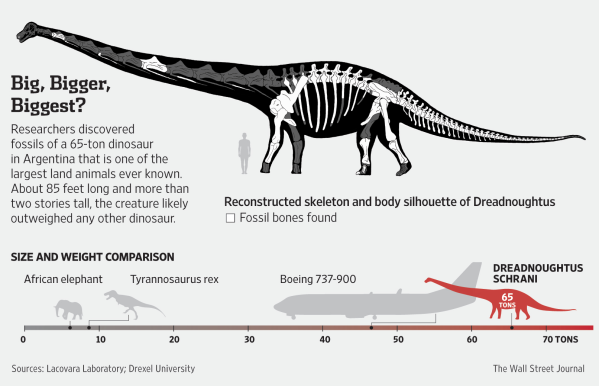
- Titanosaur: Not an Ideal Housepet
- Freelancers in America
- MiB: David Rosenberg
- 10 Weekend Reads
- Kiron Sarkar’s Weekly Report 6th September 2014
| U.S. & Allies: Many Contacts with Bin Laden + Hijackers Pre 9/11 Posted: 06 Sep 2014 10:30 PM PDT The U.S. and Its Allies Had Contact with Bin Laden and the 9/11 Hijackers Many Times Before 9/11, Including a Direct Contact with Bin Laden by an FBI Resource In 1993The report that the FBI had a human resource in direct contact with Bin Laden in 1993 – and covered it up and hid it from the 9/11 Commission and Congress – is newsworthy. See this Washington Times report and NBC News coverage. But that's just the tip of the iceberg:
Indeed, former counter-terrorism boss Richard Clarke theorizes that top CIA brass tried to recruit the hijackers and turn them to our side, but were unsuccessful. And – when they realized had failed – they covered up their tracks so that the FBI would not investigate their illegal CIA activities , "malfeasance and misfeasance", on U.S. soil. And former FBI translator Sibel Edmonds – deemed credible by the Department of Justice's Inspector General, several senators (free subscription required), and a coalition of prominent conservative and liberal groups – alleges that the U.S. worked with Bin Laden right up to 9/11 … and for months afterwards. In any event, it's indisputable that 9/11 was entirely foreseeable … as was Al Qaeda flying airplanes into the World Trade Center and Pentagon. As is the fact that the U.S. has backed the world's most dangerous and radical Muslim terrorists for decades. |
| Posted: 06 Sep 2014 05:00 PM PDT Jon Stewart wasn't looking to direct a movie, he says, but when Iranian-Canadian journalist Maziar Bahari was arrested just days after appearing on The Daily Show, Stewart became involved in the story that would lead to his directorial debut. Rosewater, adapted by Stewart from Bahari's memoir, Then They Came for Me: A Family's Story of Love, Captivity, and Survival, tells the story of the journalist's arrest, interrogation, and four-month imprisonment while covering the 2009 Iranian elections. The Daily Show segment in which Bahari appeared before his arrest, "Persians of Interest," was used by interrogators as evidence of his alleged "media espionage." While Bahari doesn't blame Stewart for the ordeal, he maintains that Stewart likely "felt personally invested in the story because his name came up in a dark interrogation room in a prison in Iran." He appeared on The Daily Show after his release and, before getting into a more serious discussion, the two engaged in a lighthearted banter. Bahari jokingly wished to retract his permission for Stewart to run the initial interview, and Stewart offered, "Well, they say comedy is imprisonment plus time." |
| Titanosaur: Not an Ideal Housepet Posted: 06 Sep 2014 01:00 PM PDT New Species of Dinosaur Weighed as Much as a Dozen Elephants:
Not a good housepet . . .
|
| Posted: 06 Sep 2014 09:00 AM PDT Freelancing in America: A National Survey of the New Workforce
|
| Posted: 06 Sep 2014 06:45 AM PDT This week's Masters in Business Radio show at 10:00 am and 6:00 pm on Bloomberg Radio 1130AM and Siriux XM 119 (it also repeats all weekend). Our guest this week is David Rosenberg, formerly Merrill Lynch's North American Chief Economist, now strategist and economist at Gluskin Sheff & Assoc. in Toronto. You can listen to live here or stream it at Soundcloud or download the 61 minute podcast here. All of the past Podcasts are here and coming soon to Apple iTunes). Next week, we speak with market analyst and historian Laszlo Birinyi of Birinyi Associates. ~~~ Note that the stream and MP3 may not show up til later today
|
| Posted: 06 Sep 2014 05:00 AM PDT Hello, I will be your reading sommelier this weekend. May I suggest you settle into your favorite easy chair, pour yourself a hot cup of Joe, and enjoy our carefully blended longer-form weekend reads:
Whats up this weekend?
Dollar Is a Winner As Policies Shift
|
| Kiron Sarkar’s Weekly Report 6th September 2014 Posted: 06 Sep 2014 02:30 AM PDT Mr Draghi has come to the rescue yet again. The cut in all of the ECB's policy rates by 10 bps, combined with an asset backed securities (ABS) and covered bond purchase programme, was more than the market expected. The decision was agreed by a "comfortable majority". Mr Draghi confirmed that whilst the ECB did discuss the purchase of Eurozone (EZ) government bonds, they did not proceed (not surprisingly given the German view), and I believe are unlikely to do so unless there is a material downturn in the future. The Euro collapsed below US$1.30, whilst EZ bond and equity markets rallied materially. Short term bond yields (2 year) of a number of EZ countries (including Ireland, which required a bailout previously) turned negative. The ECB's actions effectively makes the Euro the funding currency for carry trades, which should ensure that it declines further, with my target of US$1.25 brought forward to later this year, from Q1 2015 previously. The ABS programme includes real estate bonds, which should help to increase property prices in the EZ, a key component in any economic recovery. Mr Draghi did not indicate the size of the ABS/covered bond purchase programme, though Reuters suggests that it will be E500bn. The ECB is to announce the "modalities" of the ABS/covered bond purchase programme in October. Together with the TLTRO programme, which I believe will be far more successful than currently forecast by analysts, Mr Draghi is set to materially increase the size of the ECB's balance sheet – Mr Draghi suggested by around 1/3rd from the present E2tr, though it may well be larger. The reduction in all policy rates, combined with the view that rates are now at the lower bound, removes the risks of banks waiting till December (in anticipation of lower ECB rates) before accessing LTRO funds this month, though with the results of asset quality review/stress tests still to be announced (which will establish banks capital ratios), some banks may still prefer to wait till December. This is certainly a positive for European markets, in particular the property and the financial sectors. In addition, European equities with large US$ earnings will benefit from the stronger US$, whilst the converse is true for US equities with large Euro earnings. Whilst early days, the disinflation in the EZ may be coming to an end. A reduction in energy and food prices have been the main reasons for the decline in EZ inflation to just +0.3%. If such commodity prices stabilise, which looks like a possibility at present, inflation in the EZ may well be at or near a bottom. US markets (S&P) closed at record highs. The weak non-farm payroll (NFP) data has been interpreted by investors as a reason for the FED to remain accommodative for longer. I remain positive on US markets, though I suspect that investors will begin to focus on Europe as well, following the announcement by the ECB. Emerging markets should also benefit from the increased liquidity to be provided by the ECB. Ukraine signed a cease fire with pro-Russian separatists. The timing clearly was impacted by the threat of additional sanctions. Whether this cease fire holds is going to be the question and I for one remain doubtful. In addition, the threat of additional sanctions remains. US The ISM index rose to 59.0, the highest since March 2011, well above July's reading of 57.1 and the forecast of 57.0. An increase in business capex was noticeable. Importantly, the new orders component rose to 66.7, the highest since April 2004. Whilst the employment component was very marginally lower, the production gauge, orders waiting to be filled, factory inventories and customer stockpiles components all rose. Yet another very positive reading which supports the view that the US economy continues to expand. Wage growth, and to an extent housing, remain the laggards, though both, I believe will pick up, in particular wage growth. The US$ clearly appreciated following the report. August ISM non-manufacturing PMI came in at 59.6, above July's 58.7 and the forecast of 57.7. It was the highest reading since August 2005. The improvement should flow through into higher employment and better consumer spending. The new orders component eased to 63.8, from 64.9, though employment increased to 57.1, from 56.0, the highest since February 2006. Inflationary pressures eased. Once again, particularly good numbers and together with the ISM manufacturing data, suggests that the US economy is expanding at the highest rate since 2005. Construction expenditure rose by +1.8% M/M in July, higher than the rise of +1.0% expected. The previous 2 months data was revised higher. Private nonresidential spending (business spending) rose by +1.4% M/M in July and is up +14.1% Y/Y. However, it is still around 17% below the peak in January 2008. The FED's Beige Book stated that all 12 districts reported moderate to modest growth. Consumer spending was slight to moderate in most districts. The 12 districts indicated that growth had continued since the publication of the last Beige Book. The report suggests that whilst the economy continues to grow, it is not strong enough to remove the FED's monetary accommodation. Employment, wage growth and inflation "were relatively unchanged". Bank activity improved, with loan growth seen in all Fed districts. US bank regulators approved regulations designed to ensure that banks have sufficient liquidity in the event of a financial crunch. Effectively, the rules limit large banks from taking on excessive risks. The FED estimates that the big banks would need to hold about US$2.5tr of highly liquid assets by 2017, which means that the banks have to increase such holdings by around US$100bn from current levels. The US trade deficit unexpectedly declined by -0.6% to US$40.5bn in July, from a revised US$40.8bn in June and much better than the increase to US$42.4bn expected. Exports rose by +0.9%. The better number is a positive for Q3 GDP. Weekly jobless claims rose by 4k to 302k, slightly higher than the forecast of 300k. Continuing claims declined by 64k, to 2.46mn, the lowest since June 2007. Europe The EZ August final manufacturing PMI came in at 50.7, slightly below the initial reading of 50.8 and below July's 51.8. Germany was revised lower to 51.4 (a 11 month low), lower than the initial estimate of 52.0, though France was upgraded to 46.9 (still in contraction territory, however), higher than the estimate of 46.5. Italy was particularly disappointing, coming in at 49.8, as opposed to expectations of 51.0. EZ final August services PMI fell to 53.1, down from the initial reading of 53.5 and below July's 54.2. Importantly, Germany, France and Italy all came in lower than the preliminary estimates, with Italy particularly poor and at 49.8 and in contraction territory. Spanish services PMI surprised to the upside, coming in at 58.1, as opposed to the forecast of 55.1 and was the highest reading since December 2006. EZ July retail sales came in -0.4% lower M/M, worse than the decline of -0.3% expected. Retail sales rose by just +0.8% Y/Y, lower than expectations. EZ July PPI came in at -0.1% (-1.1% Y/Y), in line with expectations. The main reason for the decline was the drop in energy prices. German July factory orders came in at +4.6% M/M, much stronger than the increase of +1.5% expected and the upwardly revised decline of -2.7% in July. It was the largest rise since June 2013. Domestic orders rose by +1.7%, though foreign orders rose by +6.9%, mainly due to a large increase of +14.6% for investment goods from outside the EU. Industrial production also came in better than expected at +1.9% M/M in July, higher than the rise of +0.4% expected. It was the largest monthly increase since March 2012. Better news after a string of poor data, though the finance minister, Mr Schaeuble, suggested that German GDP this year may come in below the government’s previous forecast of +1.8%. UK August manufacturing PMI declined to a 14 month low of 52.5, well below the downwardly revised 54.8 in July and much lower than the 55.1 expected. The new orders component declined to the lowest level since April 2013. The strength of the UK housing market continues. Whilst UK mortgage approvals fell to 66.57k in July, down from 67.09k in June, they were higher than the estimate of 66.0k. In addition, the BoE reported that consumer credit rose by £1.1bn in July, the most in 4 months and nearly double the increase of £0.6bn expected. UK construction PMI rose to 64.0 in August, up from 62.4 in July, the highest reading since January and well above the forecast for a decline to 61.5. Building firms report that they are increasing employment which suggests that the construction boom is set to continue. As expected, the BoE kept interest rates on hold at 0.5%. The more interesting issue is whether there will a larger number of dissenters who voted for an increase in rates. At the last meeting, 2 dissenters voted for an increase. The minutes will be published on 17th September, just 1 day before the Scottish referendum on independence. Based on present information, It is unlikely that the Scots will vote to leave the UK. If that is the case (and I believe it will be), Sterling should appreciate following its recent correction. Japan PM Abe reshuffled his cabinet, though his key ministers remained. Of particular importance was the appointment of Yasuhisa Shiozaki, who was named as health minister. Part of his responsibilities will be to overhaul the world's largest pension fund, the Government Pension Investment Fund (GPIF). Mr Shiozaki has been an outspoken supporter of change to the GPIF, to obtain higher returns. As a result, the GPIF is expected to increase its equity holdings and its foreign assets, whilst reducing its holdings in Japanese bonds from 60% at present to 40%, according to analysts. A further important appointment was that of Mr Tanigaki as Secretary-General of the LDP. Previously, he had brokered a deal with the opposition DPJ party to increase sales tax, which analysts suggest could indicate that the proposed increase in sales tax next year will go ahead. However, its early days and the Japanese economy is faring much worse than the government/BoJ suggest. Finally, the appointment of Ms Obuchi is also important, as she has the responsibility to handle the Japanese nuclear electricity industry, which is particularly controversial. Analysts suggest that a restart of some of the nuclear reactors is likely. As expected, the BoJ kept its monetary stimulus plan unchanged at an annual rate of between Yen 60 tr and Yen 70 tr. The governor, Mr Kuroda stated that the economy continued to "recover moderately as a trend" and suggested that a weaker Yen would help the economy, which was facing certain headwinds at present. He expected inflation to pick up later this year (no evidence of that however) and that the economy could deal with the higher sales tax – once again the data suggests otherwise. He urged the government to continue to reduce spending by raising the sales tax next year. Generally, Mr Kuroda's statements are much more optimistic than the data would suggest. Most analysts expect the BoJ to have to increase its monetary stimulus programme late this year or in Q1 next year. In addition, the Finance Minister Mr Aso stated that a backup plan for further fiscal stimulus was being prepared, to compensate from a downturn caused by the increase in the sales tax. Based on current data, a supplementary budget which increases fiscal stimulus is likely. China Chinese August services PMI rose to 54.4, up from 54.2 in July, according to the governments statistical office. The HSBC services PMI came in at 54.1, up from 50.0 in July. Services accounted for approximately 47% of the Chinese economy in H1 2014, according to Bloomberg. The HSBC composite PMI rose to 52.8, up from 51.6 previously, the highest reading since March 2013. The better than expected data resulted in Chinese stocks traded in Hong Kong rising by the most since last November. President Xi suggested that China would increase its spending on defense. Most Asian countries are also increasing defense expenditure to counter the more assertive role that China has taken recently. The American Chamber of Commerce in China reports that the Chinese authorities are targeting foreign companies with prejudicial rules and opaque laws. Some 60% of foreign companies surveyed reported that they felt less welcome in the country, up from 41% in a late 2013 survey.(Source Bloomberg). Other Oil prices (Brent) recovered from a low of around US$100, as the announcement of a ceasefire in the Ukraine lead investors to price in an improvement in the European economy. The Australian Central Bank, the RBA, kept interest rates unchanged at 2.50%, as expected. In addition, it stated that the A$ remains "above most estimates of its fundamental value, particularly given the decline in key commodity prices" and that the overvaluation was hampering the transition of the Australian economy from its reliance on the mining sector. The Governor added that the Australian economy would grow "a little below trend" in the coming year. The reference to the strong A$ was more pronounced than has been the case. The Q2 current a/c deficit widened to A$13.7bn, from an upwardly revised A$7.8bn, with exports declining by -0.6%, whilst imports rose by +3.7%. Q2 GDP increased by +0.5% Q/Q (+1.1% in Q1) and by +3.1% Y/Y, beating the forecast for a Q/Q rise of +0.4%. Following the release of the GDP data and whilst unemployment has risen to a 12 year high in July, the Governor stated that the RBA did not want to reduce interest rates further as they did not want to create a property bubble. The relatively high interest rates in Australia and the statement that the RBA will not reduce rates, is keeping the A$ above its fundamental value, even though the RBA is trying to talk it down. PM's Mr Modi of India and Mr Abe of Japan pledged to increase economic and security ties with each other. Both India and Japan are trying to counter the increasing influence of China in Asia. Mr Abe pledged to provide India with Yen 50 bn of infrastructure loans, and also suggested that Japanese public and private investment into India could amount to Yen 3.5 tr over the next 5 years. Kiron Sarkar |

| You are subscribed to email updates from The Big Picture To stop receiving these emails, you may unsubscribe now. | Email delivery powered by Google |
| Google Inc., 20 West Kinzie, Chicago IL USA 60610 | |



0 comments:
Post a Comment