


The Big Picture |

- This Land Is Mine
- 10 Thursday PM Reads
- The Number: 67 Days
- When China Sneezes . . .
- Russian exports – oil, money and people
- Charge-off and delinquency rates, all banks, seasonally adjusted
- 10 Thursday AM Reads
- Everybody Hates Treasuries
- Core cap ex weak, Claims in line
- The Size of Major Bull Markets
| Posted: 25 Oct 2012 04:00 PM PDT A brief history of the land called Israel/Palestine/Canaan/the Levant. This Land Is Mine from Nina Paley on Vimeo.
Who’s-killing-who viewer’s guide after the jump
Who's Killing Who? A Viewer's Guide Because you can't tell the players without a pogrom!
Canaanite
Egyptian
Assyrian
Israelite
Babylonian
Macedonian/Greek
Greek/Macedonian
Ptolemaic
Seleucid
Hebrew Priest
Maccabee
Roman
Byzantine
Arab Caliph
Crusader
Mamluk of Egypt
Ottoman Turk
Arab
British
Palestinian
European Jew/Zionist
PLO/Hamas/Hezbollah
State of Israel Backed by "the West," especially the US, they got lots of weapons and the only sanctioned nukes in the region.
Guerrilla/Freedom Fighter/Terrorist
and finally…
The Angel of Death
Note: If you want to support this project, please notice I have Paypal and Flattr buttons. TAX-DEDUCTIBLE donations accepted via the nonprofit
|
| Posted: 25 Oct 2012 01:30 PM PDT My afternoon train reads:
What are you reading?
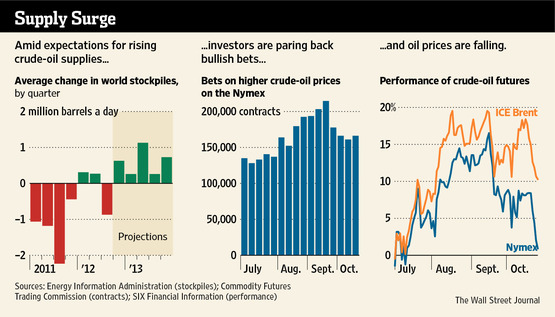
Supply Boom Upends the Oil Market |
| Posted: 25 Oct 2012 12:37 PM PDT That’s how long until we ‘go headlong over the fiscal cliff,’ according to Washington Post columnist and The Big Picture blog founder Barry Ritholtz. On today’s episode of The Number, Ritholtz and Daniel Gross share their predictions for where the economy is heading. |
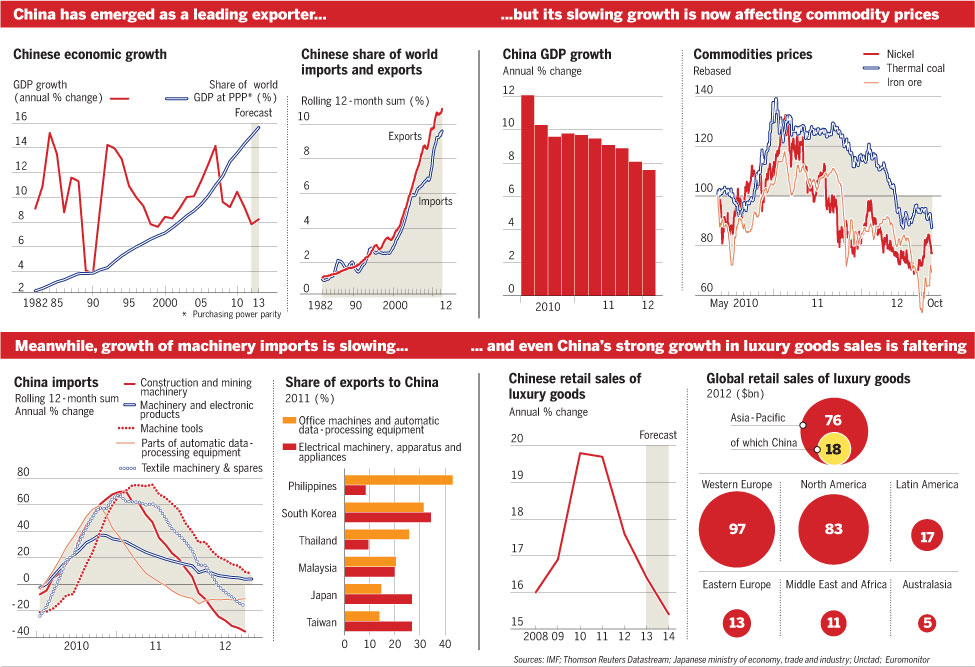
| Posted: 25 Oct 2012 11:30 AM PDT The Financial Times has a totally awesome graphics department. Check out this beauty, showing various aspects of China’s economic shift:
Click to enlarge
Source: |
| Russian exports – oil, money and people Posted: 25 Oct 2012 10:53 AM PDT Bloomberg reports that the BoJ may increase its asset purchase programme, by Yen 20bn (have seen much higher numbers) at the next meeting on 30th October – the government has discussed the issue with the BoJ. In the past the BoJ has been staunchly independent and, in addition, it would be rare for the BoJ to be accommodative twice consecutively. Whatever, if the BoJ starts to stimulate the economy, the sums necessary will be much much larger than Yen20bn. Furthermore, reports circulate that the Japanese cabinet are to endorse a major stimulus package tomorrow – possible but how is it going to be financed?. The Yen is weaker on the news, but if the BoJ does indeed pursue such a programme, the Yen is liken to weaken much further and faster. I remain short the Yen, against the US$ (indeed increased the position), currently 80.14, a 4 month low. On the other hand, the Nikkei is at a 4 week high. A weaker Yen is going to have a profound effect in South East Asia, in particular. The BoJ has started communicating in English. Mizhuo suggests that the BoJ may change the wording of its inflation commitment, from an inflation “target”, to an inflation “goal”, emphasizing its “commitment” to increasing inflation. There is a story running around that inflation will remain below 1.0% in 2014. INCREASING INFLATION IN JAPAN – ADMITTEDLY NO EASY TASK – WILL HAVE SEVERE NEGATIVE CONSEQUENCES FOR THE COUNTRY, GIVEN ITS EXCESSIVELY HIGH DEBT TO GDP – they certainly do not need, or indeed more importantly, can afford higher interest rates; Japan will face its own fiscal cliff, reports the FT. The Japanese MOF is to hold crisis talks with bond dealers tomorrow as concerns run high over the oppositions refusal to allow the government to finance its budget deficit, unless elections are called. The government needs to borrow US$479bn to finance this years deficit. Unless the bill to allow the government to raise the finances is passed in 33 days, beginning next Monday, bond auctions will have to be scrapped for the 1st time in decades. The Japanese bond market is twice the size of the economy. The yield curve is rising, with the 10′s – 20′s rising to the highest since July 1999, according to Bloomberg. Political concerns, unless sorted out, will be a major problem for Japan and the Yen; The Indian Central Bank, the RBI meets on 30th October and analysts speculate that the RBI will cut rates, possibly by 25bps to 7.75%. Recent government action to reduce subsidies on diesel, for example may well provide some opportunity to cut rates – however, its quite a finely balanced decision, though if not this time around, quite likely pretty soon. I have been pretty negative on India for some time – however, if the government continues with its proposed reforms, I believe that India will prove to be the best of the BRIC’s; South Africa has increased its 2012 GDP growth rate to 2.5% from +2.3% previously, though reduced 2013 to +3.0%, from +3.6% in February; Russia is exporting oil, money and people, reports the FT. At the Valdai Discussion Club, a club where Russian President invites foreign economists and journalists, the discussion was centered on the decline of the Russian economy. With the economy growing by just half of the 7.0% previously, Russia has lost its attractions. Oil prices are unlikely to rise, oil output is expected to decline and consumer spending has slowed. Russia badly needs investment, but the prospects are poor and investors remain uncertain. Capital flight is increasing – ten’s of billions of US$’s each year. Worse still, the declining political support for President Putin, has forced him to grant “additional favours” to certain individuals, who are using the opportunity to rape and pillage even more. The number of better placed people wanting to exit the country is rising – just have a look at London – seems like little Moscow. Cant see any likely improvement in Russia unfortunately; EZ plans to fix Greece have failed, reports Der Spiegel. The IMF believes that Greece will require an additional E20bn of funds – no chance. The Greeks have stated that the EZ will give it an additional 2 years. The EU/Germans have (sort of) denied that any decision has been taken, though not emphatically enough, which suggests that they have caved in. There is no way that Merkel can ask the Bundetag for more money for Greece, so I guess the 2 year extension is on. I do rate Mrs Merkel, but if she thinks that Greece will go away (by trying to push through the 2 year extension for Greece to meet its targets) until after her general elections in September next year, well…..Greece will never repay its debts and a haircut will be necessary, not only on private sector debt, but on the bail out funds, ex the IMF. In addition, the Greeks continue to change their mind on the austerity measures – they better grab what is currently offered, or……..; Italian August retail sales (seasonally adjusted) were flat M/M, better than the -0.2% expected and the -0.3% reading in July. Italian economic data recently has been modestly better; The Spanish head of Treasury reports that Spain is almost fully funded for this year and will start to fund its 2013 requirements. That suggests that Mr “ditherer” Rajoy will delay seeking a bail out for even longer – bad news. The bottom line is that Spain cannot survive even at these levels of interest rates. I continue to believe that Spain will, in due course, have to restructure its debts, which are rising rapidly to 100% sometime next year. Previous debt to GDP levels have been increased to deal with “creative accounting”, by the former administration. There was some good news from Spain – bank deposits have increased for the 1st time in 6 months – bank deposits are also up in Greece (up by +1.0% in September at E154.33bn, as opposed to E153.39bn in August); The IMF has warned that the downside risk to Portugal’s economic and fiscal risk is significant. It is clear that further austerity measures are having a negative impact, due to the fiscal multiplier being above 1.0 – someone please tell the German’s; President Hollande wants to change the corporation tax system in France. Well, I’m sure he’s right, but can he implement the necessary changes – highly unlikely;
EZ September M3 (broad money) annual growth slowed to just +2.7%, a 5 month low, and below expectations of +3.0%. Loans to the private sector declined by -0.8% M/M, worse than the -0.6% expected. Y/Y annual growth of credit declined by -1.3%, worse than the -1.2% in August. Loans to non financials declined by -1.4%. The only sector where lending has risen is government – confirms that the EZ will continue to contract. The numbers support Draghi’s view which he expressed to Bundestag members yesterday, namely that deflation was a real threat for some EZ countries, as opposed to inflation; UK GDP rose by +1.0% in the 3rd Q, on a Q/Q basis, much higher than the rise of +0.6% expected and the decline of -0.4% in Q2 – the fastest rate of growth since 2007. The services sector, which accounts for nearly 80% of the UK’s economy, rebounded strongly – by +1.3% in Q3 – all 5 sectors within services rose. The UK is out of recession. Y/Y, the UK economy was unchanged, much better than the -0.5% expected. However, the numbers were flattered by the Olympics and additional holidays in Q2. Having said that UK unemployment has been better than expected and, whilst the Olympics and additional holidays, the economic data supplied by the ONS seemed much worse than other data. Analysts will question (indeed have) whether the BoE will increase its QE programme, but like the FED, I believe that the BOE will want to cement any recovery, in particular given the problems in the EZ. As a result, whilst they may be on hold in November, I continue to believe that they will increase their QE programme from £375bn at present. Sterling rose on the news – currently US$1.6113 – should improve, especially against the Euro; The Irish government reports that it has passed the quarterly bailout review by the Troika. In addition, they reported that they were confident to attain the deficit target of 8.6% for 2012. However, the Irish finance ministry suggests that its 2013 growth forecast will have to be lowered – the Troika suggests it will be +1.1% (+1.4% previously), and +0.5% in 2012, citing the external trading environment as the reason for the downgrade; Intrade shows a sharp rise in the chances of President Obama returning as President – his chances have risen to just under 60.0%, from a low of just over 55% yesterday. Interesting. David Zervos of Jefferies, a highly rated analyst, states that a Romney win will be bad for US markets – I agree; US initial jobless claims for the week ending 20th October came in at 369k, slightly lower than the 370k expected, though better than the revised 392k, the previous week. Continuing claims for the week ended 13th October were 3.254mn, slightly better than the 3.26mn expected and 3.256k the previous week; US September durable goods orders came in +9.9%, higher than the +7.5% expected and the revised -13.1% in August. The more important durable goods, ex defence and aircraft came in flat, weaker than the +0.8% expected and the revised +0.2% in August. The weaker number suggests that US Q3 GDP will be lower; US pending home sales came in a disappointing +0.3% higher M/M, much lower than the +2.5% expected, though better than the -2.6% in August. Y/Y, pending home sales were up +8.5%, as opposed to expectations of double that number; 80 CEO’s of large US companies have issued a statement urging Congress to find a compromise on the budget deficit. They state that tax increases are inevitable, whichever party succeeds at the polls and that neither can you tax your way out of the problem, nor cut entitlements by enough to fix the deficit. Quite a punchy statement, but clearly right.
Outlook Asian markets (ex China) closed higher, with the Nikkei up over 1.0% following speculation that the BoJ will expend its asset purchase programme. European markets closed flat on the day, with US markets lower. A rumour that Fitch would downgrade the US impacted markets, though Fitch have reported that they will review the rating in late 2013 ie denied. The Euro is weaker at US$1.2959, with gold at US$1712 and December Brent at US$108.28. I continue to believe that the Yen will weaken further, though am nervous as to whether the BoJ will ease policy for 2 consecutive months. However, the political situation is even worse than in Europe and the US – indeed, very similar to Greece !!!!. USA 3rd Q GDP tomorrow. I continue to believe that the currency markets offer better opportunities – still dislike, the Yen and Euro, in particular, and remain short. Sterling looks as if it has more to run in the short term. Kiron Sarkar 25th October 2012 |
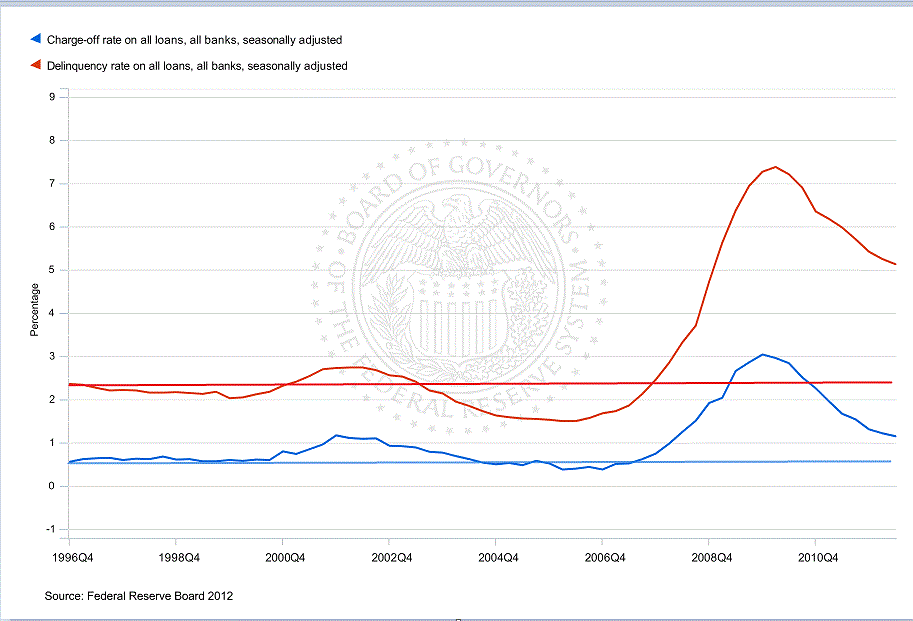
| Charge-off and delinquency rates, all banks, seasonally adjusted Posted: 25 Oct 2012 08:30 AM PDT
Interesting chart from the Fed showing the data on Delinquency Rates on all loans (including mortgages) and subsequent Charge-offs. I added the horizontal red and blue lines, showing the approximate average over the past 15 years. As you can see, we are making progress on the charge offs. But we still have an enormous way to go in clearing the Delinquent Loans . . . You can play with the interactive chart and data at the Federal Reserve site. |
| Posted: 25 Oct 2012 07:00 AM PDT My morning reads:
What are you reading?
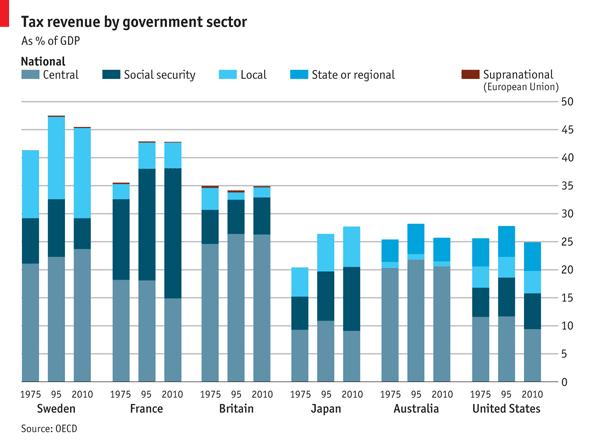
How taxation by government has changed |
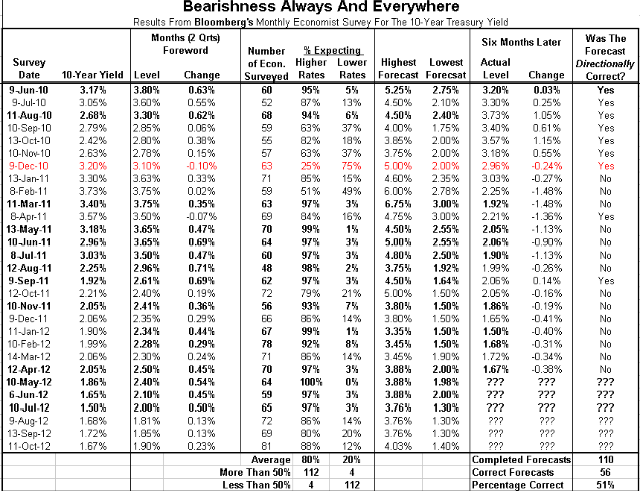
| Posted: 25 Oct 2012 05:30 AM PDT Comment
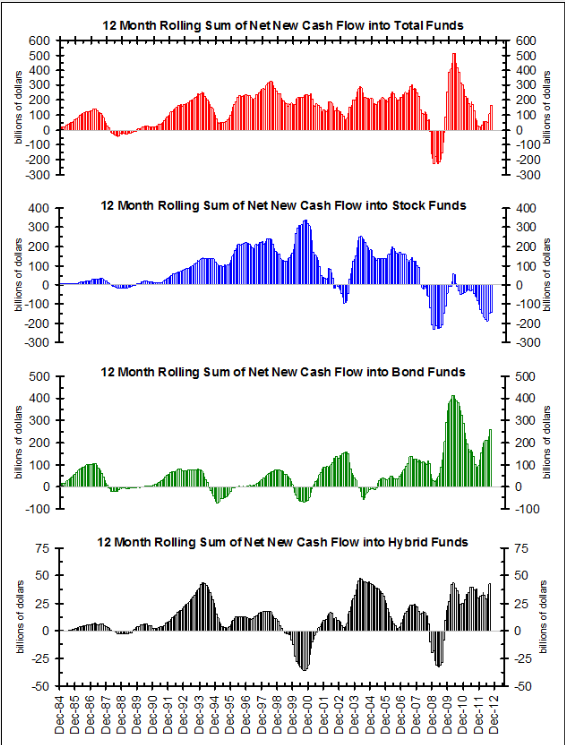
Despite this bearishness, many investors are still throwing money into bond mutual funds. The chart below bears this out. The second panel in blue shows continued outflows from all stock funds while the third panel in green shows hefty inflows into all bond funds.
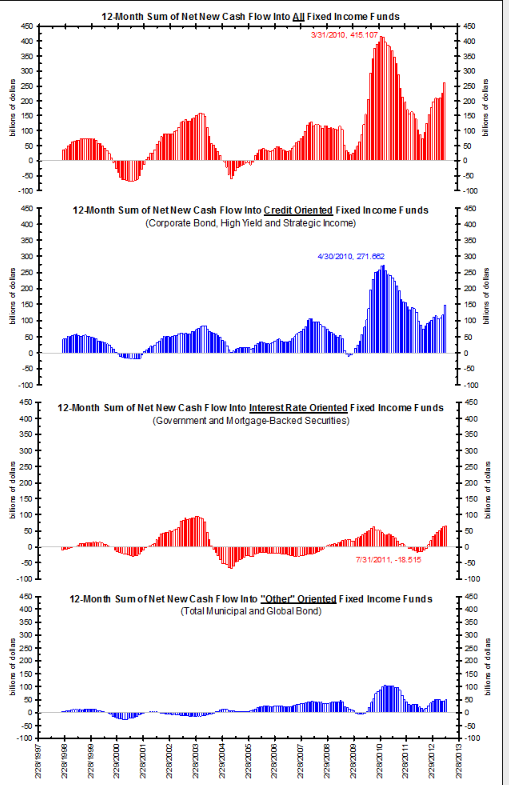
The bears will often scratch their head at these flows and assume the public is making a huge interest rate bet. However, this is not necessarily the case. As the chart below shows, the public's inflows into bond funds peaked in March 2010 and has since pulled back significantly. Of the $261.15 billion in flows into bond funds over the past year:
Add it up and we do not see a big interest rate bet being made by the public. We see tax plays, currency bets and a big bet in corporate bonds, which can also be described as a low-beta stock market bet. Treasuries are bought by the Chinese central banks, the Japanese central bank, the Federal Reserve, and dealers/banks capitalizing on carry trades thanks to the Federal Reserve's 2014 low-rate guarantee. That's it! Because the Federal Reserve is unlikely to take back this low rate pledge, we do not expect this list of buyers to drastically change over the next couple years. So what hurts the bond-buying public? Since they are making a big credit bet, one could argue a big correction in equities that dramatically widens credit spreads would be more harmful than a rise in interest rates.
Source: Bianco Research |
| Core cap ex weak, Claims in line Posted: 25 Oct 2012 05:15 AM PDT After falling 13.1% in Aug due to a sharp fall in aircraft orders, Sept Durable Goods orders rose 9.9% m/o/m. This is above expectations of up 7.5% and orders were up 2% ex transports, also better than the estimate of up .9%. BUT, non defense capital goods ex aircraft, the core cap ex component, was flat vs the forecast of up .8% and also Aug was revised lower to a gain of just .2% vs the initial report of up 1.1%. This follows a 5.6% drop in July and 2.7% fall in June, thus highlighting the anemic cap ex spending over the past 4 months whether due to the European recession, Asian slowdown and/or our own fiscal ineptitude. On a y/o/y basis, this key component is down 10%. Shipments rose .8% after a 2.9% drop in Aug and are up 2.6% y/o/y. Inventories rose just .3% and the inventory to shipments ratio fell to 1.66 from 1.67. Separately, Initial Jobless Claims totaled 369k, 1k less than expected but last week was revised up by 4k to 392k. Averaging the 2 weeks of CA distorted data was 367k. The 4 week avg rose to 368k from 367k, but below 370k for a 3rd straight week. Continuing Claims fell by 2k and Extended Benefits were lower by 46k. Again, the pace of firing’s are hovering near the lowest since the Spring of ’08 but the level of hiring’s remain punk with next week’s payroll est only up 120k. |
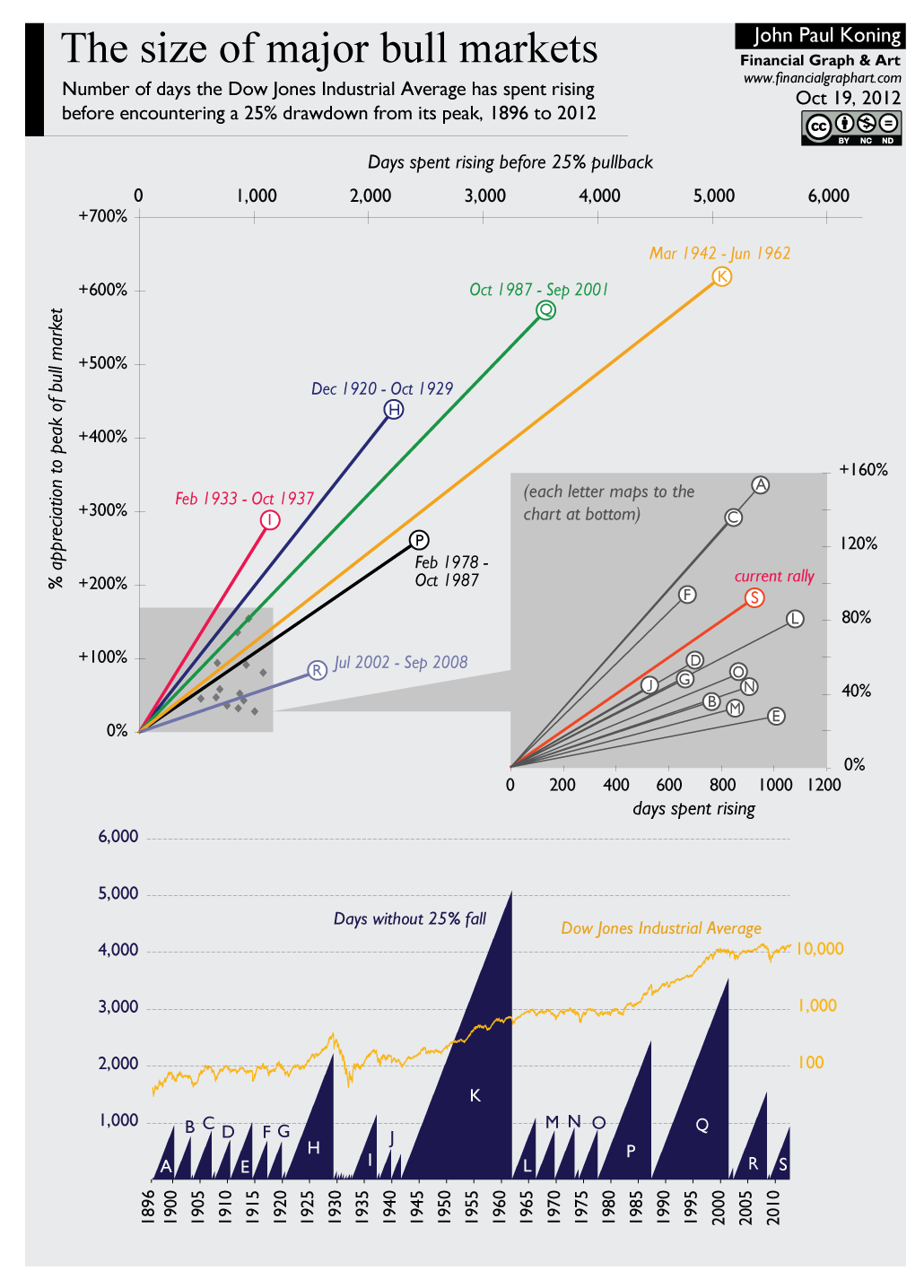
| The Size of Major Bull Markets Posted: 25 Oct 2012 04:15 AM PDT click for ginormous graphic
Back in 2009, we ran this Financial graphart‘s terrific chart of Bear Market Comparisons, 1929-2009. When we put it up way back in early February 2009, there were still 2 weeks left in the 2009 bear. (Its updated here). Well, in what might not be too auspicious a sign, today we run a new chart called “The Size of Major Bull Markets”. It’s similar to the prior one, only flipped around.
Source: |


























| You are subscribed to email updates from The Big Picture To stop receiving these emails, you may unsubscribe now. | Email delivery powered by Google |
| Google Inc., 20 West Kinzie, Chicago IL USA 60610 | |



1 comments:
Hi, Thanks for your great post, there are much nice information that I am sure a huge number of guys and gals don’t know.
Post a Comment