


The Big Picture |

- The Overview Effect
- TBP Mobile Edition Now Live (Beta Version)
- Responsive Web Design: Clever Tips and Techniques
- U.S. Equity Sector ETF Performance
- Bunting’s Laws of Investing
- Most Famous Tech Battles of All Time
- Extremism In Congress: ‘Even Worse Than It Looks’
- A Visual Look At Employment
- Looming Crisis: State Budgets Soon to Be Under Siege
- Bubala, Please! (Hanukkah Edition)
- How GoPro Became an Innovation for Adventure
- Why (or Why Not) Keep Paying Interest on Excess Reserves?
| Posted: 09 Dec 2012 05:51 PM PST On the 40th anniversary of the famous 'Blue Marble' photograph taken of Earth from space, Planetary Collective presents a short film documenting astronauts' life-changing stories of seeing the Earth from the outside – a perspective-altering experience often described as the Overview Effect.
OVERVIEW from Planetary Collective on Vimeo.
The Overview Effect, first described by author Frank White in 1987, is an experience that transforms astronauts' perspective of the planet and mankind's place upon it. Common features of the experience are a feeling of awe for the planet, a profound understanding of the interconnection of all life, and a renewed sense of responsibility for taking care of the environment. 'Overview' is a short film that explores this phenomenon through interviews with five astronauts who have experienced the Overview Effect. The film also features insights from commentators and thinkers on the wider implications and importance of this understanding for society, and our relationship to the environment.
CAST Planetary Collective: planetarycollective.com/ For more information: |
| TBP Mobile Edition Now Live (Beta Version) Posted: 09 Dec 2012 04:45 PM PST Ask, and Ye Shall Receive: The single biggest request I get about the site has been for an improved mobile version of TBP. Previously, I was using a simple Word Press plugin for mobile, and it was pretty weak. It took some time and work, but the new and vastly improved version of the Mobile site is now live — and its pretty fantastic. Mad props to the team at Onswipe, they did an awesome job. This version went live over the weekend — we are still in beta testing, so expect bugs and glitches to keep popping up in this version. (If you find any, please use the comments to tell me, and I will forward to the developers). If you go to Ritholtz.com on any mobile device, you should see it (but some devices and settings don’t). If you want to see what it looks like, point any mobile browser to: I’ll post the graphics after the jump. Its mostly self explanatory, but let me mention a few hidden items:
I’m pretty jazzed at the way it came out– looking forward to your comments . . .
Phone version
Tablet Version
|
| Responsive Web Design: Clever Tips and Techniques Posted: 09 Dec 2012 02:00 PM PST Responsive Web design challenges Web designers to adapt a new mindset to their design and coding processes. This talk provides an overview of various practical techniques, tips and tricks that you might want to be aware of when working on a new responsive design project.
by Vitaly Friedman on Dec 01, 2012 |
| U.S. Equity Sector ETF Performance Posted: 09 Dec 2012 12:00 PM PST |
| Posted: 09 Dec 2012 11:00 AM PST Brett Arend recently informed us of the passing of Dan Bunting, a man who “successfully managed money on behalf of private individuals and institutions for nearly 40 years.” Over the years, Bunting had developed a series of rules that governed his investing strategies. Here is the short version of Bunting's Laws:
Good list Brett, thanks for sharing.
Source: |
| Most Famous Tech Battles of All Time Posted: 09 Dec 2012 10:00 AM PST Click for ginormous graphic: Source: |
| Extremism In Congress: ‘Even Worse Than It Looks’ Posted: 09 Dec 2012 09:00 AM PST GOP At Root Of Dysfunction, Congressional Scholars Say : NPR Source: Extremism In Congress: ‘Even Worse Than It Looks’? |
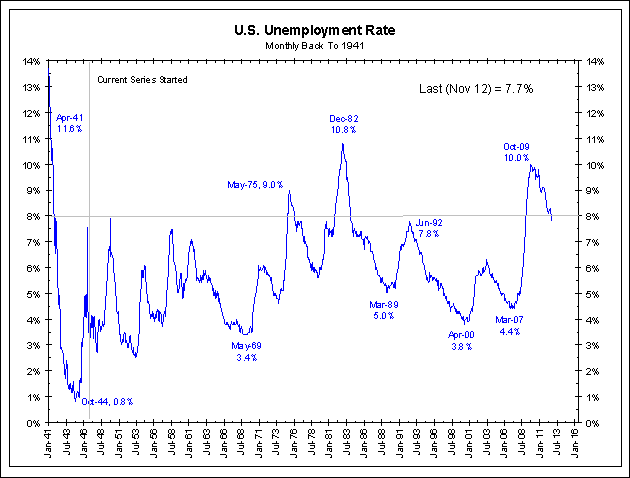
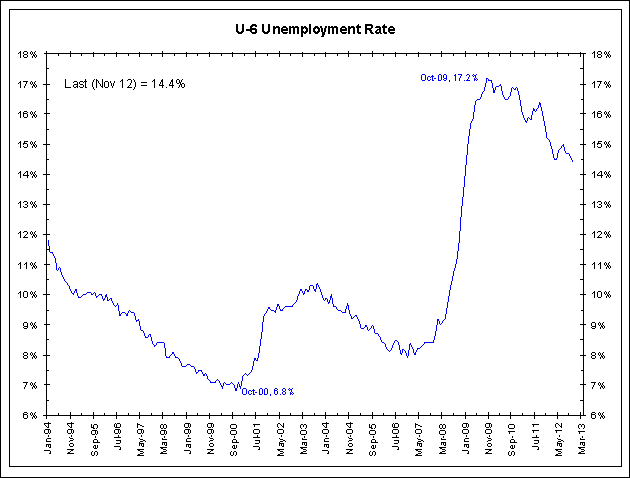
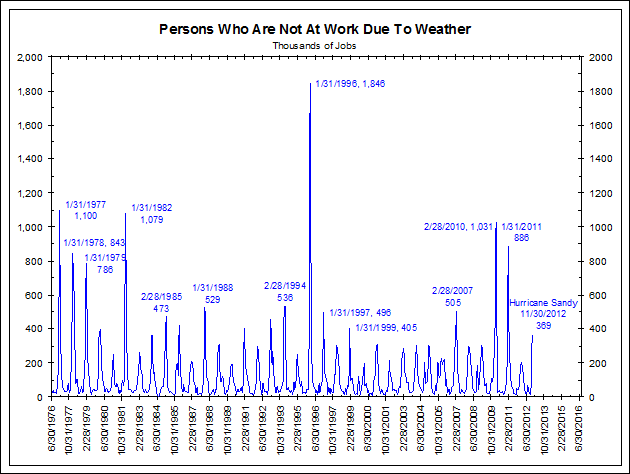
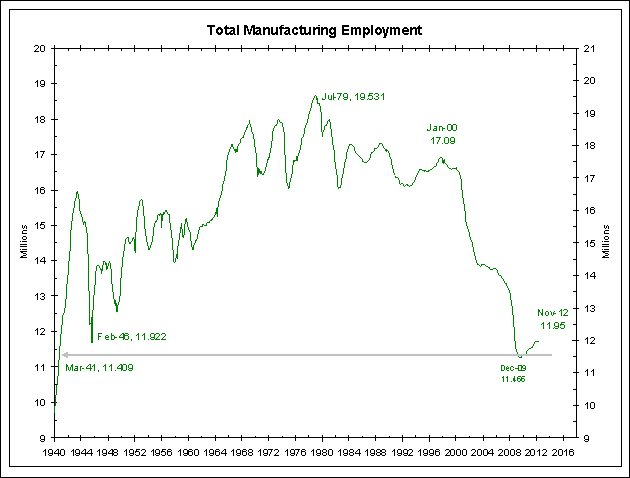
| Posted: 09 Dec 2012 08:00 AM PST All charts from Bianco Research:
Click to enlarge
~~~
lots more charts after the jump Click to enlarge
~~~
Click to enlarge
~~~
~~~
~~~
Source: Bianco Research |
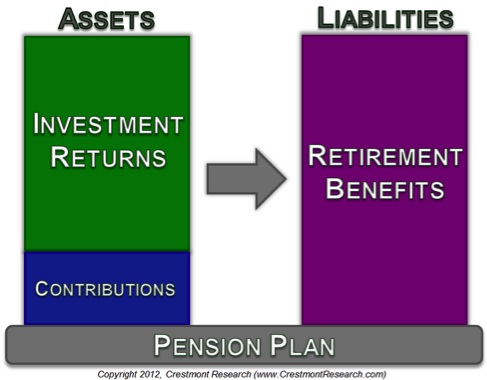
| Looming Crisis: State Budgets Soon to Be Under Siege Posted: 09 Dec 2012 05:30 AM PST There are numerous problem-solving and decision-making processes in the military and civilian sectors. All of them start with a common first step: Identify and define the problem. Get the first step wrong, and there is no chance for success. Public employee retirement systems across the nation have a major problem. Yet the issues are not isolated to investment portfolios managed in the basements of cold, dark government buildings. Nor is the impact limited to retirees or near-retirees of those programs. The tentacles reach out to the taxpayers that backstop those plans and the people served by the government workers in those plans. Pension plans are simple programs. They are set-up to receive contributions from employers and employees to be distributed later back to the employees as retirement benefits. But the plans expect to distribute more than the contributions that go in—and it almost always can. Down in the basement, the pension plan invests the contribution money over many years to produce a return. The return and the contributions combine to meet the obligations promised to the workers upon retirement. However, if that combination of funds is insufficient, then the taxpayers are expected to make up the shortfall. So there are three components to the pension machine: contributions, returns, and distributions. Two of them can be easily and accurately estimated. The third component is an assumption—a very important assumption. PENSION ANALYSISMost often, the process starts with an estimate of retirement benefits. For each worker that the pension plan covers, the analysts (called "actuaries") estimate the expected years in retirement, the time to retirement, and the inflation rate across the entire period. This exercise is not very accurate for any single worker, yet it is surprisingly accurate across a population of workers. The total of all expected retirement payments is known as the pension plan's liability. Contributions are also easy to estimate because they relate to a percentage of workers' wages that are covered by the pension plan. The same actuaries grind numbers in big computers with good accuracy. They estimate the expected total contributions to the pension plan as well as the ultimate distributions for retirement benefits. The accumulated total of the past contributions is known as the pension plan's assets. This is where the third component comes in. The contributions alone are never sufficient to cover the liabilities. Pension plans expect the contributions to earn a return while they wait in the basement between employees' working years and the retirement years. And, as they say, there is the rub.
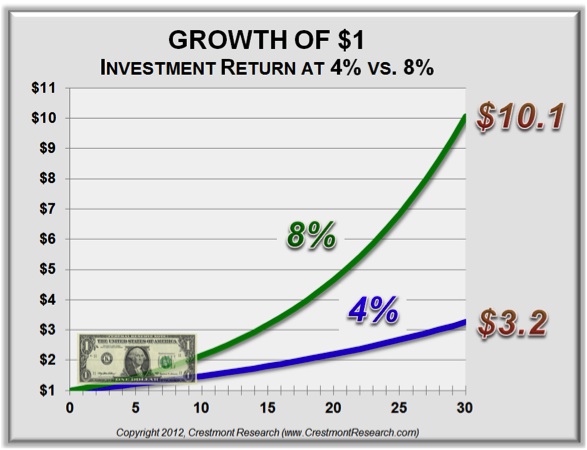
What is a reasonable assumption for returns? Well, it's complicated. The return assumption should reasonably relate to the types of investments that are used by the pension plan. The mix of investments depends upon the risk profile that the pension plan is willing to accept. IT'S YOUR RISKActually, the pension plan is not accepting the risk. The pension plan is just a conduit, a legal entity that stands between the retirees and the taxpayers. Most states have laws that provide some or complete protection for specified benefits promised to retirees. Therefore, the ultimate risk falls upon the taxpayers—not on retirees or the pension plan itself. It is more accurate to say that the mix of investments depends upon the risk profile that pension plan managers are willing to place on the taxpayers. The Social Security trust fund invests exclusively in bonds and securities issued by the U.S. Government. These investments are considered to be virtually risk-free and have little risk of loss. As a result, taxpayers bear little risk from a loss in the value of investments in the Social Security trust fund. In 2005, there was an effort to change the investment mix for the Social Security trust fund to include stock market investments. That initiative failed because the public rejected the additional risk that it represented. The stock market was considered to be far too risky for nation's largest retirement plan. Taxpayers refused to accept the risk associated with potential losses from stock market investments. Nonetheless, states have convinced taxpayers to accept stock market risk for their government retirement plans. Ironically, the national plan would have had national taxpayers accept stock market risk for virtually everyone's potential benefit; the state program has state taxpayers accepting stock market risk for plans that are limited to state and local government workers. REASONABLE RETURNSState pension plan investments are not limited to the stock market. They include corporate bonds, U.S. Treasury debts, real estate, private companies, hedge funds, commodities, and a wide variety of other investments. This mix of investments enables state pension funds to justify the assumption of a higher rate of return. This is critical because a higher rate of return means that state pension funds can contribute a significantly smaller amount of upfront contributions based upon worker's wages. If state pension funds were investing in less risky, lower return state and federal bonds, the states would have to contribute a lot more money at each payroll. It's the Big Tradeoff: contributions vs. returns. Lower expected returns means that higher contributions are needed so that the combination of contributions and returns can pay for retirement benefits. By assuming and hoping for a higher rate of return, the amount of contributions is less because the states expect for investment returns to make up the difference. To illustrate the tradeoff, assuming typical pension plan assumptions—including an expected annual return of 8%, the combined contribution between employee and employer is approximately 19% of the payroll. That's about 8% or 9% of the employee's wages paid by each of the employee and the employer. It's not too far from the rates that have been used by many states and public employment plans. But if the outlook for future annual returns falls to 4% (as current conditions warrant), the required contribution rises substantially to 68% of the payroll—more than three times typical current contribution rates. The reason is the power of compounded returns, the eighth wonder of the world that so enamored Albert Einstein. Unachieved or underachieved returns significantly reduce the ability of public pension plans to meet retirement promises in the future. To illustrate the effect that investment return has on supplying funds for retirement benefits, consider the following example. Assume for simplicity that the time horizon is thirty years. That's about the amount of time from the first dollar of wages to the first dollar of retirement. It's also about the time from the last dollar of wages to the last dollar of retirement. Clearly there are other considerations including wage gains and retirement benefit adjustments, yet thirty years provides a representative example. One dollar grows to just over $3 after thirty years of investment returns at 4%. But, the same dollar grows to more than $10 after thirty years when returns are 8%. That is more than three times the assets to pay retirement benefits. Investment return does not change the amount paid in retirement benefits, it only changes the amount of funds provided by investment returns. The difference must be provided through additional contributions.
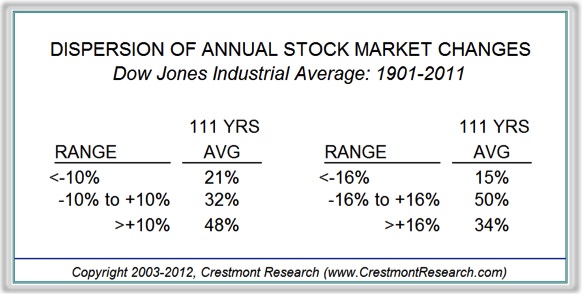
Clearly, taxpayers have a strong interest in the riskiness of the investment portfolio and the reasonableness of the assumption for returns. The only investment that assures its rate of return is a U.S. bond. Beyond that, the rate of return from investments generally increases as the chances of investment success decreases. Risk is not a knob that can be turned for higher returns. Instead, as investment risk increases, the odds of investment success decrease. Taxpayers accurately read the situation with Social Security and rejected accepting the risk of reaching for higher returns; yet they are now on the hook for substantial risk at the state level. Why? And what can be done about it? The "why" goes back to the assumption for returns from investments. Pension plan administrators know that higher return expectations make it easier to appear to meet the retirement benefit obligations. Despite the well-known tenant that "past performance is not an indication of future returns," state pension funds rely upon the results of past years to set the expectation for future years—the rate of return assumption for the pension plans. CONDITIONS CHANGEThe reason that past performance is not a reasonable indicator is that conditions change. For example, as recently as five years ago you could walk into a bank and receive 4% on a certificate of deposit; the U.S. Government paid 5% for investments in its short-term notes. Today, with the same money, the interest rate is less than 1%. It is not reasonable to assume yesteryear's rate of return for the future. Yet that is exactly what the public pension plans are doing. They continue to assume that their investments will average around 8% annually despite the change in conditions. Bonds held by public pension plans return far less than 8%. Real estate and other non-traditional investments struggle to achieve 8%. Finally, the largest part of the portfolio for most public pension plans, investments in the stock market, has not been priced to return 8% for more than a decade! What? Conventional wisdom attributes the 2008 recession and stock market losses to current pension plan shortfalls. How and why could this discussion relate to the past decade? This leads to the most important point in this discussion—defining the problem. If the current shortfalls for public pension plans are the result of a unique gap created by the 2008 recession, then the solution is to refill the gap over time. Many states are attempting to do this by increasing slightly the level of contributions over the next ten or twenty years to plug the hole. But instead, if the shortfalls are the result of a trend that was merely recognized by the 2008 recession, then the current and future gap is destined to be ever-widening. That is the $4 trillion question. Markets go up and down, especially the stock market. The stock market has historically gone up or down by more than 10% each year during almost seventy percent of the years; it has gone up or down by more than 16% each year about half of years. That is a lot of up and down.
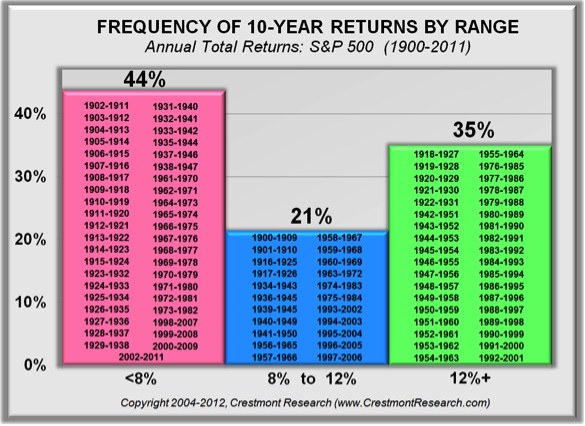
More importantly, for long-term investors like pension plans, the combination of ups and downs across the decades is not driven by good or bad news. Nor is it a random walk of years that provides some constant average rate of return. Instead, longer-term returns from the stock market vary depending upon the starting point. As a result, longer-term returns from the stock market are quite predictable. To understand the predictability, consider that the average long-term annual return from the stock market has been almost 10%. Yet the so-called "long-term returns" refers only to one really long period, typically 1926 to present. Instead, consider long-term returns across each and every ten-year period since 1900. As it turns out, the average annualized return for decades of ten consecutive years is also near 10%. But the range for decade-long returns is quite wide and few of them deliver near 10% returns. Almost eighty percent of the decade-long periods over the past century ended with annualized stock market returns either above 12% or below 8%. So the odds-on bet for stock market investors is an outlook of well-above average or well-below average. Average is a bad assumption. Why can we say that long-term returns from the stock market are relatively predictable? The thirty-five percent of periods that averaged 12% or more have a common element—they started with the stock market having a value that was fairly low. The value of the stock market can be measured by comparing its price to the amount of annual profits generated by its companies. This is known as the price/earnings ratio, or simply P/E.
The forty-four percent of periods when returns averaged 8% or less started when the stock market had a value that was fairly high. In general, the higher the starting value, the lower the decade-long returns. This is particularly relevant because today's stock market on a normalized basis is priced fairly high. It was very, very high after the market bubble in the late 1990s. Since the early 2000s, the stock market has been treading water—with normally dramatic ups and downs—as its value has settled from very-high to high. But it is still high. And that means that future returns from today are destined to be below-average. Here's where it gets tricky. As we know from history, at some point in the future the stock market will again be cheap. That will enable new, future contributions to be invested at lower prices with the expectations of higher returns. But, and it's an important but, current investments are destined to deliver low returns when measured from today. Returns from existing assets are baked-in at current prices. So not only will today's bond investments fall short of the current assumptions currently used by state pension plans, stock market investments will also fall short. The level of shortfall is dramatic. Bonds can be expected to contribute 2% to 4% annualized returns. Stocks can be expected to contribute 0% to 6%, depending upon the future inflation rate and the level of economic growth. Real estate and other non-traditional investments could reasonably be included at 4% to 10%. All in, depending upon the relative mix of investments that are used, the blended rate of return will more likely be 3% to 5% instead of the 7.5% to 8% currently assumed by most state pension plans. The result is an ongoing gap of near 4% annually that will cause an ever-widening shortfall for state pension plans. The problem is not a gap created by a unique event in 2008, but rather it is the result of an environment that started about a decade ago. That gap, moreover, will not move at glacial pace presenting a subtle 4% shift each year. Rather, with the force of an earthquake, periodic market declines will reveal large chasms. Subsequent surges may cure much of the hole until the next plunge. Yet over time, the gap will never seem to close and will attract excuses for why it is widening. Hope will spring eternal as the ship slowly succumbs to drowning waters. CONCLUSIONThe implications are significant. First, public pension plans have very large gaps to fill as well as ongoing shortfalls. Solutions must be dedicated to shore up the plans. Policy makers must resist the temptation to use pension reform as a way to fund obligations outside of the plans. Second, solutions will require additional contributions that will further challenge the budgets of state and local government employers. The magnitude of the additional funding will only increase with delay. Every year that additional funding is missed compounds and concentrates the problem into fewer future years. Further, state and local governments will be able to make much better decisions about sourcing additional funding if they are aware of the full magnitude of the problem. Likewise, the participants in these retirement pension plans will experience less change and will have more time to plan if their part of the solution is decided and implemented sooner. Additionally, there are significant implications for citizens. Budget shortfalls at the state and local level will drive higher taxes: income, property, sales, and other taxes. Higher taxes among the broad citizenry to fund retirement benefits—where the benefits are greater than in the private sector—may generate resentment and unrest. Such emotional responses often result in less-rational solutions. Higher taxes and social anxiety can lead to slower economic growth, which can reduce standards of living over time. The last comment is intended to recognize a significant risk with the hope of encouraging solutions; it is not intended to be a foresight. Finally, there are significant implications for investors. Some municipal bond issuers that appear solvent under current investment return assumptions will fail under the more realistic assumptions. Caveat emptor. Investors also tend to be targets for higher income and wealth taxes, which can lower net returns from their other investments. The solution to public pension woes is not a stopgap series of contributions; it will require fundamental reform to address the ongoing effects of the existing conditions. A successful solution requires an accurate assessment of the problem. An inaccurate assessment begs disaster. Without a comprehensive solution, the likely actions will be marginal plugs introduced with hope that ultimately result in ineffective results. Ed Easterling is the author of recently-released Probable Outcomes: Secular Stock Market Insights and award-winning Unexpected Returns: Understanding Secular Stock Market Cycles. Further, he is President of an investment management and research firm, and a Senior Fellow with the Alternative Investment Center at SMU's Cox School of Business where he previously served on the adjunct faculty and taught the course on alternative investments and hedge funds for MBA students. Mr. Easterling publishes provocative research and graphical analyses on the financial markets at www.CrestmontResearch.com. Source: |
| Bubala, Please! (Hanukkah Edition) Posted: 09 Dec 2012 05:00 AM PST Hanukkah Episode — Making Latkes Mazel Tov, muthafucker Happy Hanukkah, Bitches! |
| How GoPro Became an Innovation for Adventure Posted: 09 Dec 2012 03:30 AM PST The tiny versatile sports camera has reinvented how we capture adrenaline junkie moments. |
| Why (or Why Not) Keep Paying Interest on Excess Reserves? Posted: 09 Dec 2012 03:00 AM PST Why (or Why Not) Keep Paying Interest on Excess Reserves?
In the fall of 2008, the Fed added new policy tools to its portfolio of techniques for implementing monetary policy. In particular, since October 9, 2008, depository institutions in the United States have been paid interest on the balances they hold overnight at Federal Reserve Banks (see Federal Reserve Board announcement). Several other central banks, such as the European Central Bank (ECB) and the central banks of Canada, England, and Australia, have somewhat similar deposit facilities allowing banks to earn overnight rates on their balances. In this post, I discuss the benefits and costs of this new tool in an environment where excess reserves in the United States have now exceeded $1.4 trillion and account for close to 95 percent of all reserves. It has typically been argued that the interest rate paid by central banks on required reserve balances effectively compensates depository institutions for the implicit tax that reserve requirements impose on them, while the interest rate paid on excess balances provides the central bank with an additional tool for conducting monetary policy. Central banks differ, however, in the strategies they use to implement the rates paid on excess reserves. For example, the ECB does not pay interest on excess reserves directly but instead offers a deposit facility where banks can place excess reserves overnight. The Fed, by contrast, pays interest on depository institutions’ excess balances directly. Since the implementation of this new policy in the United States, reserves have increased to unprecedented levels (see chart below). And although there is no doubt that adding a new tool has strengthened the Fed's ability to conduct monetary policy, some economists have recently begun to discuss the current costs and benefits of remunerating excess reserves: Should the trade-off between benefits and costs be reconsidered at this time? Or put differently, how would it matter if the Fed lowered the interest rate on excess reserves? My recent paper with Ricardo Lagos of New York University can help answer such questions. This work provides a search-based model of the U.S. interbank market that captures some of the market's key institutional features, including its decentralized (over-the-counter) nature. This feature is important because it means that banks must first find a potential counterparty with which to negotiate the terms (size and rate) of a loan before borrowing and lending can actually take place. In a stylized version of the model, the rate negotiated between a borrower and lender can be understood as a weighted average of their outside options—that is, a weighted average of the return that a lender would earn if it did not make the loan and instead kept the reserves in its account at the Fed overnight (interest on excess reserves) and the rate that the borrower would have to pay if it could not get a loan and needed to borrow from the discount window (discount window rate and other penalties such as stigma). The weights capture the bargaining power of borrower and lender and, more important, the aggregate level of reserves. When excess reserves are very high relative to the level of required balances, as is the case in the United States at present, the weight on the interest paid on excess reserves is very close to one, and changes in interest on excess reserves translate almost one-to-one into changes in the federal funds rate. In current market conditions, this would mean that reducing the rate the Fed pays on excess reserves would push the fed funds rate to near zero. The textbook benefit of lowering interest rates is the stimulative effect on economic activity. The tactic is generally used by central banks to reduce the real cost of borrowing and encourage consumption and investment when the economy starts to weaken. However, it has been suggested that the effectiveness of lowering rates may be limited when rates are already very close to zero. Another benefit of reducing rates would be to lower money market rates and stimulate bank lending, although the effect may also be marginal in the current environment. An additional argument in favor of lowering rates can be found in traditional and recent theories of money that typically argue that a zero nominal interest rate leads to an optimal allocation of resources in the economy. What about the costs of lowering rates? Reducing rates in an ultra-low-interest-rate environment may lead to a deflationary spiral. However, many economists have suggested that the risks of a deflationary trap are probably small. Additional costs were also pointed out at the Federal Open Market Committee (FOMC) meeting held on September 20-21, 2011 (see Minutes). When discussing the possibility of lowering the interest paid on reserves, participants at the meeting raised concerns that a close-to-zero rate could lead to disruptions in several financial markets. In particular, lowering rates could further depress the volume traded in the federal funds market. In a thinner market, the rate could then be driven by infrequent transactions that are no longer representative of overnight borrowing costs. The information that this rate may convey would then be lost. Very low interest rates could also place money markets funds under stress—an outcome that could disrupt access to short-term credit for some borrowers, including large firms. As pointed out by Todd Keister in a post on November 16, 2011, on the zero lower bound, financial distress could also reach the U.S. Treasury market if rates were to become negative. Overall, reducing the rate paid on excess reserves would push the fed funds rate closer to zero, which could have detrimental effects on several financial markets. Uncertainty about the scope of these disruptions to financial markets seems to be preventing central banks from lowering rates further. Disclaimer Gara Afonso is an economist in the New York Fed’s Research and Statistics Group. |









| You are subscribed to email updates from The Big Picture To stop receiving these emails, you may unsubscribe now. | Email delivery powered by Google |
| Google Inc., 20 West Kinzie, Chicago IL USA 60610 | |



0 comments:
Post a Comment