


The Big Picture |

- It’s Not the Mainstream Media, It’s the OLD News
- Even More Holiday Shopping Ideas
- 10 Midweek PM Reads
- What I would ask Bernanke…
- Why the Fed Should Adopt Apple’s Nomenclature
- FOMC
- Post Traumatic Crash Disorder
- 10 MidWeek AM Reads
- FED day today
- FOMC/overseas
- Sleep
- What Does the New Community Reinvestment Act (CRA) Paper Tell Us?
| It’s Not the Mainstream Media, It’s the OLD News Posted: 12 Dec 2012 10:30 PM PST
Average Fox News Viewer is 65 … Other Corporate News Networks Aren't Far BehindThe average age of Fox News watchers is 65. As Hollywood Reporter notes:
Hollywood Reporter notes that the other corporate news networks are greying as well:
State of the Media points out:
This is largely due to the greying of tv audiences in general as Baby Boomers age. The U.S. population has been getting older and older. As the National Institutes of Health notes:
(See this and this for the effect of an aging population on the economy.) So the average aged viewer will keep on rising for news conveyed on the "dinosaur media". And the young get their news more from the web, including mobile devices and social media. A 2012 study by Pew found (via Poynter):
But it's also a question of loss of interest in all news sources by young people. For example, Pew finds (with commentary from Poynter):
The root problem is that young people have lost trust in the "old" media … and in the political system. The dinosaur media is always pro-war, and happily trumpets disinformation about supposed enemies to drum up support for new wars. Even after the Iraq WMD propaganda was thoroughly debunked, the old media is at it again (and then there's war-o-tainment.) Old media also spouts economic propaganda on a daily basis. The young people aren't buying it … No wonder a funny man – Jon Stewart - is the main tv news source for young people. Postscript: Given that the top experts in every field have their own blogs, people who want real news can cut out the middleman … and read the experts' insights direct and unfiltered. See this, this and this. |
| Even More Holiday Shopping Ideas Posted: 12 Dec 2012 04:00 PM PST Gather round for the next installment of our annual Shopmas tradition. These are some of the more fun or amusing things I managed to stumble across in my travels. Lots of great feedback about the last lists — you can see part one and part two here — so here is our third round of Shopmas ideas for those of you who have loved ones on your holiday shopping list who have been very, very good. Go forth and stimulate : ~~~
Fun for offices and other dull spaces (perfect if yours does secret santa crap), this is a cute little gift for young kids or the your very bored office staff. Bonus: Slapping these stickers on printers, coffee brewers and fax machines annoys the hell out of that women in HR you despise. ~~~
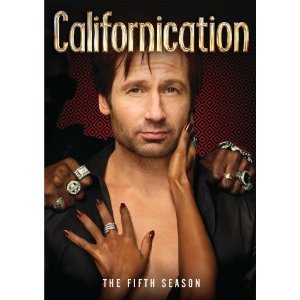
• Californication: The Fifth Season $29 This won’t be out until next week (Dec 18), but I so totally adore this wicked, dark series of obsession with truth-telling and self destructive behavior I had to mention it now. The entire alcohol fueled dysfunction is a joy to watch unfold. Sophisticated and unique, this comedy centers on novelist David Duchovny who tries to pursue his career, raise his 13-year-old daughter, and bed every California hottie, all the while still carrying a torch for his ex-wife. It uproarious fun. (I just ordered this as well)
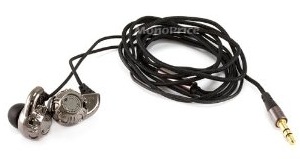
• Velodyne vPulse Black In-Ear Headphones with Inline Microphone $99 WireCutter called the Velodyne vPulses “the best value under $100 earbuds when judged by two central earbud criteria: how comfortable they are to wear and how they sound in the real world, compared to other headphones in this price range.”
Yeah, I ordered a pair yesterday.
• Amazon Gift Cards $50 (Up to $7500) Long time readers know I am not a fan of Gift Cards (See Yes Virginia, Gift Cards Do Suck) In a pinch, a real last minute gift idea is Amazon Gift Cards. I normally dislike gift cards, but these never expire and Amazon’s selection of stuff is enormous. And since its over $25, you get free shipping. ~~~ • How Music Works David Byrne I just started reading this over the weekend, and enjoyed it enough to share it immediately. (you dont hear about 90% of the books I se) How Music Works is David Byrne's celebration of a subject he has spent his entire life pursuing. It is apparent that he has thought deeply about what music is, and how it works. Byrne explores how profoundly music is shaped by its time and place, and how recording technology forever changed our relationship to playing, performing, and listening to music. ~~~ • Pax premium loose leaf vaporizer $250 Now that Weed is becoming quasi-legal, its time some of you learned that smoking ganga actually does cause health issues. The solution is to avoid smoking — and vaporize.
The Pax heats but never burns your “tobacco” releasing a delicious vapor. Using Pax is as easy as 1-2-3 (see video). One of their stoner clients says: “Easy to use, very solid and high quality. Feels right when you have it in your hand. Taste is awesome without the harshness. Extremely satisfied and not disappointed at all.” For the Rastafarians on your gift list. ~~~ • The Rolling Stones 50 $37
Since they first went on stage Thursday 12 July 1962 at the Marquee Club in London’s Oxford Street, fifty years have past. Over that period, the Stones have performed live in front of more people than any band… ever. Curated, introduced and narrated by the band themselves, The Rolling Stones 50 is the only officially authorized book to celebrate this milestone. ~~~
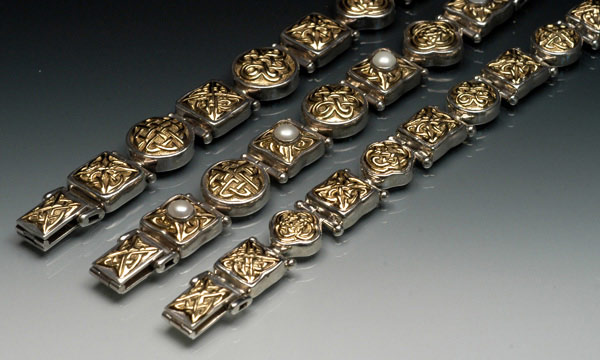
This is my 3rd year recommending the work of local NY artisan Deborah Armstrong‘s lovely jewelry. This gift idea seems to always generate a great response.
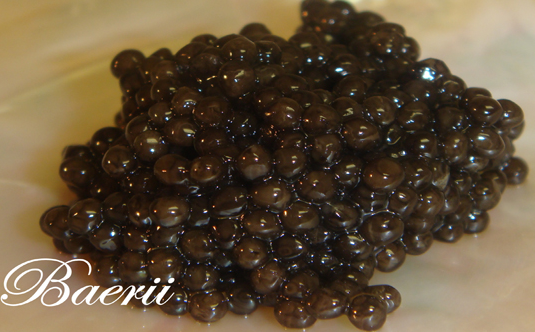
Prices range from $150 – $1500 — and you can do very well at any end of the price scale. ~~~ • Paramount Caviar ($50-$1500) Telephone 1-800-99 Caviar
Paddlefish $20 Bulgarian Osetra $85 per ounce Kaluga Caviar 1 Ounce $185.00 Its all topnotch stuff. ~~~
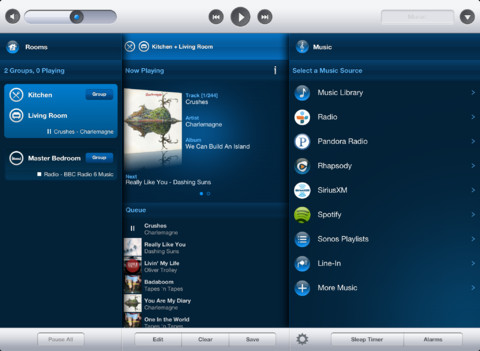
I have been using a Sonos system since last year, and its been pretty awesome. It wirelessly streams from my home computer to a pair of the speakers (living room, dining room) but you can put up to in each different room — my full audio catalog, plus Pandora, Napster, and most other audio sources. (I seem to use it mostly with Pandora). My Sonos is a PLAY:5 and a PLAY:3 plus the wireless Bridge. The entire system is controlled by either an Android, iPad, iPhone or iPod Touch. It works seamlessly:
Reviews are here Check Sonos or Amazon for a specials of free Wireless Bridge ~~~
Tom is a Long Island metalsmith and sculptor, who makes these wonderful and whimsical creatures out of found pieces and parts he has been collecting for 50 years. The $15,000 Rhino you see to the right stands about 5 feet tall, is 8 feet long, and weighs nearly a ton. Composed mostly of automobile The Gremlin (below right) stands about 4 feet tall. You really need to get over to Glen Head to peruse these in person — the photos do no justice to the scale and whimsy of this artwork.
Appointments suggested |
| Posted: 12 Dec 2012 01:30 PM PST My afternoon train reads:
What are you reading?
Analysts Get Gloomy, Right on Schedule |
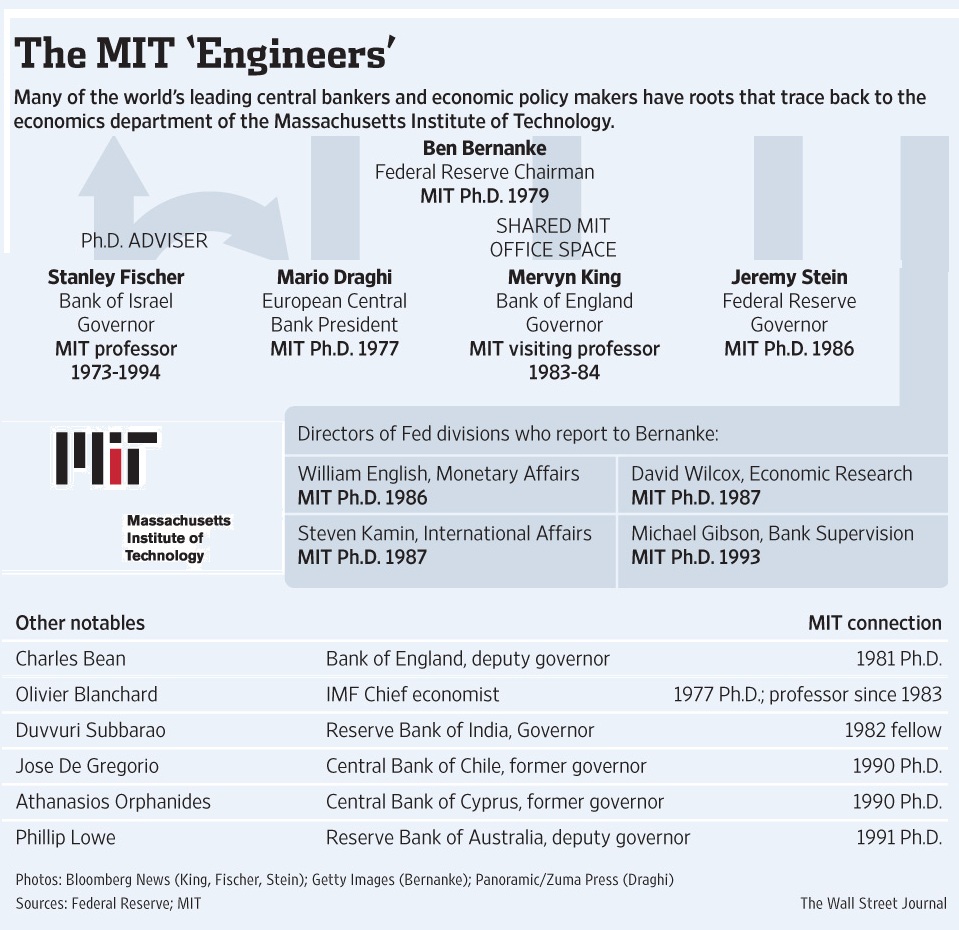
| Posted: 12 Dec 2012 12:27 PM PST If I was able to ask Ben Bernanke a question at today’s press conference, I would ask this: What in your models make you believe that GDP growth can accelerate to a range of 2.3-3% in 2013, 3-3.5% in 2014 and 3-3.7% in 2015 from 1.7-1.8% in 2012 but somehow forecast that PCE inflation will be no greater than 2% in each of those years vs 1.6-1.7% in 2012 in light of the massive expansion in your balance sheet? |
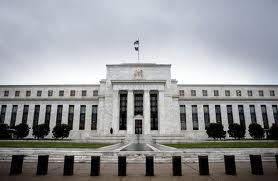
| Why the Fed Should Adopt Apple’s Nomenclature Posted: 12 Dec 2012 12:01 PM PST Dear Chairman Bernanke, I was listening to your announcement of the latest round of action designed to stimulate the economy — quantitative easing as far as the eye can see, or QE ∞. Fascinating stuff. I also noted you took away the 2015 endline, and already folks like PIMCO think that means 2017 (although you explicitly targeted a 6.5% unemployment, so long as inflation stays relatively contained). This was widely expected, and your actions have led us, over the past few weeks, to a somewhat more aggressive investment posture. In the meantime, we respectfully ask this question of you: Have you considered adopting a more informative nomenclature for each subsequent intervention? We would like to respectfully suggest that the FOMC adopt Apple’s numbering system. Their nomenclature for phones is easily followed, and communicates a great deal about what is happening. For example, this current easing is QE4, in the Spring, we could see QE4S. Next Fall, we will all get excited about QE5, followed by QE5S the following spring. We would have named Operation Twist “The Mini.” This will help those gadget heads who may be struggling to keep up with the various Open Market Operations, but have some familiarity with the idea of infinite iterations of any given product. If this new QE naming system catches on, we have one last suggestion for you relative to Apple. Your street address of “20th Street and Constitution Avenue N.W.” (in Washington, D.C. 20551) is not particularly informative about your mandate. Sure, the mailman can find the building to deliver your mail, but what does it really tell us? May I suggest also following Apple’s lead in this regard? Their mailing address is 1 Infinite Loop (Cupertino, California). For the Fed, 1 Infinite Loop is so much more appropriate than just some plain old street address. Keep up the good work!
Respectfully,
Barry Ritholtz
|
| Posted: 12 Dec 2012 11:05 AM PST The FOMC voted 11-1 to embark on QE4 in 2013 when OT expires. This was very much as expected and the Fed’s balance sheet, which is below the record high earlier in the year (as more securities expired than they’ve purchased), will resume its ascent. Also of important note, the Fed took away its 2015 low rate time frame and replaced it with this: “the current exceptionally low range for the fed funds rate will be appropriate at least as long as the unemployment rate remains above 6.5%, inflation between one and two years ahead is projected to be no more than half % pt above the Committee’s 2% longer run goal, and longer term inflation expectations continue to be well anchored. The Committee views these thresholds as consistent with its earlier date based guidance.” The first criteria is objective in that we will see the monthly unemployment rate but what happens if we get there with a continued shrinking in the labor force? The 2nd two are more subjective in that it relies on Fed forecasts. Remember, he PCE inflation deflator was above their .5 % above the 2% target for 7 mo’s in a row in 2011. CPI was above 3% for 9 mo’s in a row. Bottom line, the Fed continues to think that without them, “economic growth might not be strong enough to generate sustained improvement in labor market conditions.” Central planners always think that but it’s also why they’ll remain so easy for so long. With a 0-.25% fed funds rate and a 2T increase in the size of their balance sheet over the years, GDP, after falling 3.1% in ’09, grew 2.4% in ’10, 1.8% in ’11 and will likely be less than 2% again in ’12. Thus, this is the best we’ve gotten with this grand experiment and also face the prospect of a likely very uncomfortable eventual unwind of policy to look forward to. The book is far from finished on the Greenspan/Bernanke Fed. In the meantime, markets will continue the dance of slow economic/earnings growth on one hand and massive central bank money printing on the other. |
| Posted: 12 Dec 2012 08:30 AM PST
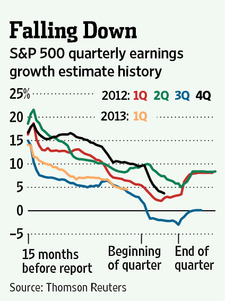
Post Traumatic Crash Disorder (PTCD™ a registered trademark of TBP) seems to be a genuine condition. As the chart above (and accompanying article) reveal, it is the intriguing result of the most recent crashes. We know “generals always fight the last war,” and it is apparently true about about investors as well. Here is the WSJ:
That may be the single most bullish thing I have read this year . . . |
| Posted: 12 Dec 2012 06:45 AM PST My morning reads:
What are you reading?
Inside the Risky Bets of Central Banks |
| Posted: 12 Dec 2012 06:30 AM PST Japanese machinery orders rose by +2.6% in October, the 1st increase in 3 months, though lower than the +3.0% forecast; India’s November trade deficit came in at US$19.3bn, slightly less than October’s record of US$20.1bn. Exports declined by -4.2%, though imports rose by +6.4%. Analysts expect the deficit to increase further, putting further pressure on the Rupee. There is a serious threat that credit agencies will cut India’s rating to junk. Indian CPI rose by +9.9% in the 3 months to November. Food prices, in particular, rose materially. Industrial production rose by +8.2% Y/Y in October, much better than the +5.1% rise expected, though; Saudi Arabia has cut oil output to just 9.5mn bpd in November, as opposed to over 10mn bpd earlier in the year. US oil production has risen by over 750k bpd this year, according to US authorities. Opec is producing above its 30mn bpd target – in November it was 30.8mn bpd, though the lowest in nearly 1 year. The cartel agreed to maintain the production ceiling today. OPEC is meeting in Vienna – they are to choose a Secretary General, as well. With oil supply increasing from Iraq, combined with rising US production, I would expect oil prices to decline next year, subject to geo-political issues – indeed, I’m surprised that oil has held up at these levels so far; EZ seasonally adjusted industrial production declined by -1.4% M/M in October (-2.5% in September), as opposed to a flat reading expected. Y/Y, EZ industrial production came in at -3.6% Y/Y, worse than the -2.4% expected and -2.3% in September; It looks as if the EZ may reach an agreement on banking supervision at the finance ministers meeting. Somewhat surprising given the German objections. The German’s want the ECB to supervise banks with assets above E50bn, whilst the French want the threshold lowered to just E2.5bn. At present, the UK and Sweden are opposed to a number of the proposals. The plan is for the ECB to take over supervision in January 2014;
UK unemployment claims declined unexpectedly in November by 3k to 1.58mn people, as opposed to a rise of 7k expected. In accordance with the ILO measure, unemployment declined by 82k in the 3 months to October to 2.51mn, the largest decline since 2001, with the unemployment rate at 7.8%. Average earnings rose by +1.8% Y/Y. The lower and declining level of unemployment is a mystery, given the weaker UK economic data; The next governor of the BoE, Mr Mark Carney suggests that inflation targeting should be abandoned, with an interest rate target set, based on unemployment and/or nominal GDP growth instead. Very interesting and going the way of the FED; US November import prices declined by -0.9% M/M, more than the -0.5% expected and much better than the increase of +0.3% expected. Y/Y November import prices declined -1.6%, more than the -1.0% expected and the flat reading in October. A decline in oil prices was probably a large element of the decline. No signs of inflation;
Outlook Asian markets closed higher, with China up over 10% from its recent lows – still believe it has further to go. European markets are up, with US futures suggesting a higher open. Its all about the FED today The Euro is trading at US$1.3039, with the Yen weakening to Yen 82.88 against the US$. The A$ is stronger – currently US$1.0549 – just keeps strengthening. The strength has certainly surprised a lot of us. Spot gold is around US$1715, with January Brent at US$107.64. I remain positive/bullish and continue to add to my holdings. Kiron Sarkar 12th December 2012 |
| Posted: 12 Dec 2012 05:53 AM PST We’ll hear again from the 4th branch of government today, the Federal Reserve, to tell us their plan to replace the upcoming expiration of Smother the Yield Curve. Between Fed speeches and WSJ articles, it seems likely that we’ll get $45b per month of unsterilized Treasury purchases, thus bringing the monthly dose of electronically printed money to $85b including the ongoing MBS program. Fed policy will again try to pull forward economic activity as for example, any new car or home purchased today because of artificially engineered cheap money is one less car purchased later when the price of money is more dear. With diminishing returns on helping the economy clearly seen in 2012, we’ll see in 2013 whether that will be the case for asset prices as it may take more and more help to maintain the same level of sustenance. With the avg 30 yr mortgage rate moving again to a record low for the week, the MBA said purchase apps were up just .7% after a .1% increase last week but that it is to a one yr high. Refi apps rose 8% to an 8 week high. One other thing of note ahead of the FOMC, the 5yr 5yr forward inflation breakeven closed yesterday at 3.07%, the highest since July 2011. In Asia, an 8 month low in the yen coincided with an 8 month high in the Nikkei. Japan said machinery orders bounced back in Oct. India’s IP in Oct jumped 8.2% y/o/y vs est of 5%. In Europe, the UK reported an unexpected drop in jobless claims and the pound is at a 1 month high vs the US$. Yields are lower for a 2nd day in Italy and Spain after Italy sold the max amount of 1 yr bills they hoped for notwithstanding political uncertainty. Euro zone IP in Oct fell 1.4% m/o/m vs the est of flat. II: Bulls 45.7 v 43.6, 2 mo high. Bears 23.4 v 25.5, lowest since May. |
| Posted: 12 Dec 2012 05:00 AM PST |
| What Does the New Community Reinvestment Act (CRA) Paper Tell Us? Posted: 12 Dec 2012 04:15 AM PST What Does the New Community Reinvestment Act (CRA) Paper Tell Us?
There are two major, critical questions that show up in the literature surrounding the 1977 Community Reinvestment Act (CRA). The first question is how much compliance with the CRA changes the portfolio of lending institutions. Do they lend more often and to riskier people, or do they lend the same but put more effort into finding candidates? The second question is how much did the CRA lead to the expansion of subprime lending during the housing bubble. Did the CRA have a significant role in the financial crisis? There’s a new paper on the CRA, Did the Community Reinvestment Act (CRA) Lead to Risky Lending?, by Agarwal, Benmelech, Bergman and Seru, h/t Tyler Cowen, with smart commentary already from Noah Smith. (This blog post will use the ungated October 2012 paper for quotes and analysis.) This is already being used as the basis for an “I told you so!” by the conservative press, which has tried to argue that the second question is most relevant. However, it is important to understand that this paper answers the first question, while, if anything, providing evidence against the conservative case for the second. Where is the literature on these two questions? One starting point is the early 2009 research of two Federal Reserve economists, Neil Bhutta and Glenn B. Canner, also summarized in this Randy Kroszner speech. On the first question Kroszner summarizes research by the Federal Reserve, the latest being from 2000, arguing that “lending to lower-income individuals and communities has been nearly as profitable and performed similarly to other types of lending done by CRA-covered institutions.” The CRA didn’t cause changes to banks’ portfolios, but instead required them to find better opportunities. More on this in a minute. What about the second question? Here the Bhutta/Canner research notes that only six percent of higher-priced loans (their proxy for subprime loans) were extended by CRA-covered lenders to lower-income borrowers or CRA neighborhoods. 94 percent of these loans were either made by non-traditional banks not covered by the CRA (the “shadow banking system”), or not counted towards CRA credits. As Kroszner noted, “the very small share of all higher-priced loan originations that can reasonably be attributed to the CRA makes it hard to imagine how this law could have contributed in any meaningful way to the current subprime crisis.” How did those loans do? Here the research compared the performance of subprime and alt-A loans in neighborhoods right above and right below the CRA’s income threshold, and found that there was no difference in how the loans performed. Hence the idea that a CRA-driven subprime bubble isn’t found in the data. (The FCIC’s final report, starting at page 219, has more on this and other research.) So what does this new research do? It takes banks that were undergoing a normal examination to see if they were in compliance with the CRA, and thus under heightened regulatory scrunity, and compares their loan portfolios with banks that were not undergoing a CRA examination. It finds that the CRA exam increases loans 5 percent every quarter surrounding the event and those loans default 15 percent more often, under the idea that those banks were ramping up their loans to pass the CRA exam. But this is question 1 territory. 94 percent of higher priced loans came outside CRA firms and outside CRA loans, and this research doesn’t really change that. Since we are talking about regular mortgages – more on that in a second – that higher default isn’t that scary. To put that in perspective, loans made in the quarter following the initiation of a CRA exam in a non-CRA tract are 8.3 percent more likely to be 90 days delinquent. That sounds scary, but it is an increase of 0.1, from 1.2 percent to 1.3 percent. In the CRA tract it is 33 percent more likely to default, going from 1.2 percent to 1.6 percent. FICO scores drop 7 points from 713.9 to 706.9. That’s an increase I wouldn’t want in my portfolio, but it is light-years away from 25%+ default rates, and very low FICO scores, on actual subprime. This research, if anything, pushes against movement conservative CRA arguments. In light of the evidence in question 2, many conservatives argue that regulators used CRA to push down lending standards, which then impacted other firms. But this paper finds that extra loans aren’t more likely to have higher interest rates, lower loan-to-value, or be balloon/interest-only/jumbo/buy-down mortgages, although there is a slight increase in undocumented loans. And their borrowers aren’t more likely to have risky characteristics themselves. The authors conclude that “this pattern is consistent with banks' strategic attempts to convince regulators that the loans they extend that meet CRA criteria are not overtly risky.” Read that again. The authors argue, from their empirical evidence, that regulators were trying to make sure these loans had high standards, and CRA banks tried to comply with that as best they could on the major, visible risks of their loans. This is the opposite argument made by people like John Carney, who believes the CRA “encourag[ed] lenders to adopt loose standards for mortgages.” It also pushes against people like Peter Wallison, who, in his FCIC dissent, argued that CRA loans were more likely to have subprime characteristics or riskier borrowers in ways not captured by a higher-price variable. Not the case. It also finds that loan volume and risk increases the most during 2004-2006, and points to the private securitization market as an important channel. This, along with characteristics above, pushes back against the idea that the CRA primed a subprime pump in the late 1990s and early 2000s, another favorite of movement conservative finance writers. If anything, banks undergoing CRA exams were caught up in the same mechanisms that were causing the housing bubble itself. I’m not sure I buy all of the research. If CRA banks take on too many loans during examination, why wouldn’t they just loan less afterwards, balancing out? The paper jumps to argue the opposite, as it is worried that “adjustment costs may cause banks to keep elevated lending rates even after the CRA exam is formally completed.” This is meant to establish their results as a lower-bound, rather than an upper-bound. But really? They managed to ramp up their lending in enough time during this time. Either way it would throw a very different set of interpretations on their research. I’m interested in seeing how other researchers react to these problems. But for now these results don’t change the way we approach the financial crisis. ~~~ Originally published at the New New Deal
|













| You are subscribed to email updates from The Big Picture To stop receiving these emails, you may unsubscribe now. | Email delivery powered by Google |
| Google Inc., 20 West Kinzie, Chicago IL USA 60610 | |



0 comments:
Post a Comment