


The Big Picture |

- Weekly Eurozone Watch – Back on the Radar
- Mediterranean Diet: The Benefits of Olive Oil
- Succinct Summation of the Week’s Events (March 1 2013)
- Sequester: Geography of Defense Cuts
- Munger: Charlie’s Almanac & Human Misjudgment
- US$ Strengthening
- 10 Friday AM Reads
- The Big Lie Annotated: An AEI History Of The Financial Crisis
- What if Money Was No Object?
- Media Appearance: Pete Dominick’s SiriusXM Show
- Investing 101: Keep it Simple to Succeed
- 2.28.13 Equity Market Research
| Weekly Eurozone Watch – Back on the Radar Posted: 01 Mar 2013 02:30 PM PST
Comments ***************************************************************************
(click here if charts are not observable)
|
| Mediterranean Diet: The Benefits of Olive Oil Posted: 01 Mar 2013 02:00 PM PST Fascinating study about the Mediterranean diet:
|
| Succinct Summation of the Week’s Events (March 1 2013) Posted: 01 Mar 2013 12:00 PM PST Succinct summation of the week’s events: Positives:
Negatives:
|
| Sequester: Geography of Defense Cuts Posted: 01 Mar 2013 08:45 AM PST A look at the 20 districts that receive the most in defense contracts: click for larger graphic |
| Munger: Charlie’s Almanac & Human Misjudgment Posted: 01 Mar 2013 08:15 AM PST
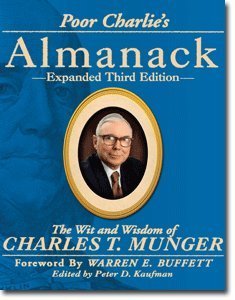
I bring this up because I wanted to reference this tome of a book: Poor Charlie’s Almanack: The Wit and Wisdom of Charles T. Munger, Expanded 3rd Edition As you imagine, Warren Buffetts partner Charlie Munger is no slouch. He lays out his view of the world in very succinct (if I can describe a 500 word book that way) and direct fashion. He has a terrific mind for business and investing, and essentially tells you what his secrets are in this book. He goes into the behavioral and cognitive issues investors face, but much more as well. The Munger approach to problem solving teaches you how to look at problems. It is weird to say this, bu Charlie Munger may be an underrated investor. He is overshadowed by Buffett, and his blunt honesty may not be appreciated by some. But Munger is the reason Berkshire owns Coca-Cola, Gillette, and J&J. He has been described as having numerous advantages over ordinary investors: An analytical edge, a behavioral advantage, the ability to see the world through multiple discipline, and a broad freedom from institutional norms. Note the title of the book comes from Munger’s role-model, Benjamin Franklin. I have been reading speeches from Munger for years, and this morning I finally broke down and bought the book on Amazon.
The Psychology of Human Misjudgment speech after the jump
|
| Posted: 01 Mar 2013 08:00 AM PST Kiron Sarkar's subscription service for his newsletter commences today Monday 25th February 2013. To subscribe, go to sarkargm.com. ~~~
Japan Deflation persists in Japan. Consumer prices, (ex fresh food) declined by -0.2% in January Y/Y, the 3rd consecutive monthly decline, though in line with expectations. Its going to be far more difficult to generate inflation in Japan, after 15 years of deflation. Mr Kuroda will have to ramp up BoJ bond purchases far more than analysts expect. His1st BoJ policy meeting will be held on 3/4th April. Japanese businesses are reluctant to increase wages, which will limit the scope to increase inflation, also implying that BoJ policy will have to ease far more than currently expected. His 1st actions will have to be seen to be a success to generate the necessary momentum to weaken the Yen, in particular. I have started to short the Yen against the US$ positions again, albeit relatively slowly. There are some signs that Japanese businesses are beginning to invest. Capex, excluding software, rose by +0.9% in Q4, Q/Q on a seasonally adjusted basis, the 1st increase in 4 quarters. The unemployment rate fell to 4.2%, whilst household spending rose by +2.4% Y/Y. Japanese investments in US securities rose to US$1.84 trn at the end of June 2012, up from US$1.59 trn a year earlier. Japanese investors bought US$227bn of US government debt during the 12 months to June 2012. The holdings of US securities exceeds those held by China, which amounted to US$1.59 trn, though China remains the largest buyer of US Treasuries. Some of the holdings attributed to the UK may actually be Chinese holdings, as the Chinese do use London for some of their trades. (Source Bloomberg).
* SNIP * ~~~ Important Notice This newsletter is now a fee based subscription service, effective yesterday. More details at www.sarkargm.com |
| Posted: 01 Mar 2013 06:30 AM PST Hey, its Friday! Here are some reads to finish up your week with:
What are you reading?
Fed Split Over How Long To Keep Cash Spigot Open |
| The Big Lie Annotated: An AEI History Of The Financial Crisis Posted: 01 Mar 2013 05:30 AM PST The Big Lie Annotated: An AEI History Of The Financial Crisis
“There was never any significant debate about the causes of the 2008 financial crisis,” argues Peter Wallison, who must believe that his stint on the Financial Crisis Inquiry Commission was a complete waste of time. Two years ago, he blamed the other nine FCIC commissioners, for “ignoring” the research of Edward Pinto, who proclaimed that the crisis was caused by Fannie, Freddie and affordable housing goals. Now Wallison blames the media. ”Although there were two narratives about why it happened, only one of them was accepted and propagated by the media,” he says. “And in effect the necessary competition in ideas never occurred.” For $72 you can read all about it in his new book, Bad History, Worse Policy: How a False Narrative about the Financial Crisis Led to the Dodd-Frank Act. The irony could not be more rich. Neither Peter Wallison nor Edward Pinto would ever subject themselves to a free and open competition of ideas, because their “research” cannot withstand a modicum of scrutiny. FCIC staffers carefully reviewed Pinto’s work, but neither they nor Pinto were ever able to reconcile his risk categories with actual loan performance, which seemed to nullify Pinto’s thesis. So Wallison simply lied to Congress, when he testified that the FCIC never reviewed Pinto’s work. The schism described by Wallison is not between left and right, between Democrats and Republicans, or between regulation and laissez-faire. It is the divide between capitalists and crackpots. In the world of capitalism, everyone takes risks. Some pay off; some do not. Capitalists study the results in order to ascertain who was lucky and who was smart. Not crackpots like Wallison and Pinto. They declare that, “28 million mortgages, were subprime or otherwise low-quality,” of which, “three quarters were on the books of government agencies.” But they refuse to examine loan performance over time. Wallison and Pinto maintain their media platforms because they are protected by a vast conspiracy of silence–an informal agreement among conservative think tanks, Republican politicians, academic shills, and friendly media outlets–which insulates the words of Wallison and Pinto to any kind of fact checking. <a href=”http://ox-d.lanistaconcepts.com/w/1.0/rc?cs=51030f68dd793&cb=INSERT_RANDOM_NUMBER_HERE” ><img src=”http://ox-d.lanistaconcepts.com/w/1.0/ai?auid=332813&cs=51030f68dd793&cb=INSERT_RANDOM_NUMBER_HERE” border=”0″ alt=”"></a> Consequently, there has never been an adequate takedown of the multifarious lies and deceptions embedded within the Wallison/Pinto “narrative.” So, what follows is a description of the elephant in the room, a brief explainer of some of Wallison’s more egregious whoppers. The list is by no means comprehensive. And it merely touches upon Pinto’s new disinformation campaign against FHA, which deserves a separate debunking. (Spoiler Alert: If you believe Pinto’s claim that, “FHA’s Estimated GAAP Net Worth Equals –$26.27 Billion,” you don’t know much about GAAP or finance.) A Few Basic Metrics But first, a few basic metrics. Best Loan Performance: Over the past few decades, Fannie and Freddie’s loan performance has always been exponentially superior to that of any other segment in the mortgage market. The first chart covers the period of 1998 – 2010, the second from the beginning of the 2008 crisis until now.
 by James Lockhart/ Public Domain  by FHFA $216 Billion versus $888 Billion: Similarly, the total credit losses incurred by the GSEs are about one-fourth those incurred about by private label mortgage securitizations, which are packaged and sold by Wall Street. Laurie Goodman of Amherst Securities estimated that losses on private label securitizations issued between 2005 – 2007 total about $714 billion, a number fairly close to Moody’s current estimates. Add in another $133 billion in losses from synthetic subprime CDOs, which never financed a single mortgage, plus another $41 billion from CDOs issued before 2005, and the total approaches $888 billion.
The total credit losses on the GSEs’ entire $4.5 trillion mortgage book, since the beginning of 2008, is about $216 billion. A Blueprint of The Big Lie “For those not familiar with the argument that the financial crisis was caused by government policy,” said Wallison at an AEI luncheon last week, “let me state it as succinctly as I can.” And with 500 words he mapped out the genetic code of The Big Lie. Below is his verbatim text, interrupted by my identifiers (e.g. Whopper 1:) and Notes to decipher his mendacity. Here goes:
Note 1: Here we get to the heart of Wallison’s deceptive technique, wherein he claims that HUD’s efforts to prod the GSEs into extending credit to certain underserved sectors translated into, “the agency’s intention was to reduce the underwriting standards that were then prevailing in the market.” That’s not how it works in the real world. When large lending institutions devise their underwriting guidelines, they set up internal portfolio limits, and sub-limits, for different types of loans with different types of risk exposures. So, for example, if a bank has a $1 billion balance sheet, it may cap the limit of its exposure to high-risk loans to no more than $50 million. For instance, GSE originations, when segmented according to FICO score, were remarkably stable. About 65% had FICO scores higher than 700, about 18% had scores between 699 and 660, and about 17% were below 660.  by FHFAAs we’ll see, HUD prodded the GSEs to set up small sub-limits for riskier types of loans. But these efforts never reshaped “the prevailing market.”
Note 2: Lots to unpack here:A. Wallison’s claim, about the GSEs loading up on low income borrowers in the mid-1990s, is false. As HUD Secretary Mel Martinez, a Bush appointee, testified i 2003:
Joe Nocera and Bethany McLean confirm this point:
B. There is zero evidence that the GSE’s underwriting standards deteriorated in the 1990s. As reflected in the GSEs’ stellar loan performance:  by FHFA Report to Congress C. Wallison’s claim, about the GSEs’ acceptance of low down payments, is misleading because its presented outside the context of risk limits. Every bank extends loans that are somewhat riskier than their overall portfolios. But unless the amounts are quantified and put in context, they are meaningless. It’s like focusing on the player who struck out in the third inning, while ignoring the final score.D. Private insurance companies, not the GSEs, set market demand for low-downpayment mortgages.Fannie and Freddie could not, by law, assume the primary credit risk on any mortgage loan in excess of 80% of the home’s appraised value. If a loan had an LTV higher than 80%, then the first loss was covered by private mortgage insurance. In other words, the amount of low-down payment loans available in the marketplace was never decided by the GSEs. It was the private market, private mortgage insurers, which were not regulated by the federal government. In addition, the GSEs’ policies prevented them from assuming 80% credit exposure on high LTV loans. So, for example, if a loan had an LTV of 85%, the minimum insurance coverage was 12%, so that Fannie’s net risk exposure would be no more than 73% of the total.E. FICO were not “reduced’ because they were not used in the underwriting process prior to 1996. Thereafter, they were used as an initial screening device, not as a proxy for creditworthiness.
Note 3: Nobody in the mortgage business would be dumb enough to believe, “Fannie and Freddie are taking on greater risk, so I can take on greater risk as well.” First of all, what businessperson would want to repeat someone else’s mistake? Secondly, the GSEs had an entirely different level of risk capacity:A. The GSEs, unlike the banks, had enormous balance sheets of super-safe mortgages to balance out any higher risk mortgages they financed. <a href=”http://ox-d.lanistaconcepts.com/w/1.0/rc?cs=51030f68dd793&cb=INSERT_RANDOM_NUMBER_HERE” ><img src=”http://ox-d.lanistaconcepts.com/w/1.0/ai?auid=332813&cs=51030f68dd793&cb=INSERT_RANDOM_NUMBER_HERE” border=”0″ alt=”"></a> B. Private label mortgage securitizations cannot diversify market timing risk. Since time immemorial, real estate lending has been governed by two immutable rules: (1) Location, location, location; and (2) Timing is everything. The most important risk factor is that level of property price appreciation, positive or negative, after the loan closes. With securitizations, the investor risks taking on loans that were booked at the peak of the cycle. Whereas the GSEs book loans continually, before, during and after the peak, and so their capacity for taking on risk exceeds that of the private label securities market. Yet is was private label deals that continually lowered their credit standards, as illustrated Subprime Mortgage Derivatives:
Note 4: You could easily write 2,000 words debunking that singular whopper.A. Most mortgage originations were not for new homes or home purchases; they were for refinancings.  by HUD Report The subprime sector was dominated by cash outs, larger home mortgages based on inflated appraisals. And a huge percentage of subprime mortgages were extended as part of fraudulent home flipping scheme, not because of government policy.
B. The GSEs and FHA were constrained by predatory lending rules, not private lenders or Wall Street. Consequently, Affordable Housing Goals did not include loans for which the lender did not adequately consider the borrower’s ability to make payments.(65 FR 65069, Oct. 31, 2000) C. The GSEs’ affordable housing goals excluded the “B&C mortgage” segment, aka subprime mortgages.(65 FR 65090) D. Ever hear of FRAUD? Check out the lawsuits filed by the Federal Housing Finance Agency alleging securities violations by 18 major banks. The word “fraud” appears 67 times in the Federal Housing Finance Authority’s complaint against JPMorgan, 53 times in its complaint against Countrywide, and 41 times in its complaint against Merrill Lynch. It’s impossible to read those filings and not be struck by all the damning evidence of the banks’ complicity, as underwriters subprime and Alt-A mortgage securities, in promoting systemic fraud throughout the loan distribution chain. Not the FHFA was the first to the courthouse. Allstate , AIG , MBIA , MassMutual , and a multitude other investors had all filed suits alleging substantially identical allegations of fraud in the sale of the same types of securities. Wallison is famous for denying the existence of Wall Street fraud. As he wrote in his FCIC dissent:
As it happened, Wallison along with all but one of the GOP members, boycotted the FCIC hearings in Miami, Bakersfield, Las Vegas, and Sacramento, where the evidence of widespread fraud was laid out in detail.
Note 5: One can write many words about why Pinto’s tally of 28 million” subprime or otherwise low-quality” mortgages is a complete crock.But why bother? The world of free market capitalism does not revolve around the labeling schemes of Peter Wallison and Edward Pinto. It revolves around performance.
Note 6: The foregoing explains, incontrovertibly, how easy it is to use cherry picked data, embellished with a few rhetorical sleights of hand, to fabricate a false history.
Note 7:A. In 2007 and 2008, GSE and FHA defaults were relatively minor. As shown below:  by Mortgage Bankers Association B. Mortgages do not all suddenly default overnight. Mortgages do not instantaneously “default.” In almost every case, the loan servicer exercises some discretion as to the initiation of foreclosure proceedings following a period of 90+ days delinquency. Mortgages did not suddenly transform the financial markets between September 8 and September 16, 2008.C. The financial panic was not triggered by mortgage defaults, but by liquidity crises tied to derivatives.AIG lost $30 billion in liquidity because of ratings triggers following a ratings downgrade, which was precipitated by margin calls from Goldman Sachs. Lehman triggered a panic, because its bankruptcy caused a money market fund to break a buck. Thanks to credit default swaps, transparency in the credit markets was compromised. None of this had anything to do with the GSEs and their underwriting standards.
Note 8: Once again, Wallison conflates liquidity and solvency. Hank Paulson decided that, given his projections of future losses at the GSEs, they should be taken into conservatorship. But the GSEs did not face a sudden liquidity crisis, a perennial run on the bank like the ones that caused the downfalls of Bear Stearns and Lehman.
Note 9: Here we see the disconnect between Wallison’s sophistry and the reality of free market capitalism. Try and complete this sentence: “You don’t become insolvent by acquiring and guaranteeing __.”The statement is patently nonsensical, because no business activity is exempt from the risk of insolvency. A number of Texas banks and S&Ls had acquired nothing but prime mortgages in the mid to late-1980s, yet they became insolvent anyway. Businesses become insolvent because their leverage provides an insufficient margin for error. The GSEs became insolvent because their statutory capital was razor thin, which is very different from poor underwriting standards. How dishonest is Peter Wallison? How deep is the ocean? How high is the sky? But the bigger scandal is not Wallison’s mendacity, but Wallison’s enablers, the perpetrators of that vast conspiracy of silence.
|
| Posted: 01 Mar 2013 05:00 AM PST Alan Watts: “So I always ask the question: What would you like to do if money were no object? How would you really enjoy spending your life? Well it’s so amazing as the result of our kind of educational system, crowds of students say ‘Well, we’d like to be painters, we’d like to be poets, we’d like to be writers’ But as everybody knows you can’t earn any money that way! Another person says ‘Well I’d like to live an out-of-door’s life and ride horses.’ I said ‘You wanna teach in a riding school?’ Let’s go through with it. What do you want to do? When we finally got down to something which the individual says he really wants to do I will say to him ‘You do that! And forget the money!’ Because if you say that getting the money is the most important thing you will spend your life completely wasting your time! You’ll be doing things you don’t like doing in order to go on living – that is to go on doing things you don’t like doing! Which is stupid! Better to have a short life that is full of which you like doing then a long life spent in a miserable way. And after all, if you do really like what you are doing – it doesn’t really matter what it is – you can eventually become a master of it. It’s the only way of becoming the master of something, to be really with it. And then you will be able to get a good fee for whatever it is. So don’t worry too much, somebody is interested in everything. Anything you can be interested in, you’ll find others who are. But it’s absolutely stupid to spend your time doing things you don’t like in order to go on spending things you don’t like, doing things you don’t like and to teach our children to follow the same track. See, what we are doing is we are bringing up children and educating to live the same sort of lifes we are living. In order they may justify themselves and find satisfaction in life by bringing up their children to bring up their children to do the same thing. So it’s all retch and no vomit – it never gets there! And so therefore it’s so important to consider this question: What do I desire?” |
| Media Appearance: Pete Dominick’s SiriusXM Show Posted: 01 Mar 2013 04:59 AM PST
My pal Pete Dominick, whose SiriusXM show, “Stand Up! With Pete Dominick” has moved to a new morning slot, is off to a raucous start. I am on today from 8:00 – 9:00 am ET (replaying same time PT), on Indie, SiriusXM channel 104. We will be talking sequester and all of the usual nonsense Tune in . . . |
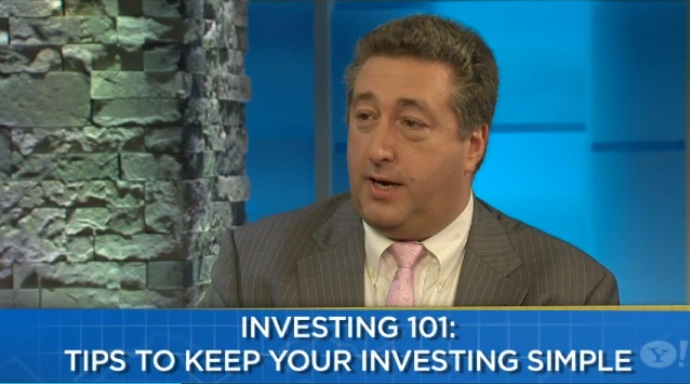
| Investing 101: Keep it Simple to Succeed Posted: 01 Mar 2013 04:00 AM PST |
| 2.28.13 Equity Market Research Posted: 01 Mar 2013 03:00 AM PST |




| You are subscribed to email updates from The Big Picture To stop receiving these emails, you may unsubscribe now. | Email delivery powered by Google |
| Google Inc., 20 West Kinzie, Chicago IL USA 60610 | |



0 comments:
Post a Comment