


The Big Picture |

- Ugly Chart Contest
- Facebook Home = Trojan Horse
- 10 Monday PM Reads
- Structural Employment Problems
- 10 Monday AM Reading
- Ritholtz on U.S. Markets, Budget Negotiations
- Bail-In vs. Bailout
- Media Appearance: Bloomberg TV Surveillance
- How High Rollers Stash Their Cash Overseas
- Political Intelligence, Insider Trading and Materiality
- Majority of American Support Legalizing Pot Use
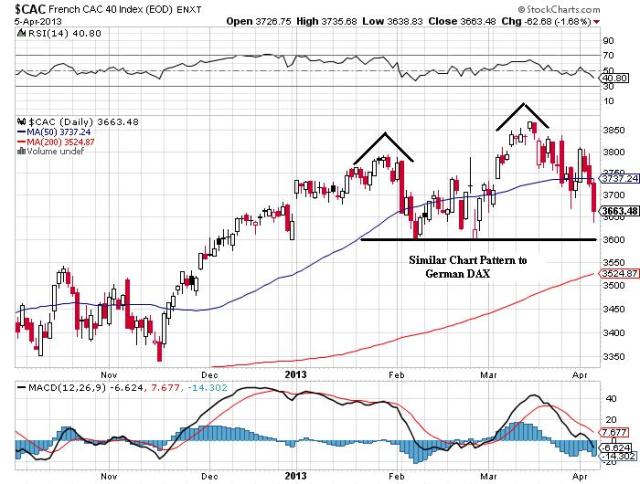
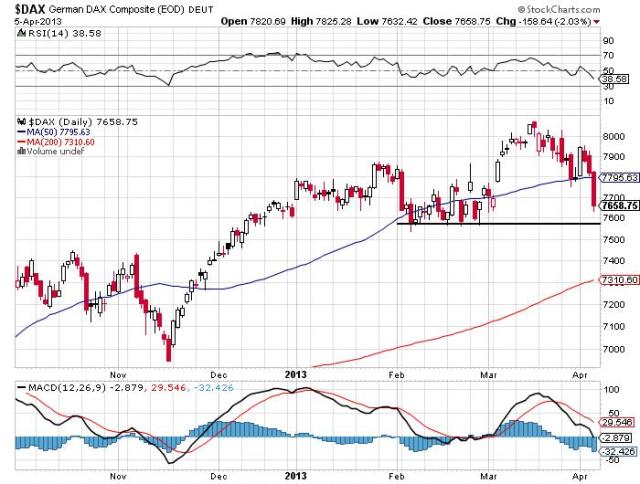
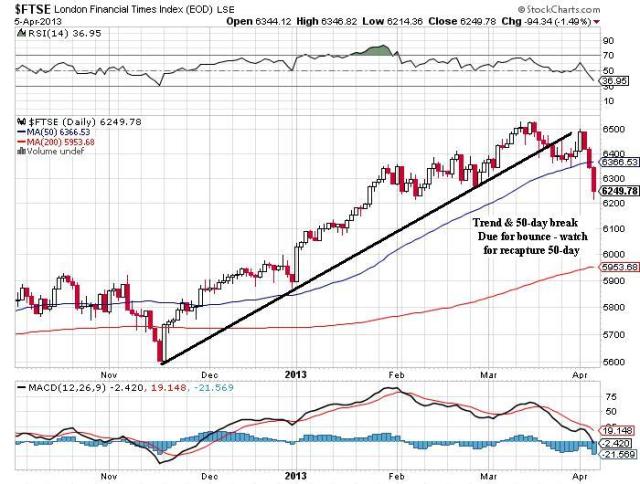
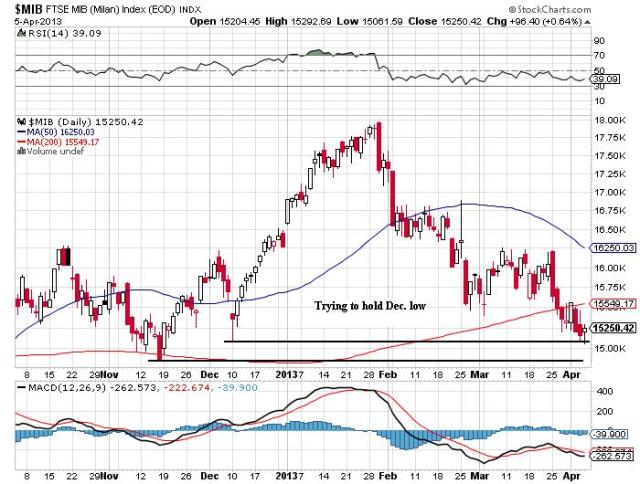
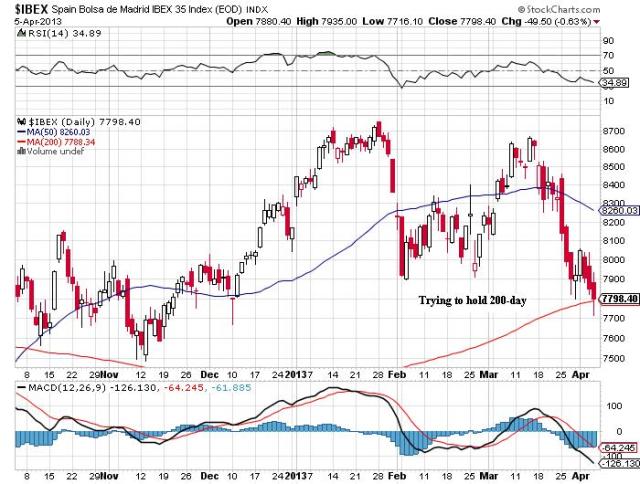
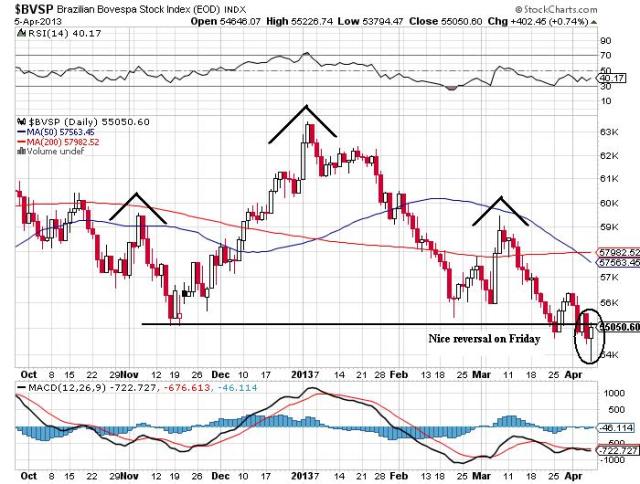
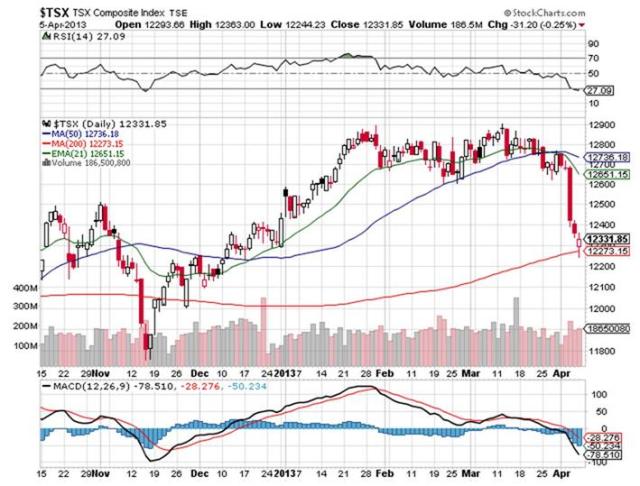
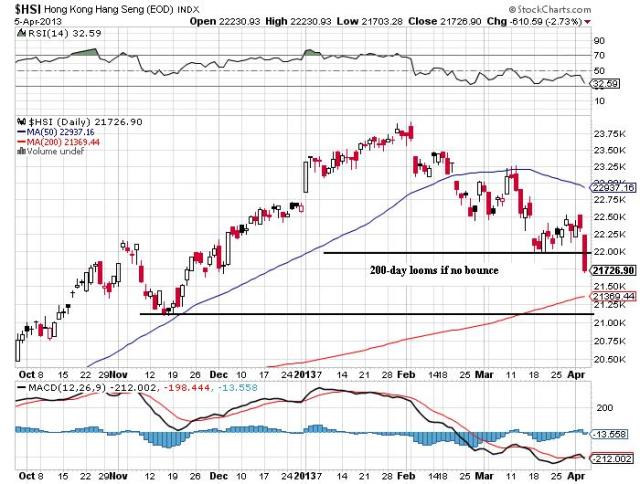
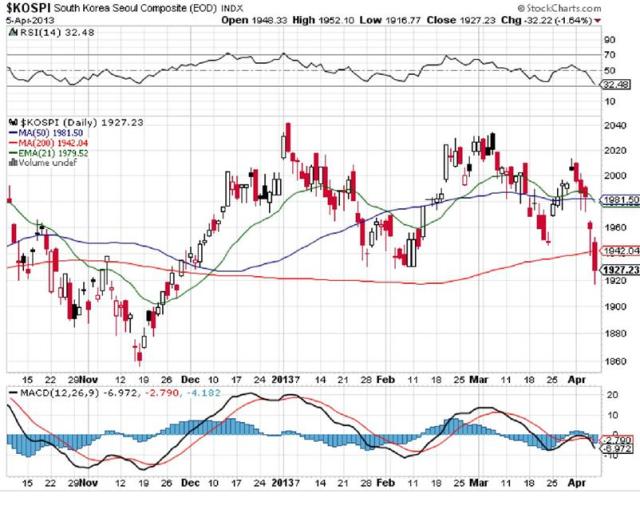
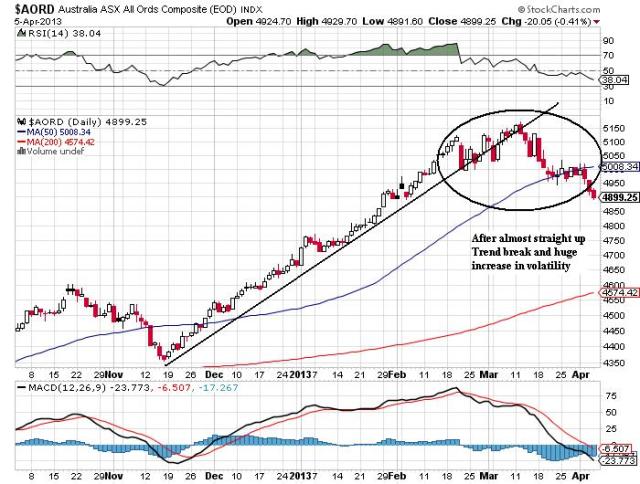
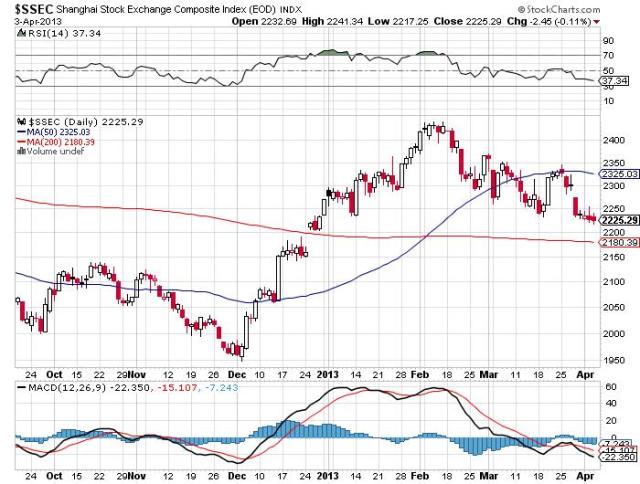
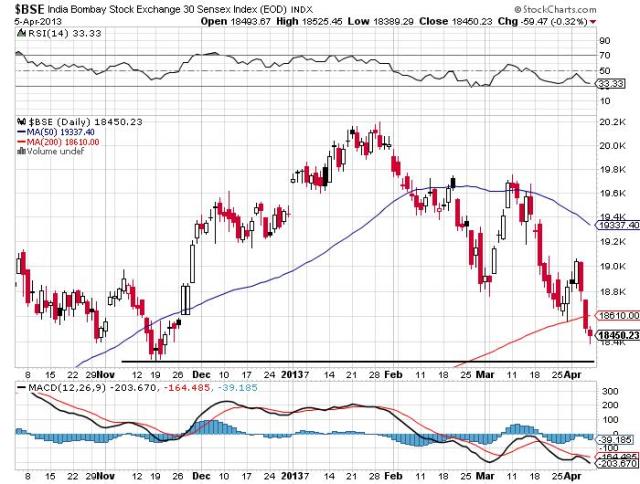
| Posted: 08 Apr 2013 10:30 PM PDT Beyond the Dow, S&P500, and Japanese stocks the major global equity indices have been carving out some fairly ugly charts. It's becoming increasingly difficult to extract market signals as the massive of flood of Bank of Japan money printing begins to flow into the global tributary, which also includes the Fed's quantitative easing. Markets, in our opinion, are going to become incredibly gummed up and exhibit unprecedented and unpredictable behavior throughout the rest of the year. Who would of thought the dollar/yen pair could rally 50 percent from April 1995 to April 1997? The yen carry trade fueled massive flows into the emerging markets, pumped up the U.S. dotcom bubble, and distorted Asian exchange rates, which, some say, contributed to the 1997 Asian financial crisis and 1998 Russian debt default. Buckle up. The next year is going to make Mr. Toad's Wild Ride look like a Merry-Go-Round! By the way, if your weren't watching on Friday sovereign bond yields came in big time. France, for example, tightened 20 bps to the German bund last week. Is the recent collapse in global sovereign yields, including the 10-year Treasury to a 2013 low, signalling global recession and increased risk aversion or central bank quantitative easing gumming up markets and rendering price signals useless? It's tough to make the case that the recent soft patch in the data and one bad employment number can move yields down as much as they have. No wonder corporates are confused and hesitant to expand capacity when they see depression level interest rates and record high stock prices. WTF? Nevertheless, we've assembled a mosaic of some of the ugliest charts in the world. Where markets go from here is anybody's guess. The traditional flight (market) indicators and global compass have been distorted by the global central banks. The wave of liquidity will only get larger before it crests when the Fed changes policy. The key, then, is to pick the spots where to surf the liquidity. Dollar/yen, Japanese equities, and U.S. large cap stocks with mature cash flows seem to be the bonzai pipeline of financial trading for now. We're in uncharted waters, folks. We have our biases to how this all ends – mostly negative — but if anyone thinks they definitively know, avoid them and head for the hills. Let's go to the charts.
~~~ ~~~ ~~~ ~~~ ~~~ ~~~ ~~~ ~~~ ~~~ ~~~ ~~~ ~~~ ~~~ (click here if charts are not observable) |
| Posted: 08 Apr 2013 04:30 PM PDT Matt Drance at Apple Outsider has the smartest take I have read yet on Facebook home. It seems that the Apple Google war — or IOS vs Android — just got a brand new combatant. Here’s Drance:
Discuss . . .
|
| Posted: 08 Apr 2013 01:30 PM PDT My afternoon train reading:
What are you reading?
Overbought/Oversold Markets |
| Structural Employment Problems Posted: 08 Apr 2013 08:30 AM PDT Labor Slack Points to Structural Employment Problem >
Nice chart today from Bloomberg Briefs suggesting that we have structural problems in the labor market post-credit crisis. The income gap based on education levels is well established; there is also a low-wage bias in the economy – we seem to be creating more of the low skill, low wage jobs than we were previously. This substantial labor slack has persisted since the 2007-2009 recession. It appears that some people are making the decision that rather accept low paying jobs or doing “menial” labor, they prefer to not work at all. Hence, the declining labor pool. These changes have potentially large ramifications — in such varied areas as inflation, social security and even retail sales.
|
| Posted: 08 Apr 2013 07:00 AM PDT My morning reads:
What are you reading?
10-Year Treasury Yield Breaks Uptrend |
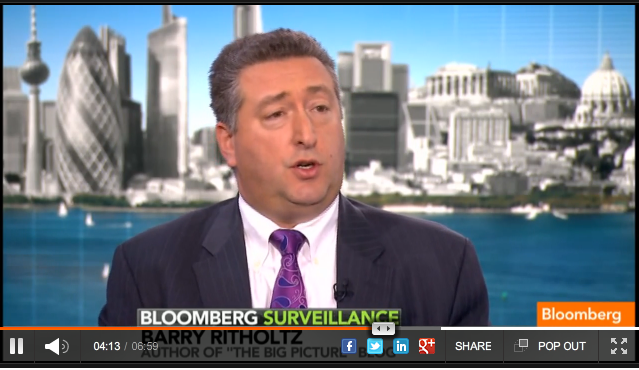
| Ritholtz on U.S. Markets, Budget Negotiations Posted: 08 Apr 2013 06:30 AM PDT Barry Ritholtz, chief executive officer of FusionIQ and author of the “Big Picture” blog, talks about global markets. U.S. corporate earnings and budget negotiations. He speaks with Tom Keene, Scarlet Fu and Sara Eisen on Bloomberg Television’s “Surveillance.” click for video
|
| Posted: 08 Apr 2013 06:15 AM PDT Bail-In vs. Bailout
In the aftermath of the bungled Cyprus affair, we are now observing a major transition underway with regard to bank-deposit safety. In the Eurozone and in Europe generally, the sacredness of an insured deposit was bludgeoned by the finance ministers in their botched attempt to impose a cost on insured deposits in Cyprus. The finance ministers were taken to task decisively by their political constituents. Imagine: it was the parliament of Cyprus that stood between the insured depositors in Eurozone banks and the outrageous attempt to breech the sacred promise that insurance entails. One has to be thankful for the democratic political process that elects parliaments, even in Cyprus. Now we are seeing a different form of attack on depositors. We are transitioning from a system of bank bailouts to "bail-ins." In the bailout approach, banks that fail are resolved through some form of governmental, taxpayer-backed initiative. That is what we mostly have in the US, with the Federal Deposit Insurance Corporation (FDIC) as the resolution entity. The FDIC honors insured depositors' claims. The uninsured deposits become a liability of the resolved banking institution. Those depositors may suffer losses along with shareholders, debt holders, preferred stock holders, and others. That hybrid system includes the attempt to consolidate banking institutions. Most bank failures in the US are resolved through a merger. We see this all the time. On a Friday afternoon at the close of business, the FDIC seizes a bank. The shareholders are wiped out, the books and records of the bank are carefully maintained so that they can be converted, and the new bank or new banking system opens for business on Monday morning. The insured depositors are completely covered, and the transition is nearly seamless. Announcements of this type of activity occur frequently in the US and cause no particular market reaction. In the bail-in situation, on the other hand, uninsured depositors have thrust upon them a new role. They must do credit analysis on the exposure they or their firms have to a particular bank. This requirement causes deposits to gravitate to those banks that are viewed as "fortress banks." Fortress banks are deemed to have sufficient capital, size, and management quality so as to be above and beyond risk as it is perceived by the large depositor. The outcome here is to concentrate large deposits in what are viewed as the strongest banks. The strongest, largest banks are, however, the same banks that regulators express concern over because they are systemically risky. They are systemically risky precisely because they have such a large concentration of banking deposits and services attached to them. Where does this all lead from a market point of view? It seems to us that one thing it will do is change the behavior of depositors. Those depositors that are able to distribute funds across multiple banks at very low cost will do so, because they will thereby raise their level of insurance coverage. Other large depositors who, because their deposits are so large, do not have that ability to diversify their deposit base will have to find different ways to protect themselves. Credit analysis on large banks can now fetch a premium. After all, anyone who can create an early warning about problems in a large bank, so that depositors can move their money, is offering a service that is in greater demand in the bail-in situation. But providing that warning also puts the service provider at great risk, because there are laws, in most jurisdictions, against sharing information that might trigger a run on a bank. Take the example of a large bank with large deposits and a credit-review service concerned about the deterioration of that bank's quality. What is the service provider to do? If they warn their business customer that the bank's circumstances could be weakening, that customer could move very large deposits out of the bank. In doing so, the customer would accelerate the weakening of the bank. With the bail-in approach, we then have the makings of a negative-feedback loop that could render very large banks even more systemically risky than they were under the bailout regime. Another behavior could occur within the bank itself. Banks that are part of the bail-in system know that they have to maintain a higher level of liquidity. They have to demonstrate that they are safe institutions. Their capital and liquidity requirements are raised, and their business model must conform to this new regime. For policy makers such as the central banks, this regime shift also has implications. Are large banks with large deposits less likely to engage in lending at the same ratios and in the same capacities as they did when they were subject to bailout rather than bail-in? Does bail-in reduce the money-multiplier attributable to reserves and excess reserves? If it does, then a central bank policy that is expanding excess reserves might not be robust enough. Remember, creating a credit mechanism by which reserves in a system are multiplied 10 times means that a reduction in the money multiplier will have a 10-fold impact on the eventual economic outcome. At Cumberland, in thinking about bail-in vs. bailout, we see the following issues in portfolio management. First, credit analysis is important. Risk needs to be identified and evaluated with the highest standard of integrity. In a private firm, one can give counsel to banking clients and portfolio-management clients and act to sell securities in which there may be very early warning signs of credit deterioration. From a portfolio-management point of view, one should not wait around. Our approach is to run quickly from credit deterioration and hope it does not get worse. Let someone else take that risk, not our client. The second issue is how to deal with exposure of investments to the financial sector and banks. Clearly, a transition from bailout to bail-in will mean that some banks will do much better than others, and very large banks may do much better than smaller ones. Redeployment of investments within the financial sector is an issue that has to be reexamined. Lastly, jurisdictions become important. New Zealand, which is moving away from bailout to a complete system of bail-in, is an example of a place where banking has become more dangerous. The government of New Zealand has essentially declared that insurance is too costly and cannot be accurately priced. It has stated it will resolve banking difficulties with the help of larger depositors. In Canada there is now some discussion of the introduction and development of bail-in. Canada has a fairly clean history when it comes to bank capital and bank supervision. Is this about to change? In the Eurozone and Europe generally we have had this discussion about bail-in vs. bailout for months. Clearly, the proponents of bail-in are growing stronger in Europe, and they are going to affect the characteristics of banks and central banks and the behavior of the finance ministers who determine bank-resolution policy. Other places in the world where regulation and supervision are strong and dependable, such as Singapore, rise in terms of desirability. Governance of financial systems is paramount. Singapore is a place where governance is very high and perpetrators of bad behavior are punished severely. Perhaps due to that standard, Singapore does not suffer the financial incidents that we see elsewhere in the world, including the US. The Bob Dylan song says, "The times they are a changin'." Dylan was probably not thinking about banks and financial assets when he wrote the words, but they certainly do apply today. ~~~ David R. Kotok, Chairman and Chief Investment Officer |
| Media Appearance: Bloomberg TV Surveillance Posted: 08 Apr 2013 04:00 AM PDT Bloomberg Surveillance
I am going to be on Bloomberg TV/Radio this morning with Tom Keene and Sara Eisen from 7:00 – 8:00am. Also scheduled to be on is economist Josh Barro, where we will be discussing the usual subjects. The live TV streams here.
|
| How High Rollers Stash Their Cash Overseas Posted: 08 Apr 2013 03:00 AM PDT And yes, I am being somewhat tongue-in-cheek throughout:
|
| Political Intelligence, Insider Trading and Materiality Posted: 08 Apr 2013 02:30 AM PDT Insider trading still allowed for Congress critters and government employees: |
| Majority of American Support Legalizing Pot Use Posted: 08 Apr 2013 02:00 AM PDT For the first time in more than four decades, a majority of Americans support legalizing the use of marijuana, according to the Pew Research Center. Alan Murray, Pew Research Center president, joins The News Hub.
|





| You are subscribed to email updates from The Big Picture To stop receiving these emails, you may unsubscribe now. | Email delivery powered by Google |
| Google Inc., 20 West Kinzie, Chicago IL USA 60610 | |



0 comments:
Post a Comment