.

{2} GoogleTranslate (H)

English French German Spanish Italian Dutch Russian Portuguese Japanese Korean Arabic Chinese Simplified

Our New Stuff

{3} up AdBrite + eToro

Your Ad Here

Friday, July 12, 2013

The Big Picture

The Big Picture


Two Sentences that Explain the Crisis and How Easy it Was to Avoid

Posted: 12 Jul 2013 02:00 AM PDT

Two Sentences that Explain the Crisis and How Easy it Was to Avoid
William K. Black
July 9, 2013


Everyone should read and understand the implications of these two sentences from the 2011 report of the Financial Crisis Inquiry Commission (FCIC).

"From 2000 to 2007, [appraisers] ultimately delivered to Washington officials a petition; signed by 11,000 appraisers…it charged that lenders were pressuring appraisers to place artificially high prices on properties. According to the petition, lenders were 'blacklisting honest appraisers' and instead assigning business only to appraisers who would hit the desired price targets" (FCIC 2011: 18).

Those two sentences tell us more about the crisis' cause, and how easy it was to prevent, than all the books published about the crisis – combined.  Here are ten key implications.

  1. The lenders are extorting the appraisers to inflate the appraisal.
  2. No honest lender would inflate an appraisal, the lender's great protection from loss.
  3. The lenders were overwhelmingly the source of mortgage fraud.
  4. The lenders were not only fraudulent, but following the "recipe" for "accounting control fraud."  They were deliberately making enormous numbers of bad loans.
  5. This had to be done with the knowledge of the bank CEOs.  One of the wonderful things about being a CEO is the ability to communicate to employees and agents without leaving an incriminating paper trail.  Sophisticated CEOs running large accounting control frauds can use compensation and business and personnel decisions to send three key messages:  (a) you will make a lot of money if you report exceptional results, (b) I don't care whether the reports are true or the results of fraud, and (c) if you do not report exceptional results or if you block loans from being approved by insisting on effective underwriting and honest appraisals you will suffer and your efforts will be overruled.  The appraisers' petition was done over the course of seven years.  Even if we assumed, contrary to fact, that the CEO did not originate the plan to inflate the appraisals the CEOs knew that they were making enormous numbers of fraudulent "liar's" loans with fraudulent appraisals.  It is easy for a CEO to stop pervasive fraudulent lending and appraisals.  Where appraisal fraud was common it was done with the CEO's support.
  6. Fraudulent loan origination creates a "Gresham's" dynamic (bad ethics drives good ethics from the marketplace or profession because cheaters prosper) will be created among lenders.   The CEO of lenders that follow the fraud "recipe" can count on three "sure things."  The lender will report exceptional income in the near term.  The controlling officers will promptly be made wealthy by modern executive compensation.  The lender will (later) suffer severe losses.  The controlling officers of honest lenders will report far lower income and receive far less compensation.  The CFO will rightly fear losing his job.  This turns market forces perverse and makes accounting control fraud surge.
  7. The Gresham's dynamic and the fraud "recipe" cause an enormous expansion in bad loans.  This can hyper-inflate a financial bubble.  As a bubble grows the fraud recipe becomes even more wealth-maximizing for unethical senior officers.  The trade has a saying that explains why bubbles are so criminogenic – "a rolling loan gathers no loss."  The fraudulent lenders refinance their bad loans and report (fictional) profits.
  8. Once fraudulent loans are fraudulently originated they cannot be cured.  There is no loan exorcist.  All subsequent sales of the mortgage (or cash flows from the mortgage) in the secondary market will require additional fraud and will transfer bad assets with a greatly increased risk of loss.  (Not every fraudulently originated mortgage loan will default and suffer loss, but a portfolio of such loans has such a greatly increased risk of loss that the portfolio will have a negative expected value.)  Liar's loans do not "become" bad; they are endemically fraudulent when they are originated and mortgage loans made on the basis of deliberately inflated appraisals are always fraudulent.  Only accounting fraud, failing to provide appropriate allowance for loan and lease losses (ALLL) at the time the loans are made, can produce the fictional income that drives the fraud scheme.
  9. The Gresham's dynamic that causes us the most wrenching pain as regulators is the one that the officers controlling the fraudulent lenders deliberately created among appraisers.  They created the blacklist to extort the most honest appraisers.  The fraudulent lenders, of course, do not have to successfully suborn every appraiser or even most appraisers in order to optimize their frauds.  A fairly small minority of suborned appraisers can provide all the inflated appraisals required.  The honest appraisers will lose a great deal of income and many will be driven out of the profession by the lost income or because the degradation of their profession disgusts them.  These non-wealthy professionals, the ethical appraisers, were injured by the fraudulent CEOs because the appraisers knowingly chose honesty over maximizing their incomes.  The CEOs of the lenders and the officers and agents they induced (by a combination of de facto bribery and extortion) to assist their frauds chose to maximize their incomes through fraud.
  10. The U.S. government did nothing in response to the appraisers' petition warning about the black list of honest appraisers.  The federal banking agencies' anti-regulatory leaders' hatred of effective regulators caused them to do nothing in response to the appraisers' petition.  The anti-regulators did nothing for years, as the number of appraisers signing the petition grew by the thousands and surveys and investigations confirmed their warnings about lenders extorting appraisers to inflate appraisals.  The appraisers put the anti-regulators on notice about the fraud epidemic for seven years beginning in 2000.

How Much Is the US Government Spying On Americans?

Posted: 11 Jul 2013 10:30 PM PDT

Anyone Who Says the Government Only Spies On Potential Bad Guys Is WRONG

Even now – after all of the revelations by Edward Snowden and other whistleblowers – spying apologists say that the reports are "exaggerated" or "overblown", and that the government only spies on potential bad guys.

In reality, the government is spying on everyone's digital and old-fashioned communications.

For example, the government is photographing the outside information on every piece of snail mail.

The government is spying on you through your phone … and may even remotely turn on your camera and microphone when your phone is off.

As one example, the NSA has inserted its code into Android's operating system … bugging three-quarters of the world's smartphones.  Google – or the NSA – can remotely turn on your phone's camera and recorder at any time.

Cell towers track where your phone is at any moment, and the major cell carriers, including Verizon and AT&T, responded to at least 1.3 million law enforcement requests for cell phone locations and other data in 2011. (And – given that your smartphone routinely sends your location information back to Apple or Google – it would be child's play for the government to track your location that way.) Your iPhone, or other brand of smartphone is spying on virtually everything you do (ProPublica notes: "That's No Phone. That's My Tracker").

The government might be spying on you through your computer's webcam or microphone. The government might also be spying on you through the "smart meter" on your own home.

The FBI wants a backdoor to all software.  But leading European computer publication Heise said in 1999 that the NSA had already built a backdoor into all Windows software.

And Microsoft has long worked hand-in-hand with the NSA and FBI so that encryption doesn't block the government's ability to spy on users of Skype, Outlook, Hotmail and other Microsoft services.

(And leading security experts say that the NSA might have put a backdoor in all encryption standards years ago. … meaning that the NSA can easily hack into encrypted communications.)

"Black boxes" are currently installed in between 90% and 96% of all new cars. And starting in 2014, all new cars will include black boxes that can track your location.

License plate readers mounted on police cars allow police to gather millions of records on drivers … including photos of them in their cars.

A security expert and former NSA software developer says that hackers can access private surveillance cameras. Given that the NSA apparently already monitors public cameras using facial recognition software, and that the FBI is building a system which will track "public and private surveillance cameras around the country", we can assume that government agencies might already be hacking into private surveillance cameras.

The CIA wants to spy on you through your dishwasher and other "smart" appliances. As Slate notes:

Watch out: the CIA may soon be spying on you—through your beloved, intelligent household appliances, according to Wired.

In early March, at a meeting for the CIA's venture capital firm In-Q-Tel, CIA Director David Petraeus reportedly noted that "smart appliances" connected to the Internet could someday be used by the CIA to track individuals. If your grocery-list-generating refrigerator knows when you're home, the CIA could, too, by using geo-location data from your wired appliances, according to SmartPlanet.

"The current 'Internet of PCs' will move, of course, toward an 'Internet of Things'—of devices of all types—50 to 100 billion of which will be connected to the Internet by 2020," Petraeus said in his speech. He continued:

Items of interest will be located, identified, monitored, and remotely controlled through technologies such as radio-frequency identification, sensor networks, tiny embedded servers, and energy harvesters—all connected to the next-generation Internet using abundant, low cost, and high-power computing—the latter now going to cloud computing, in many areas greater and greater supercomputing, and, ultimately, heading to quantum computing.

***

ITworld's Kevin Fogarty thinks that J. Edgar Hoover, were he still with us, would "die of jealousy" upon hearing about the tools soon to be at Petraeus' disposal.

And they're probably bluffing and exaggerating, but the Department of Homeland Security claims they will soon be able to know your adrenaline level, what you ate for breakfast and what you're thinking … from 164 feet away. (In addition, people will probably soon be swallowing tracking devices for medical purposes)

The government is allegedly scanning prisoners' brains without their consent at Guantanamo. In the near future, brain scanners may be able to literally read our thoughts (and see this).

The government is currently testing systems for use in public spaces which can screen for "pre-crime". As Nature reports:

Like a lie detector, FAST measures a variety of physiological indicators, ranging from heart rate to the steadiness of a person's gaze, to judge a subject's state of mind. But there are major differences from the polygraph. FAST relies on non-contact sensors, so it can measure indicators as someone walks through a corridor at an airport, and it does not depend on active questioning of the subject.

CBS News points out:

FAST is designed to track and monitor, among other inputs, body movements, voice pitch changes, prosody changes (alterations in the rhythm and intonation of speech), eye movements, body heat changes, and breathing patterns. Occupation and age are also considered. A government source told CNET that blink rate and pupil variation are measured too.

A field test of FAST has been conducted in at least one undisclosed location in the northeast. "It is not an airport, but it is a large venue that is a suitable substitute for an operational setting," DHS spokesman John Verrico told Nature.com in May.

Although DHS has publicly suggested that FAST could be used at airport checkpoints–the Transportation Security Administration is part of the department, after all–the government appears to have grander ambitions. One internal DHS document (PDF) also obtained by EPIC through the Freedom of Information Act says a mobile version of FAST "could be used at security checkpoints such as border crossings or at large public events such as sporting events or conventions."

The risk of false positives is very real. As Computer World notes:

Tom Ormerod, a psychologist in the Investigative Expertise Unit at Lancaster University, UK, told Nature, "Even having an iris scan or fingerprint read at immigration is enough to raise the heart rate of most legitimate travelers." Other critics have been concerned about "false positives." For example, some travelers might have some of the physical responses that are supposedly signs of mal-intent if they were about to be groped by TSA agents in airport security.

Various "pre-crime" sensing devices have already been deployed in public spaces in the U.S.

The government has also worked on artificial intelligence for "pre-crime" detection on the Web. And given that programs which can figure out your emotions are being developed using your webcam, every change in facial expression could be tracked.

According to the NSA's former director of global digital data – William Binney – the NSA's new data storage center in Utah will have so much storage capacity that:

"They would have plenty of space … to store at least something on the order of 100 years worth of the worldwide communications, phones and emails and stuff like that," Binney asserts, "and then have plenty of space left over to do any kind of parallel processing to try to break codes."

***

[But the NSA isn't stopping there.] Despite its capacity, the Utah center does not satisfy NSA's data demands. Last month, the agency broke ground on its next data farm at its headquarters at Ft. Meade, Md. But that facility will be only two-thirds the size of the mega-complex in Utah.

The NSA is building next-generation quantum computers to process all of the data.

NBC News reports:

NBC News has learned that under the post-9/11 Patriot Act, the government has been collecting records on every phone call made in the U.S.

This includes metadata … which can tell the government a lot about you. And it also includes content.

The documents leaked by Edward Snowden to Glenn Greenwald show:

But what we're really talking about here is a localized system that prevents any form of electronic communication from taking place without its being stored and monitored by the National Security Agency.

It doesn't mean that they're listening to every call, it means they're storing every call and have the capability to listen to them at any time, and it does mean that they're collecting millions upon millions upon millions of our phone and email records.

In addition, a government expert told the Washington Post that the government "quite literally can watch your ideas form as you type." A top NSA executive confirmed to Washington's Blog that the NSA is intercepting and storing virtually all digital communications on the Internet.

McClatchy notes:

FBI Director Robert Mueller told a Senate committee on March 30, 2011, that "technological improvements" now enable the bureau "to pull together past emails and future ones as they come in so that it does not require an individualized search."

The administration is building a facility in a valley south of Salt Lake City that will have the capacity to store massive amounts of records – a facility that former agency whistleblowers say has no logical purpose if it's not going to be a vault holding years of phone and Internet data.

***

Thomas Drake, a former NSA senior executive who challenged the data collection for several years, said the agency's intent seems obvious.

"One hundred million phone records?" he asked in an interview. "Why would they want that each and every day? Of course they're storing it."

***

Lending credence to his worries, The Guardian's latest report quoted a document in which Alexander purportedly remarked during a 2008 visit to an NSA intercept station in Britain: "Why can't we collect all the signals all the time?"

***

One former U.S. security consultant, who spoke on condition of anonymity to protect his connections to government agencies, told McClatchy he has seen agency-installed switches across the country that draw data from the cables.

"Do I know they copied it? Yes," said the consultant. "Do I know if they kept it? No."

NSA whistleblower Russel Tice – a key source in the 2005 New York Times report that blew the lid off the Bush administration's use of warrantless wiretapping – says that the content and metadata of all digital communications are being tapped by the NSA.

The NSA not only accesses data directly from the largest internet companies, it also sucks up huge amounts of data straight from undersea cables providing telephone and Internet service to the United States.

After all, the government has secretly interpreted the Patriot Act so that "everything" is deemed relevant … so the government can spy on everyone.

The NSA isn't the only agency which is conducting massive spying.

The Wall Street Journal notes:

The rules now allow the little-known National Counterterrorism Center to … copy entire government databases—flight records, casino-employee lists, the names of Americans hosting foreign-exchange students and many others. The agency has new authority to keep data about innocent U.S. citizens for up to five years, and to analyze it for suspicious patterns of behavior. Previously, both were prohibited. Data about Americans "reasonably believed to constitute terrorism information" may be permanently retained.

The changes also allow databases of U.S. civilian information to be given to foreign governments for analysis of their own. In effect, U.S. and foreign governments would be using the information to look for clues that people might commit future crimes.

"It's breathtaking" in its scope, said a former senior administration official familiar with the White House debate.

Reason notes:

Gazillions. That's the number of times the federal government has spied on Americans since 9/11 through the use of drones, legal search warrants, illegal search warrants, federal agent-written search warrants and just plain government spying. This is according to Sen. Rand Paul, R-Ky., who, when he asked the government to tell him what it was doing to violate our privacy, was given a classified briefing. The senator — one of just a few in the U.S. Senate who believes that the Constitution means what it says — was required by federal law to agree not to reveal what spies and bureaucrats told him during the briefing.

Even if the US government weren't recording all of that data, England's GCHQ spy agency is … and is sharing it with the NSA.

Germany, Australia, Canada and New Zealand are also recording and sharing massive amounts of information with the NSA.

Private contractors can also view all of your data … and the government isn't keeping track of which contractors see your data and which don't. And because background checks regarding some contractors are falsified, it is hard to know the types of people that might have your information.

And top NSA and FBI experts say that the government can retroactively search all of the collected information on someone since 9/11 if they suspect someone of wrongdoing … or want to frame him.

The American government is in fact collecting and storing virtually every phone call, purchases, email, text message, internet searches, social media communications, health information, employment history, travel and student records, and virtually all other information of every American.

The Wall Street Journal reported that the NSA spies on Americans' credit card transactions. Many other government agencies track your credit card purchases as well.

As Washington Monthly noted in 2004, Congress chopped off the head of the Total Information Awareness program … but the program returned as a many-headed hydra:

A program can survive even when the media, the public, and most of Congress wants it killed. It turns out that, while the language in the bill shutting down TIA was clear, a new line had been inserted during conference—no one knew by whom—allowing "certain processing, analysis, and collaboration tools" to continue.

….Thanks to the Central Intelligence Agency and the National Security Agency, which had lobbied for the provision, TIA didn't die—it metastasized. As the AP reported in February [of 2004], the new language simply outsourced many TIA programs to other intelligence offices and buried them in the so-called "black budget." What's more, today, several agencies are pursuing data mining projects independent of TIA, including the Department of Homeland Security, the Justice Department, the CIA, the Transportation Security Administration, and NASA….Even with TIA ostensibly shut down, many of the private contractors who worked on the program can continue their research with few controls.

Senators Wyden and Udall – both on the Senate Intelligence Committee, with access to all of the top-secret information about the government's spying programs – write:

Section 215 of the Patriot Act can be used to collect any type of records whatsoever … including information on credit card purchases, medical records, library records, firearm sales records, financial information and a range of other sensitive subjects.

In fact, all U.S. intelligence agencies – including the CIA and NSA – are going to spy on Americans' finances. The IRS will be spying on Americans' shopping records, travel, social interactions, health records and files from other government investigators.

The government is flying drones over the American homeland to spy on us. Indeed, the head of the FBI told Congress that drones are used for domestic surveillance … and that there are no rules in place governing spying on Americans with drones.

Senator Rand Paul correctly notes:

The domestic use of drones to spy on Americans clearly violates the Fourth Amendment and limits our rights to personal privacy.

Emptywheel notes in a post entitled "The OTHER Assault on the Fourth Amendment in the NDAA? Drones at Your Airport?":

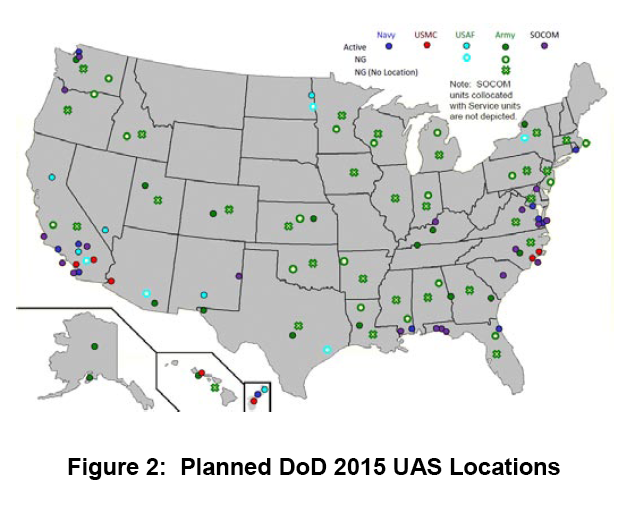
http://www.emptywheel.net/wp-content/uploads/2012/01/Picture-7.png

***

As the map above makes clear–taken from this 2010 report–DOD [the Department of Defense] plans to have drones all over the country by 2015.

Many police departments are also using drones to spy on us. As the Hill reported:

At least 13 state and local police agencies around the country have used drones in the field or in training, according to the Association for Unmanned Vehicle Systems International, an industry trade group. The Federal Aviation Administration has predicted that by the end of the decade, 30,000 commercial and government drones could be flying over U.S. skies.

***

"Drones should only be used if subject to a powerful framework that regulates their use in order to avoid abuse and invasions of privacy," Chris Calabrese, a legislative counsel for the American Civil Liberties Union, said during a congressional forum in Texas last month.

He argued police should only fly drones over private property if they have a warrant, information collected with drones should be promptly destroyed when it's no longer needed and domestic drones should not carry any weapons.

He argued that drones pose a more serious threat to privacy than helicopters because they are cheaper to use and can hover in the sky for longer periods of time.

A congressional report earlier this year predicted that drones could soon be equipped with technologies to identify faces or track people based on their height, age, gender and skin color.

The military is paying for the development of drones with facial recognition software which "remember" people's faces … and read "malintent".

Moreover, Wired reports:

Transit authorities in cities across the country are quietly installing microphone-enabled surveillance systems on public buses that would give them the ability to record and store private conversations….

The systems are being installed in San Francisco, Baltimore, and other cities with funding from the Department of Homeland Security in some cases ….

The IP audio-video systems can be accessed remotely via a built-in web server (.pdf), and can be combined with GPS data to track the movement of buses and passengers throughout the city.

***

The systems use cables or WiFi to pair audio conversations with camera images in order to produce synchronous recordings. Audio and video can be monitored in real-time, but are also stored onboard in blackbox-like devices, generally for 30 days, for later retrieval. Four to six cameras with mics are generally installed throughout a bus, including one near the driver and one on the exterior of the bus.

***

Privacy and security expert Ashkan Soltani told the Daily that the audio could easily be coupled with facial recognition systems or audio recognition technology to identify passengers caught on the recordings.

RT notes:

Street lights that can spy installed in some American cities

America welcomes a new brand of smart street lightning systems: energy-efficient, long-lasting, complete with LED screens to show ads. They can also spy on citizens in a way George Orwell would not have imagined in his worst nightmare.

­With a price tag of $3,000+ apiece, according to an ABC report, the street lights are now being rolled out in Detroit, Chicago and Pittsburgh, and may soon mushroom all across the country.

Part of the Intellistreets systems made by the company Illuminating Concepts, they have a number of "homeland security applications" attached.

Each has a microprocessor "essentially similar to an iPhone," capable of wireless communication. Each can capture images and count people for the police through a digital camera, record conversations of passers-by and even give voice commands thanks to a built-in speaker.

Ron Harwood, president and founder of Illuminating Concepts, says he eyed the creation of such a system after the 9/11 terrorist attacks and the Hurricane Katrina disaster. He is "working with Homeland Security" to deliver his dream of making people "more informed and safer."

The TSA has moved way past airports, trains and sports stadiums, and is deploying mobile scanners to spy on people all over the place. This means that traveling within the United States is no longer a private affair.

You might also have seen the news this week that the Department of Homeland Security is going to continue to allow searches of laptops and phones based upon "hunches".

What's that about?

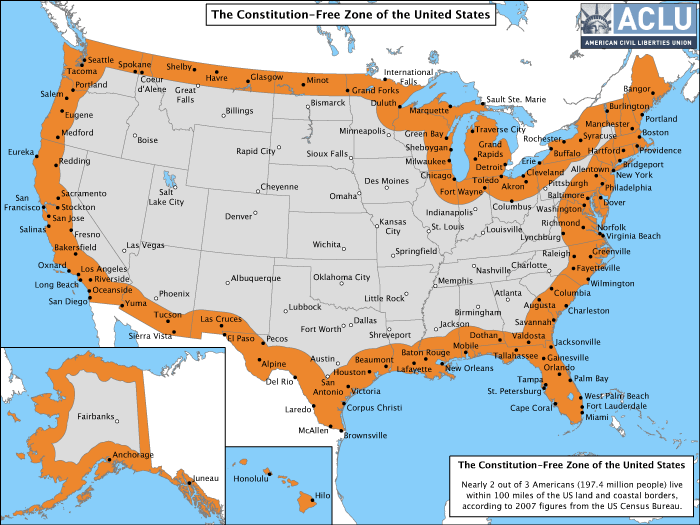
The ACLU published a map in 2006 showing that nearly two-thirds of the American public – 197.4 million people – live within a "constitution-free zone" within 100 miles of land and coastal borders:

The ACLU explained:

  • Normally under the Fourth Amendment of the U.S. Constitution, the American people are not generally subject to random and arbitrary stops and searches.
  • The border, however, has always been an exception. There, the longstanding view is that the normal rules do not apply. For example the authorities do not need a warrant or probable cause to conduct a "routine search."
  • But what is "the border"? According to the government, it is a 100-mile wide strip that wraps around the "external boundary" of the United States.
  • As a result of this claimed authority, individuals who are far away from the border, American citizens traveling from one place in America to another, are being stopped and harassed in ways that our Constitution does not permit.
  • Border Patrol has been setting up checkpoints inland — on highways in states such as California, Texas and Arizona, and at ferry terminals in Washington State. Typically, the agents ask drivers and passengers about their citizenship. Unfortunately, our courts so far have permitted these kinds of checkpoints – legally speaking, they are "administrative" stops that are permitted only for the specific purpose of protecting the nation's borders. They cannot become general drug-search or other law enforcement efforts.
  • However, these stops by Border Patrol agents are not remaining confined to that border security purpose. On the roads of California and elsewhere in the nation – places far removed from the actual border – agents are stopping, interrogating, and searching Americans on an everyday basis with absolutely no suspicion of wrongdoing.
  • The bottom line is that the extraordinary authorities that the government possesses at the border are spilling into regular American streets.

Computer World reports:

Border agents don't need probable cause and they don't need a stinking warrant since they don't need to prove any reasonable suspicion first. Nor, sadly, do two out of three people have First Amendment protection; it is as if DHS has voided those Constitutional amendments and protections they provide to nearly 200 million Americans.

***

Don't be silly by thinking this means only if you are physically trying to cross the international border. As we saw when discussing the DEA using license plate readers and data-mining to track Americans movements, the U.S. "border" stretches out 100 miles beyond the true border. Godfather Politics added:

But wait, it gets even better! If you live anywhere in Connecticut, Delaware, Florida, Hawaii, Maine, Massachusetts, Michigan, New Hampshire, New Jersey or Rhode Island, DHS says the search zones encompass the entire state.

Immigrations and Customs Enforcement (ICE) and Customs and Border Protection (CBP) have a "longstanding constitutional and statutory authority permitting suspicionless and warrantless searches of merchandise at the border and its functional equivalent." This applies to electronic devices, according to the recent CLCR "Border Searches of Electronic Devices" executive summary [PDF]:

Fourth Amendment

The overall authority to conduct border searches without suspicion or warrant is clear and longstanding, and courts have not treated searches of electronic devices any differently than searches of other objects. We conclude that CBP's and ICE's current border search policies comply with the Fourth Amendment. We also conclude that imposing a requirement that officers have reasonable suspicion in order to conduct a border search of an electronic device would be operationally harmful without concomitant civil rights/civil liberties benefits. However, we do think that recording more information about why searches are performed would help managers and leadership supervise the use of border search authority, and this is what we recommended; CBP has agreed and has implemented this change beginning in FY2012.***

The ACLU said, Wait one darn minute! Hello, what happened to the Constitution? Where is the rest of CLCR report on the "policy of combing through and sometimes confiscating travelers' laptops, cell phones, and other electronic devices—even when there is no suspicion of wrongdoing?" DHS maintains it is not violating our constitutional rights, so the ACLU said:

If it's true that our rights are safe and that DHS is doing all the things it needs to do to safeguard them, then why won't it show us the results of its assessment? And why would it be legitimate to keep a report about the impact of a policy on the public's rights hidden from the very public being affected?

***

As Christian Post wrote, "Your constitutional rights have been repealed in ten states. No, this isn't a joke. It is not exaggeration or hyperbole. If you are in ten states in the United States, your some of your rights guaranteed by the Bill of Rights have been made null and void."

The ACLU filed a Freedom of Information Act request for the entire DHS report about suspicionless and warrantless "border" searches of electronic devices. ACLU attorney Catherine Crump said "We hope to establish that the Department of Homeland Security can't simply assert that its practices are legitimate without showing us the evidence, and to make it clear that the government's own analyses of how our fundamental rights apply to new technologies should be openly accessible to the public for review and debate."

Meanwhile, the EFF has tips to protect yourself and your devices against border searches. If you think you know all about it, then you might try testing your knowledge with a defending privacy at the U.S. border quiz.

Wired pointed out in 2008 that the courts have routinely upheld such constitution-free zones:

Federal agents at the border do not need any reason to search through travelers' laptops, cell phones or digital cameras for evidence of crimes, a federal appeals court ruled Monday, extending the government's power to look through belongings like suitcases at the border to electronics.

***

The 9th U.S. Circuit Court of Appeals sided with the government, finding that the so-called border exception to the Fourth Amendment's prohibition on unreasonable searches applied not just to suitcases and papers, but also to electronics.

***

Travelers should be aware that anything on their mobile devices can be searched by government agents, who may also seize the devices and keep them for weeks or months. When in doubt, think about whether online storage or encryption might be tools you should use to prevent the feds from rummaging through your journal, your company's confidential business plans or naked pictures of you and your-of-age partner in adult fun.

Do you still believe that the government is only spying on bad guys in "targeted" searches?

Mind Over Mechanics

Posted: 11 Jul 2013 05:00 PM PDT

The future is here:

In a jaw-dropping feat of engineering, electronics turn a person’s thoughts into commands for a robot. Using a brain-computer interface technology pioneered by University of Minnesota biomedical engineering professor Bin He, several young people have learned to use their thoughts to steer a flying robot around a gym, making it turn, rise, dip, and even sail through a ring.

The technology may someday allow people robbed of speech and mobility by neurodegenerative diseases to regain function by controlling artificial limbs, wheelchairs, or other devices. And it’s completely noninvasive: Brain waves (EEG) are picked up by the electrodes of an EEG cap on the scalp, not a chip implanted in the brain.

A report on the technology has been published in the Journal of Neural Engineering: http://iopscience.iop.org/1741-2552/10/4/046003/article

10 Thursday PM Reads

Posted: 11 Jul 2013 01:30 PM PDT

My afternoon train reading:

• You’re Doing It Wrong: 4 Mistakes That Make Everyone a Bad Investor (Fool) see also Lessons Learned From Well-Behaved Investors (Bucks)
• Markets: The investor's dilemma (FT.com)
• One Difference Between a Great Recession and a Great Depression: Jobs (Harvard Business Review)
• Why Hedge Funds’ Glory Days May Be Gone for Good (Businessweek) see also Paulson's gold fund loses 65% so far this year. Wow. (MarketWatch)
• Where did the Reach for Yield Go? (Synthenomics)
WTF!? Corporate Insiders Shift From ‘Buy’ to ‘Sell’ as Bankruptcy Nears (WSJ)
• The Insurance Industry's Liberal Turn (Daily Beast)
• America’s Next Top Super Berry? (WSJ) see also Farming Got Hip In Iran Some 12,000 Years Ago, Ancient Seeds Reveal (KDLG)
• How Clothes Should Fit (How Clothes Should Fit)
• Who Is Howard Stern? Rolling Stone’s 1990 Feature (Rolling Stone)

What are you reading?


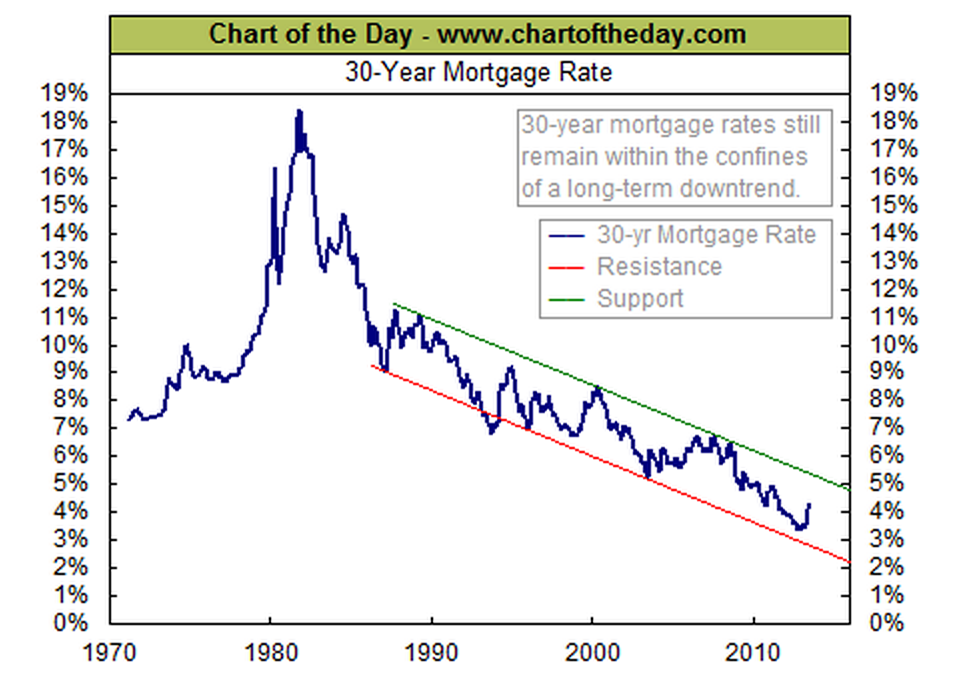
30 Year Mortgage Rate
Chart

P&I 2013: Largest Money Managers

Posted: 11 Jul 2013 11:30 AM PDT

Pensions & Investments Magazine's 2013 Special Report on AUM rankings are strangely fascinating


TOP MONEY MANAGERS
(Total worldwide assets under management)
Firm $ Millions
1. BlackRock    $3,791,588
2. Vanguard Group   $2,215,216
3. State Street Global Advisors  $2,086,200
4. Fidelity Investments $1,888,296
5. PIMCO $1,624,346
6. J.P. Morgan Asset Management $1,426,402
7. BNY Mellon Asset Management $1,385,863
8. Deutsche Asset & Wealth Management $1,244,439
9. Prudential Financial $1,060,250
10. Capital Research & Management $1,045,571
11. Amundi  $959,790
12. Goldman Sachs Group $854,000
13. Franklin Templeton Investments $781,769
14. Northern Trust $758,943
15. Wellington Management  $757,729


TOP INSTITUTIONAL MONEY MANAGERS
(Total worldwide institutional assets under management)
Firm $ Millions
1. BlackRock Inc. 2,593,089
2. State Street Global Advisors 1,671,477
3. PIMCO 1,427,957
4. Vanguard Group Inc. 1,331,066
5. BNY Mellon Asset Management 1,253,701
6. Fidelity Investments 971,282
7. J.P. Morgan Asset Management 791,624
8. Prudential Financial 790,860
9. Amundi 787,942
10. Wellington Management Co. LLP 757,356
11. AXA Investment Managers 636,342
12 Legal & General Investment Mgmt. 634,976
13. Capital Research & Management Co. 579,867
14. Northern Trust 561,158
15. Legg Mason Inc. 553,176


PDF


Advance Declines Break Out to New Highs

Posted: 11 Jul 2013 09:30 AM PDT

Click to enlarge
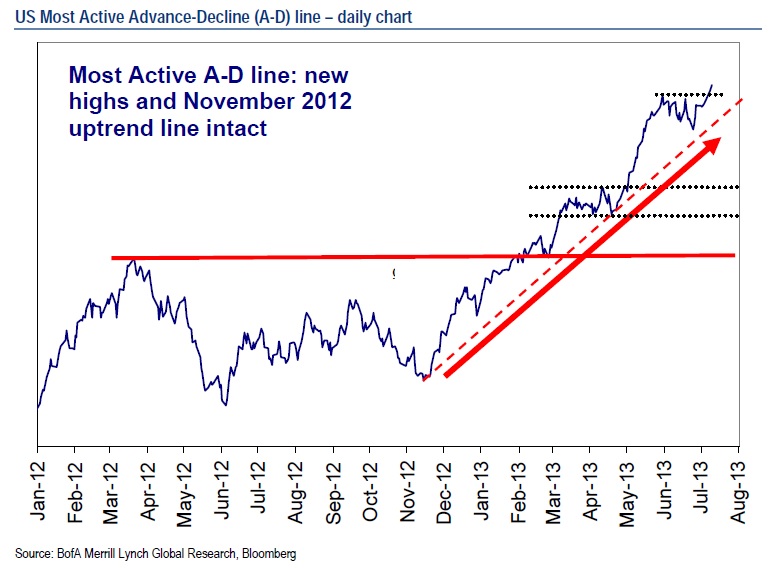
Chart


From Merrill Lynch’s technical team:

The Most Active A-D line breaks to new highs
The Most Active Advance-Decline (A-D) line is a market breadth indicator of the daily top 15 most active stocks by share volume in the US. These stocks are generally more liquid with larger market caps where the trading is dominated by institutional investors. The Most Active A-D line has moved to new highs, which is bullish for the US equity market. This is similar to the breakout for the Most Active A-D line in late April (Chart Talk, 30 April 2013) and confirms the strength in the stocks only A-D lines (Chart Talk, 10 July 2013).

In addition, unlike the S&P 500, the Most Active A-D line did not break the uptrend line from last November. Strong market breadth supports the case for a continued US equity market rally. See Market Analysis Comment, 09 July 2013 and Chart Talk, 10 July 2013 for more details and key technical levels for the S&P 500.


Source:
Most Active A-D line: new highs & uptrend line from Nov intact
Stephen Suttmeier and Jue Xiong
Bank of America Merrill Lynch, July 11, 2013

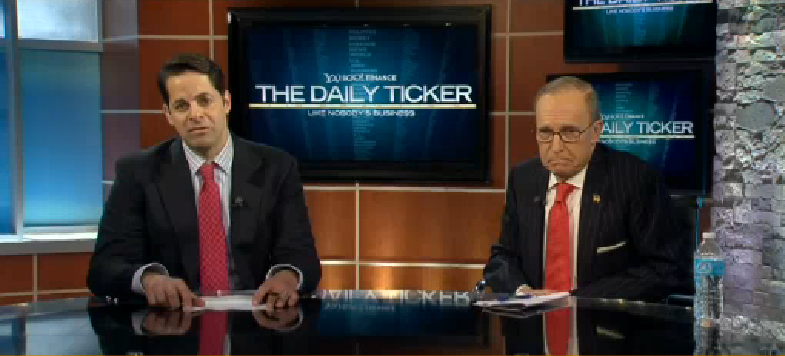
Kudlow: Bernanke Was Right!

Posted: 11 Jul 2013 08:30 AM PDT

Click for video
Video
Source: Yahoo Finance

10 Thursday AM Reads

Posted: 11 Jul 2013 07:00 AM PDT

My morning reads:

• Ignore the experts and switch off your TV (MoneyWeek)
• Gold Loses Its Luster (Daily Beast) but see Gold Nears $1,300 After Fed's Bernanke Backs Sustained Stimulus (Bloomberg)
• Move Over Economists; Time to Give Physicists a Turn (Moneybeat)
• How Long Can an Economist Fail to Mark His Theories to Market? (Brad DeLong)
• Fed is deeply divided over winding down stimulus program (Washington Post) see also Rate Surge Catches Banks Off Guard (WSJ)
• How to Tell if You Have a Lousy 401(k) Plan (Yahoo Finance)
• Standard & Poor's Running Ads That Appear To Undermine Its Legal Case With Regulators (BuzzFeed)
• Search traffic vs. social traffic — It's not equal (Pandodaily)
• The Psychology Behind Freemium (priceonomics)
• 40 Signs You Are a BuzzFeed Writer Running Out of List Ideas (Vanity Fair)

What are you reading?


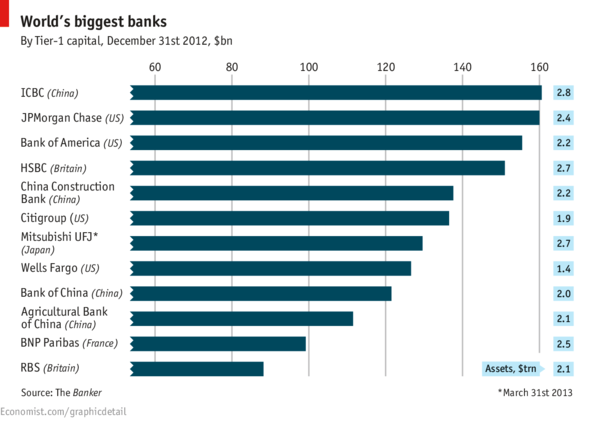
Banking behemoths
Chart
Source: Economist

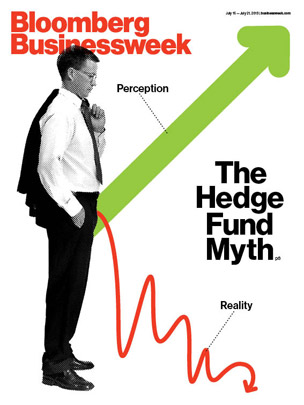
Hedge Fund Dysfunction Syndrome

Posted: 11 Jul 2013 03:30 AM PDT


Ron Burgundy says: Stay classy, Businessweek!


BBW-HFMyth-Cover-29-wobarcode-7.15-1


Source:
Why Hedge Funds’ Glory Days May Be Gone for Good
By Sheelah Kolhatkar
BusinessWeek, July 11, 2013
http://www.businessweek.com/articles/2013-07-11/why-hedge-funds-glory-days-may-be-gone-for-good

The Fraud of the Prince of Poyais

Posted: 11 Jul 2013 03:00 AM PDT

Dr. Bryan Taylor is Chief Economist of Global Financial Data.

~~~

Charles Ponzi built the original Pyramid scheme; Michael Milken sold junk bonds; Nick Leeson was the rogue trader who broke Barings Bank; and Bernie Madoff bilked investors with trading that did not exist. All of these men were un-ambitious amateurs when compared to Gregor McGregor, the financial fraudster to top all fraudsters.

Gregor McGregor was a very selfish swindler who returned nothing to any of his investors. At least Bernie Madoff and Charles Ponzi took some of the money they received from investors and returned it to perpetuate their Ponzi scheme, but Gregor McGregor kept all the money for himself. He also granted himself the title of Sir, as well as, Grand Cazique (Prince) of Poyais indicating his extreme self-confidence and narcicism.

It is one thing to convince investors to invest money in a company that
doesn't produce anything, but it takes real skill to convince investors to invest in a country that doesn't exist. How did he do it?

The South American Bubble

GraphicDuring the Napoleonic Wars, Spanish control over its South American colonies weakened and the colonists in those countries fought for their independence. Between 1809 (Ecuador) and 1825 (Uruguay), all of the South American countries gained their independence from Portugal and Spain. However, countries need money, and the local tax base was limited. Most of the South American countries had mines that produced gold and silver, so in the early 1820s, Argentina, Brazil, Chile, Colombia, Peru and other countries issued bonds that were backed by their new governments. Local mines issued stocks making promises of large profits to investors. This led to one of three bubbles on the London Stock Exchange in the early half of the 1800s: the Canal Bubble of the 1810s, the South American Bubble of the 1820s, and the Railroad Bubble of the 1840s. In the midst of this investment mania came Gregor McGregor who sold bonds and anything else he could muster in his mythical country of Poyais.

Gregor McGregor had joined the Royal Navy in 1803 and was a Colonel in the Venezuelan War of Independence, fighting under Simon Bolivar who had fought in Florida in 1817. In 1820, he returned to London and announced that had been named the Cacique (Prince) of the Principality of Poyais. The country was located on the Bay of Honduras and the land had been allegedly bestowed upon him by native chief King Frederic Augustus I of the Mosquito Shore and Nation. The country included over 12,500 square miles of untapped, rich lands which only lacked settlers to develop.

To help promote his cause, he published a book, Sketch of the Mosquito Shore, including the Territory of Poyais, supposedly written by Captain Thomas Strangeways. The book said English settlers had founded the capital of St. Joseph in the 1730s, had untapped gold and silver mines,
fertile soil, and other ample resources which settlers could profit from. The country had a civil service, a bank, an army, a democratic government, and natives eager to work for their British masters. The book can be downloaded for free from Google Books and you can read for yourself the wonders of this non-existent country. Unfortunately, the
most fertile thing about Poyais was Gregor McGregor's imagination.

In reality, King Frederic Augustus had signed the document granting the land to Gregor McGregor in April 1820 after being plied with whiskey and rum. The land only had four run-down buildings in it, and was surrounded
by uninhabitable jungle with no fertile lands, gold or silver mines and the other assets described by McGregor in his book. But to a fraudster, facts are irrelevant.

The Assets of Poyais?

Once people began to read about the Territory of Poyais and all of its riches, investors had the misfortune to meet with the Cacique of Poyais in London's inner circles of the rich and famous.

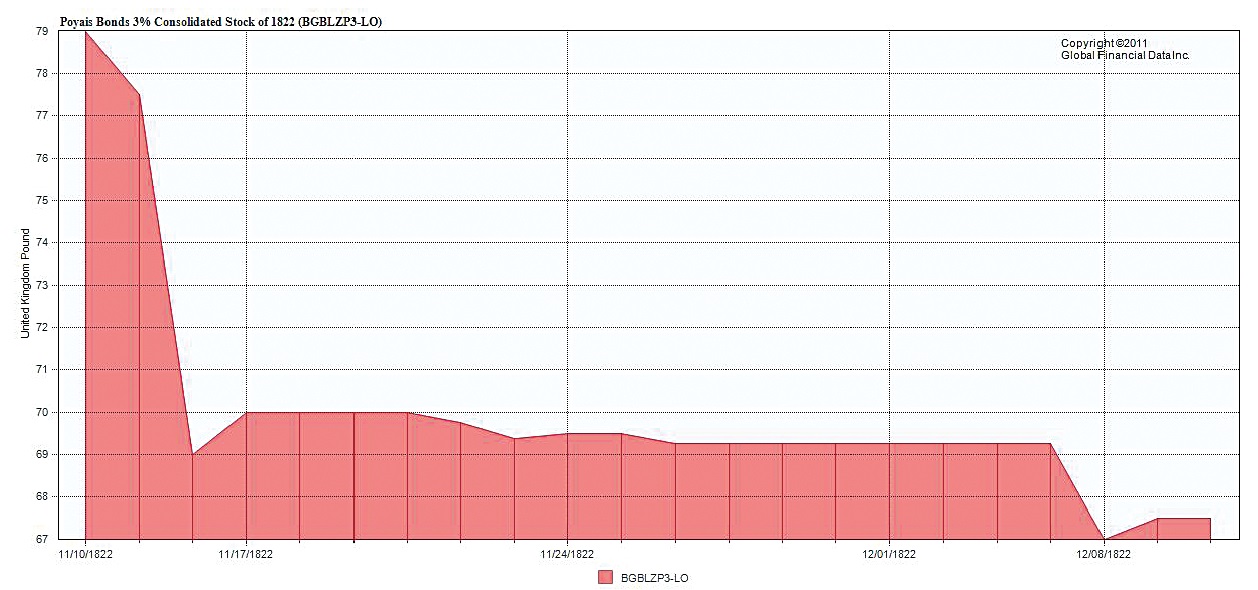
Chart

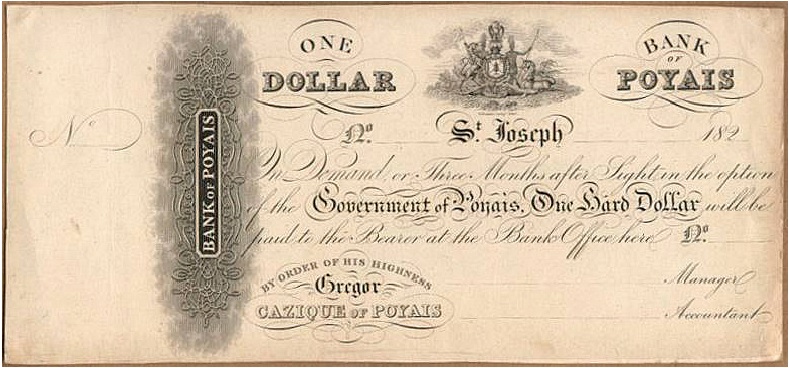
For the rich he offered 2000 bonds at £100 each on October 23, 1822, which resulted in £200,000 in sales. The bonds were offered at 80 and paid 3% interest. For the poor, he offered land for sale at the rate of 3 shillings, 3 pence per acre (later 4 shillings), which was about a day's wages in 1822, therefore it appeared to be a very attractive investment. He sold places in his military, the right to be shoemaker to the Princess, a jeweler, teacher, clerk or other craftsmen in his non-existent government and country. In fact, he even issued his own currency which the settlers could use once they arrived in Gregor McGregor's El Dorado.

The Poyaisian Legation to Britain opened offices in London, and land offices were opened in Glasgow, Stirling and Edinburgh to sell land to his fellow Scots. Gregor McGregor had a group of people who promoted and sold all the land and other Poyaisian goods, sharing the profits with McGregor. By 1823, Gregor McGregor was a multi-millionaire in today's terms.

The Settlement of Poyais

As amazing as it may seem, the Legation of Poyais chartered two boats to take settlers to Poyais. Why they would take this risk, knowing that the settlers would discover the truth about Poyais once they arrived, staggers the imagination, but perhaps the fraudster had started to believe his own fraud. On September 10, 1822, the Honduras Packet departed from London with 70 settlers including doctors, lawyers and a banker. On January 22, 1823, the Kennersley Castle left Leith Harbour in Scotland with almost 200 settlers.

Graphic

When they arrived in Poyais, the settlers, some of whom had risked their life savings, found an uninhabitable jungle that had more tropical diseases than silver and gold. Of the original 240 settlers who reached Poyais, only 60 survived. The rest died.

The Mexican Eagle, an official ship from British Honduras happened upon the Poyaisian settlers in April 1823 and brought King George Frederic to the settlers to tell them he had revoked the land grant because McGregor had assumed sovereignty. Fifty settlers sailed back to London on the Ocean on August 1, 1823 and arrived in London on October 12, 1823. The next day, the story of the ill-fated investors hit the newspapers of London.

Amazingly, many of the settlers defended Gregor McGregor, believing the Cacique had been duped. One of the settlers, James Hastie, who lost two children to tropical diseases, published a book Narrative of a Voyage in the Ship Kennersley Castle from Leith Roads to Poyais, in which he blamed his advisors and publicists for the false information about Poyais. Gregor McGregor, however, fled to France

Gregor McGregor's Later
Poyais Schemes

Once in France, Gregor McGregor continued his fraud. He wrote a constitution for the Republic (no longer a Principality) of Poyais and tried to sell land to French settlers. In 1825, he tried to issue new bonds, and shares in a Poyaisian company.Graphic

When potential settlers began applying to the French authorities to sail to a country that didn't exist, the French began investigating. Gregor McGregor was arrested on December 7, 1825 and spent two months in prison on remand. There were two trials, one in April 1826 and another in July 1826 in which McGregor was acquitted, but one of his co-conspirators, Lehuby was sentenced to 13 months in prison.

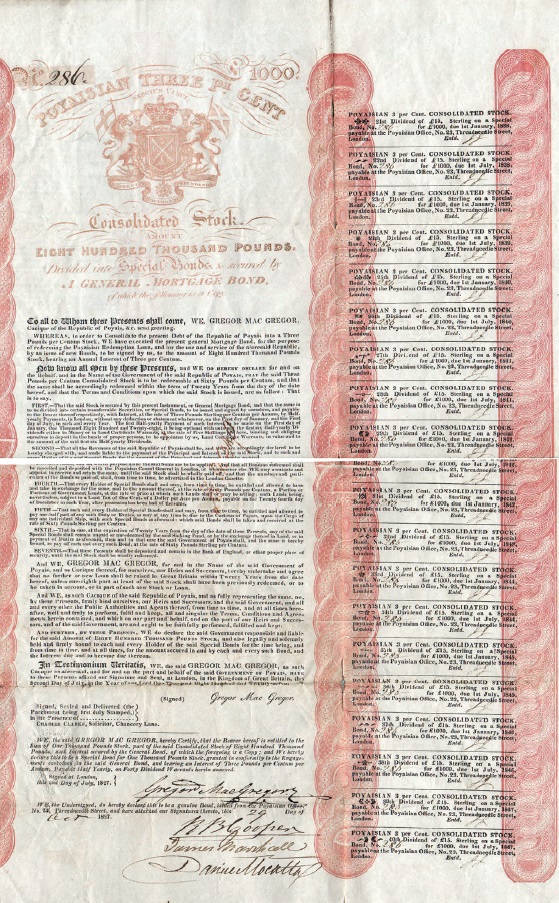
Gregor McGregor returned to London, and still claiming to be the Cacique of the Republic of Poyais opened an office at 23 Threadneedle Street (near the Bank of England). He tried to issue new Poyais bonds in 1827 through Thomas Jenkins and Company as brokers, but with little success. In 1828 he tried to sell land in Poyais at 5 shillings an acre (about $1). graphic In 1831, McGregor, now President of the Poyaisian Republic, issued Poyaisian New Three per cent Consolidated Stock bonds. He tried to sell land certificates in Poyais in 1834 and in 1837 and wrote a new Constitution for Poyais in 1836.

In 1839, Gregor McGregor moved to Venezuela where he received a pension as a general who had fought in the Venezuelan War of Independence. He died on December 4, 1845.

The history of Poyais and Gregor McGregor should forever remain a cautionary tale to investors. Don't believe every "hot" opportunity that comes your way because history indicates that we will encounter another clever swindler. May investors beware so that they do not fall prey of the next Cacique.


Source:
Ralph M Dillon
Global Financial Data

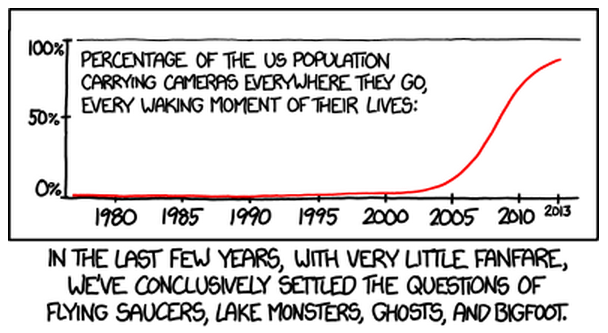
Solved: UFOs, Loch Ness Monster, Ghosts & Bigfoot

Posted: 11 Jul 2013 02:30 AM PDT

Percentage of US population carrying cameras everywhere they go:


Click to enlarge
Chart

Source: xkcd

Common Stock Repurchases during the Financial Crisis

Posted: 11 Jul 2013 02:00 AM PDT

Common Stock Repurchases during the Financial Crisis
Beverly Hirtle
Liberty Street Economics, July 10, 2013


Large bank holding companies (BHCs) continued to pay dividends to their shareholders well after the onset of the recent financial crisis. Academics, industry analysts, and policymakers have noted that these payments reduced capital at these firms at a time when there was considerable uncertainty about the full extent of losses facing individual banks and the banking industry. But dividends are not the only means to return capital to shareholders; stock repurchases serve much the same function. In this post, I examine common stock repurchases by large BHCs during the financial crisis and show that they behaved very differently from common stock dividends during the same period. While dividends remained relatively constant through late 2008, common stock repurchases dropped quickly after the beginning of the financial crisis, consistent with their historically tighter sensitivity to current performance and financial conditions.

BHC Dividends during the Financial Crisis
Many analysts and researchers have noted that large BHCs did not reduce common stock dividends until the financial crisis was well under way. For instance, in a study examining capital at large U.S. and European banks, securities firms, and U.S. government-sponsored enterprises, Acharya, Gujral, Kulkarni, and Shin show that dividends at these firms did not decrease significantly until early 2009. In an October 2008 New York Times op-ed piece, Scharfstein and Stein argued that dividend payments by the largest U.S. BHCs would "redirect more than $25 billion of the $125 billion [in TARP capital] to shareholders in the next year alone." Both sets of authors argued that continued high dividend payments undercut the capitalization of the U.S. banking industry during a time of stress. In 2011, the Federal Reserve implemented the Comprehensive Capital Analysis and Review (CCAR) to review planned dividend payments and other capital distributions by large BHCs to ensure that they would retain sufficient capital to withstand stressed economic and financial market conditions even after making such distributions to shareholders (see my earlier post for a description of how the CCAR addresses this objective).

Regulatory report data confirm the findings about dividends from these earlier studies. The first chart (below) shows the quarterly history of dividends declared by large U.S. BHCs—those with at least $10 billion in assets—from 2005 to the end of 2009. This period starts two years before the onset of the crisis in mid-2007 and extends until the beginning stages of the recovery at the end of 2009. (For consistency over the period, the sample excludes the large nonbank financial firms that became BHCs in early 2009.) As the chart shows, large BHCs made dividend payments in the range of $9 billion to $12 billion per quarter from 2005 to 2007, and while dividends declined over the course of 2008, they did not fall significantly below this level until early 2009, more than a year into the financial crisis.


Common_stock_dividends


Dividends Are Not the Whole Story
Focusing just on dividends misses an important part of the story, however. Stock repurchases—when a company buys its own common stock in public or private markets or by tender offer—are another important way that a firm can return capital to shareholders. Like dividend payments, stock repurchases disperse cash from the company to shareholders. Moreover, repurchases reduce the amount of common stock outstanding one-for-one, just as dividend payments do. Dividend payments reduce retained earnings and thus reduce (potential) common equity, while stock repurchases are a direct reduction in the outstanding amount of common equity.

The second chart (below) updates the first one to include common stock repurchases for the sample of large BHCs. Both dividend and repurchase information come from the quarterly FR Y-9C regulatory reports, which contain balance sheet and income statement information for BHCs. While the Y-9C reports collect dividends declared as a distinct line item, repurchases are not reported directly and must be inferred from other information contained in the report. For the second chart, I've used BHC purchases of treasury stock—common stock issued but not held by the public—as a proxy for common stock repurchases. This is a noisy measure of repurchases, as it may omit some repurchase activity that is reported as part of other Y-9C line items. However, it is a reasonable proxy that should capture the broad movements in repurchase activity.


Repurchased


The second chart illustrates several notable aspects of repurchase activity by large BHCs. First, in the period leading up to the financial crisis, stock repurchases were significant, averaging $7.5 billion per quarter and peaking at $12 billion in the first quarter of 2007. Stock repurchases were about two-thirds the size of dividend payments over this period, meaning that total distributions to shareholders were substantially higher than indicated by considering dividends alone. This is not something new in the banking industry. Some of my earlier research, which examined BHC stock repurchases during the 1990s, also found that stock repurchases rivaled dividends as a way for BHCs to return capital to shareholders. Second, share repurchases dropped sharply during the early phases of the financial crisis, several quarters before dividends were significantly reduced. Stock repurchases by large BHCs fell from their peak of $12 billion in the first quarter of 2007 to about $2 billion during the first quarter of 2008, and were at negligible levels after the middle of that year. As noted above, dividends did not decrease significantly until early 2009.

Because of the decline in repurchases, large BHCs' overall capital distributions to shareholders declined steadily over the course of 2007 and 2008, a somewhat different picture than the one that emerges by looking at dividends alone. By the beginning of 2008, overall capital distributions had fallen below the levels that prevailed during the pre-crisis period. Even so, as the second chart illustrates, it was not until early 2009, when dividends also declined sharply, that overall distributions fell to the very low levels that ultimately prevailed for the remainder of the financial crisis and the period that followed.

Why Are Repurchases Different?
Why did stock repurchases fall earlier and more sharply than dividend payments? Part of the explanation is likely owing to the differing nature of dividends and share repurchases. Dividends are publicly visible actions requiring regular authorization by a firm's board of directors. In the banking industry, large BHCs typically declare dividends quarterly and announced them publicly in press releases. In contrast, for all firms, stock repurchases are much less transparent. Firms have the ability to select the timing and amount of repurchases flexibly over time, subject to the details of their repurchase programs. Research on nonfinancial firms has documented that stock repurchases generally vary more over time than dividends, with repurchases used more frequently by firms with volatile earnings, especially following periods of higher-than-expected profitability. My earlier research on repurchases in the banking industry in the 1990s also found that repurchases seemed to rise following periods of higher-than-average financial performance. In contrast, dividends tend to be interpreted as signals of long-term profitability, decreasing only when profits seem likely to fall to a lower level for a sustained period of time.

Much further research is needed to come to a full understanding of the decisions BHCs made regarding dividend and repurchase activity during the financial crisis. The charts in this post and the results of previous research provide some insight, but there is significant room to explore issues such as concerns about signaling financial weakness during a time of uncertainty, the role of herding behavior in the timing and extent of dividend reductions, and the relative impact of market-wide versus firm-specific factors in decisions to cut back on stock repurchases. And, looking ahead, supervisory oversight via the CCAR and the adoption of new regulatory capital standards that explicitly require reductions in capital distributions as regulatory capital ratios fall below certain trigger points will significantly affect BHCs' decisions about capital distributions. In sum, it is important to consider both dividends and stock repurchases in order to understand the impact of capital distributions on the banking industry, since large BHCs actively use both to manage their capital and distribute cash to shareholders.


Beverly_hirtleBeverly Hirtle is a senior vice president in the Federal Reserve Bank of New York's Research and Statistics Group.

~~~

Disclaimer
The views expressed in this post are those of the author and do not necessarily reflect the position of the Federal Reserve Bank of New York or the Federal Reserve System. Any errors or omissions are the responsibility of the author.

.

0 comments:

Post a Comment

previous home Next

{8} chatroll


{9} AdBrite FOOTER

{8} Nice Blogs (Adgetize)