


The Big Picture |
- Sarkar Report
- What your candy says about your politics
- 10 Monday PM Reads
- Your Broccoli Is Way Too Thirsty
- Separated at Birth: Howard & Ringo
- 10 Monday AM Reads
- Hedge Funds: Bad Investing Versus Lawlessness
- The Wolf of Wall Street: Fact vs. Fiction
| Posted: 03 Mar 2014 10:30 PM PST Overview US markets at record highs, given Mrs Yellen's dovish testimony, though other markets were mixed. The weaker US GDP data has been interpreted by markets that the FED may remain accommodative for longer. US bond yields rose from their lows as inflation data was higher than expected, with the US 10 year bond currently yielding 2.69%. EZ bond yields declined on the week, though came off their lows following the slightly higher inflation read. The potential for problems in China, combined with much weaker capex has impacted the A$, which is off its high. I would expect the A$ to weaken further. The Euro bounced higher on the higher than expected inflation data, though I continue to believe it will decline against the US$ this year. The Yen has benefited from a "flight to safety" trade, though for how long. I continue to favour the US$. The situation in the Ukraine has impacted European markets. Whilst there will be continued tension, the threat of Russia intervening seems highly unlikely. A fragmentation of the country is a possibility though. US New home sales increased unexpectedly by +9.6% to an annualised rate of 468k in January, well above the forecast of 400k, inspite of the adverse weather conditions. It was a 5 year high. The December's annualised rate was also revised higher to 427k, from 414k previously. US consumer confidence declined to 78.1 in February, lower than the estimate of 80 and the downwardly revised 79.4 in January. The expectations component declined to 75.7, down from 80.8 in January, though the present situation component rose to 81.7, the highest since the Lehman crisis. Pretty confusing report. US January durable goods orders declined by just -1.0% M/M, better than the decline of -1.7% expected and the downwardly revised -5.3% in December. Non defence, ex aircraft, a much better and less volatile data point, orders rose by +1.7% M/M, much better than the decline of -0.2% expected and the decline of -1.8% in December. Weekly jobless claims rose to 348k, up from 334k the previous week and higher than the estimate of 335k. US Q4 GDP was revised lower to +2.4%, below the rate of +3.2% initially reported and the rate of +4.1% in Q4. Expectations were for the rate to decline to +2.5%. Lower inventories, consumer spending, government spending and exports were the main reasons for the decline. However, positively, business capex was revised higher (from 3.8% to 7.3%), though consumer spending was revised lower to 2.6%, from 3.3% previously. Europe German Q4 GDP rose by +0.4% (+1.3% Y/Y) in line with previous estimates, lead by exports which were the highest in 3 years. However, private consumption came in lower, with government spending flat. Exports rose by +2.6% in Q4, Q/Q, with capex up +1.4%. Unemployment in Germany declined for the 3rd consecutive month in February. The decline of 14k, was marginally better than the decline of 10k expected. The adjusted unemployment rate came in at 6.8%, unchanged from the previous month. French unemployment rose to a record high in January. The unemployment rate came in at 11.0%. Furthermore, January consumer spending was down -2.1%, as compared with expectations of +0.2%. The EZ January unemployment rate came is unchanged at 12.0%, though the rate in Italy increased to a record high of 12.9%, as opposed to the 12.7% expected. The EU has forecast that GDP growth in the EZ will come in at +1.2% this year (up from +1.1% previously) and +1.8% next. GDP was a negative -0.4% in 2013. However, it reduced its inflation forecast to +1.0% this year (+1.5% previously) and to +1.3% next, well below the ECB's target of 2.0%. In addition, the Commission warns that accumulated sovereign debt (expected to be around 96% of GDP for the EZ) and low inflation could threaten its forecast. Frances budget deficit is expected to amount to 3.9% of GDP in 2015 (4.0% this year), higher than the 3.8% previously estimated and above the target of 3.0% it was supposed to achieve. French GDP growth is forecast at 1.0% for the current year. German 2014 GDP is expected to come in higher than initially forecast at +1.8%. Interestingly, the EU raised Spain's GDP forecast to +1.0% this year (+0.5% previously) and +1.5% next, though its budget deficit is expected to come in at 5.8% this year and 6.5% for 2015. However Spanish Q4 GDP came in at +0.2%, as opposed to +0.3% estimated previously. Italy is forecast to grow by +0.6% this year, previously 0.7%. EU area economic confidence rose to 101.2 in February (up from 101.0 in January), the highest level since mid 2011 and above forecasts of 100.7. The industrial confidence indicator whilst still negative improved to -3.4, from -3.8 previously and the services indicator rose to +3.2, from +2.4. Mr Draghi stated that the ECB was ready to act if deflation is a risk, which he believed was not the case. He added, that deflation was limited to the peripheral EZ countries, in particular, Spain, Greece, Portugal and Ireland. However, data suggests that inflation in France, Italy and Holland are all showing signs of disinflation, with French inflation lower than that in Spain and Italy. Nothing really new from Mr Draghi during the G20 meeting. February's EZ estimated CPI came in at +0.8% Y/Y, the same rate over the last 2 months, though slightly ahead of the initial estimate of +0.7%. However, EZ inflation over the last 6 months has been around negative -0.8% on an annualised basis. Furthermore, inflation in Germany in February came in at just +1.0% Y/Y, lower than the +1.2% expected and a 3 1/2 year low. The market will be analysing the upcoming inflation forecasts by the ECB. Mr Matteo Renzi won a confidence vote in the Italian Senate, though with a smaller majority than his predecessor Mr Letta. He also won support from the lower house. He now becomes the 4th PM in 2 years and the 3rd unelected PM. UK business investment rose by +2.4% in Q4 2013 Q/Q and up +8.5% Y/Y. In the past, the UK has depended on consumer spending, though that rose by just +0.4% in Q4 Q/Q. Whilst its early days, it looks as if the recovery in the UK is broadening, which is certainly positive. Japan Japanese core consumer prices (ex fresh food) rose by +1.3% Y/Y in January, higher than the +1.2% expected. Household spending rose by +1.1% in January, much higher than the rise of just +0.5% expected. Retail sales were +4.4% higher in January Y/Y, once again ahead of expectations of a rise of +3.8%. However, the increased spending is likely to been caused by consumers buying ahead of the proposed sales tax increase in April. Industrial output rose by 4.0% M/M, much higher than the rise of +2.8% expected and the highest since 2011. Generally, much better data than expected, though should be treated cautiously as it is likely impacted by the impending sales tax hike. China Fears over the Chinese property market continue with the Shanghai Composite Index down over 2.0% on Tuesday. The Yuan also continues to depreciate and fell by the most since 2010 on Tuesday. On Friday, the Yuan declined by -0.9% against the US$, the largest decline since 2005 and around -1.2% lower for the week. There is speculation that the PBoC was buying US$'s and selling Yuan and that the Central Bank will widen (double?) its trading band. The PBoC has engineered the decline of the Yuan though its daily fixing, having previously increased its value to combat inflation. In addition, they continue to drain money from the system. Analysts argue that the PBoC wants to increase 2 way volatility in an attempt to curb currency speculation, as the Yuan had previously just appreciated for several months, which resulted in capital inflows, disguised as exports. Whilst that may be the case, I believe that it also reflects fears that the Chinese economy is slowing and that exporters are facing problems. A weaker Yuan also helps in the deleveraging process that China has to go through. However, a weaker Yuan could result in material losses for mainly Chinese businesses who bought structured products on the belief that the Yuan would continue to appreciate. Chinese officials reported that the decline in the Yuan should not be misinterpreted. Hmmm. Bloomberg reports that banks are becoming wary of lending to other banks, as can be seen from certain key credit indicators – not a good sign. The National People’s Congress meets next week, which should result in the announcement of new policies. Other The problems besetting China has resulted in mining companies cutting back on their capex programmes aggressively in Australia. Private sector capex declined by -5.2% in Q4, Q/Q, much worse than the decline of -1.3% anticipated. It was the 1st decline in 3 Q's. Kiron Sarkar |
| What your candy says about your politics Posted: 03 Mar 2014 04:30 PM PST
|
| Posted: 03 Mar 2014 02:30 PM PST My afternoon train reading:
What are you reading?
|
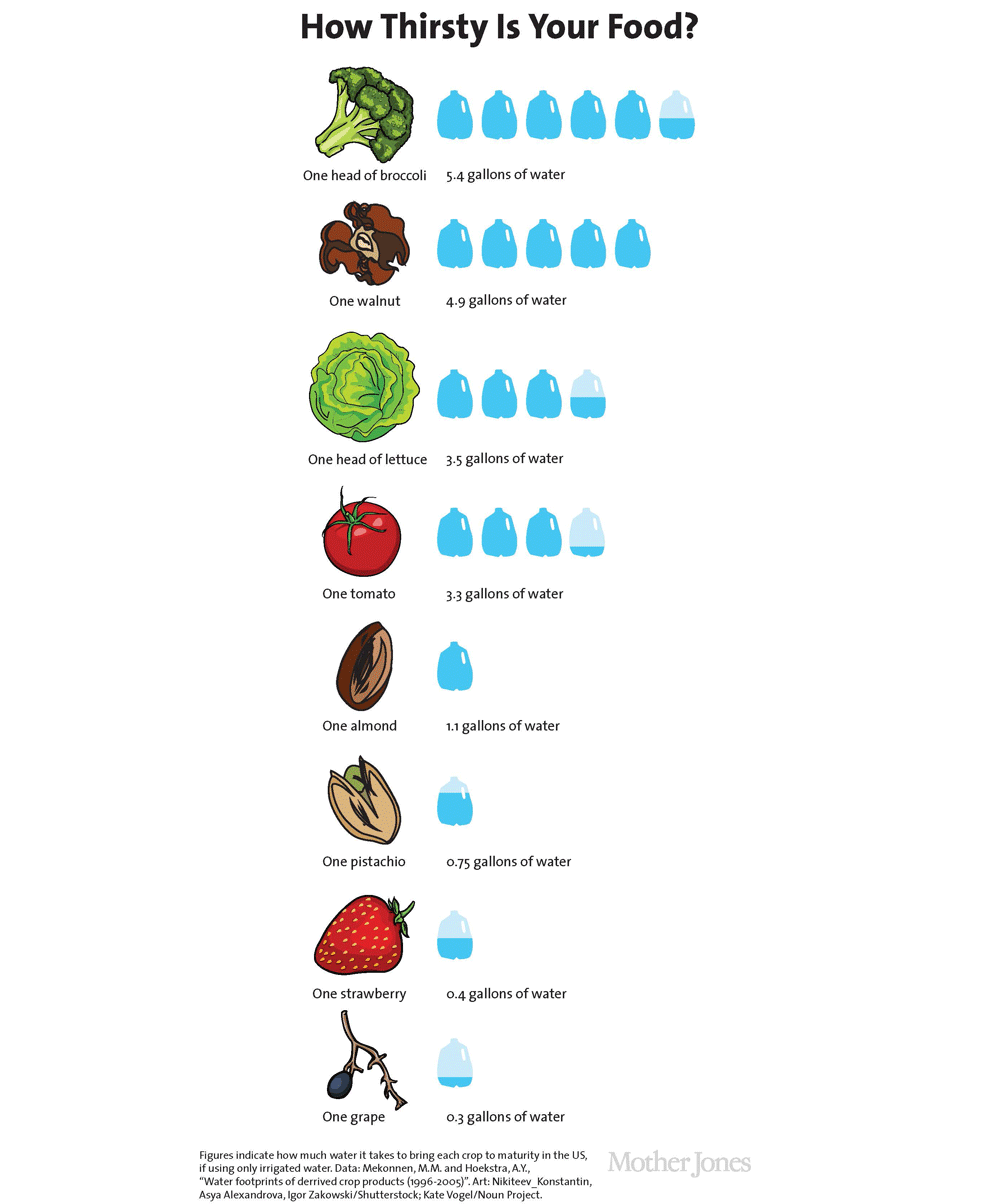
| Your Broccoli Is Way Too Thirsty Posted: 03 Mar 2014 11:30 AM PST |
| Separated at Birth: Howard & Ringo Posted: 03 Mar 2014 09:00 AM PST I am watching the Beatles Grammy show (on DVR) when it dawns on me that I was out drinking with Ringo Starr recently. I am trying to recall how I ended up getting s#$%faced with a Beatle, when it dawns on me that it wasn’t Ringo at all, but Howard!
Is it just me or does Howard Lindzon remind you of Ringo Starr?
|
| Posted: 03 Mar 2014 07:00 AM PST Good morning. Some fine reading selections to begin your work week:
|
| Hedge Funds: Bad Investing Versus Lawlessness Posted: 03 Mar 2014 05:30 AM PST This weekend, I found myself in the rather unusual position of defending hedge funds. Before I explain why that is so unusual, allow me to explain what I was defending them against. Last week, Forbes released its annual score card of top-earning hedge fund managers. The usual gang was there: Soros, Tepper, Cohen, Paulson, Icahn, Simons, Dalio, Griffin, et. al. That clickbait scorecard — it worked on me — and led to a strident column from Gawker, bizarrely titled “Fund Managers Are the Biggest Gangsters of All.” Noting that the top 25 managers made a combined $24.3 billion in 2013, Gawker concluded, "The biggest thugs of all operate fully within the law." Which is completely and utterly wrong. The real gangsters were the "Banksters" who helped bring down the economy in the financial crisis, along with their lapdogs in Washington. To literally talk my own book, “Bailout Nation“: If you want to see truly thuggish behavior, look at three decades of radical deregulation, plus a gutting of enforcement mechanisms.
|
| The Wolf of Wall Street: Fact vs. Fiction Posted: 03 Mar 2014 03:00 AM PST
|




| You are subscribed to email updates from The Big Picture To stop receiving these emails, you may unsubscribe now. | Email delivery powered by Google |
| Google Inc., 20 West Kinzie, Chicago IL USA 60610 | |



0 comments:
Post a Comment