


The Big Picture |
- Is Modern Life Making Us Dumber?
- Mauboussin: Untangling Skill and Luck
- The Ladder
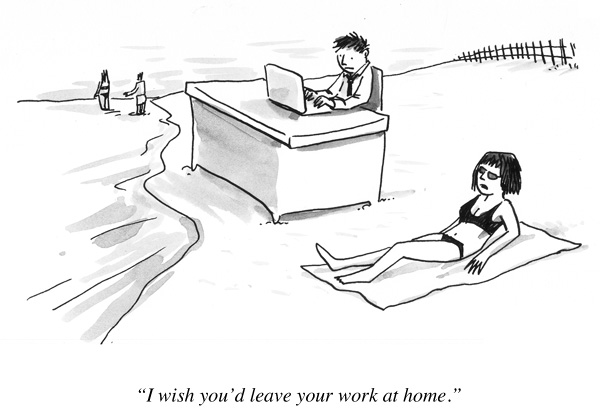
- I wish you’d leave your work at home.
- 10 Sunday Reads
- Is there a trade-off between low bond risk premiums and financial stability?
| Is Modern Life Making Us Dumber? Posted: 31 Aug 2014 10:30 PM PDT Forget "Peak Oil" and "Peak Credit" … Are We On the Downslope of "Peak Intelligence"?
Scientists say that we have much smaller brains than our ancestors had 20,000 years ago … and we might have gotten stupider since agriculture became widespread. Huffington Post reports that we've probably gotten dumber than even our Victorian ancestors:
The Daily Mail notes that we've gotten dumber since the 1950s:
What's Making Us Dumber?There are several theories for why we are getting dumber, including the following: (1) Toxic chemicals in the environment can reduce intelligence. Modern man is surrounded by toxic chemicals which have been shown to reduce intelligence. Examples include flame retardant, lead (found in many lipsticks), certain pesticides (and see this and this), fluoride (more). Radiation can also reduce intelligence. For example, radiation can reduce brain size. Brian Moench, MD notes:
And a very well-established resource for doctors (the Merck Manuals) state:
(2) Humans evolved to eat a lot of Omega 3s:
Omega 3s – in turn – boost intelligence and help prevent cognitive decline. (3) Similarly, Science Daily notes:
Obviously, we don't get in as much soil as our ancestors did. (In addition, some bacteria in our gut greatly influence brain function. Most native cultures ate fermented foods containing healthy bacteria.) (4) Exercise boosts intelligence … and our ancestors got a lot more exercise than we do! "Even our most highly trained athletes pale in comparison to" farmers 7,000 years ago. (5) In addition, high levels of cortisol – the chemical released when one is under continuous, unrelenting stress – and poverty can physically impair the brain and people's ability to learn. Hunter-gatherers had more leisure time – and a more playful attitude – than we do today. (6) [For this and the next theory, we quote from HuffPost.] Dr. Jan te Nijenhuis points to the fact that women of high intelligence tend to have fewer children than do women of lower intelligence. This negative association between I.Q. and fertility has been demonstrated time and again in research over the last century. (7) "The reduction in human intelligence … would have begun at the time that genetic selection became more relaxed," Dr. Gerald Crabtree, professor of pathology and developmental biology at Stanford University, told The Huffington Post in an email. "I projected this occurred as our ancestors began to live in more supportive high density societies (cities) and had access to a steady supply of food. Both of these might have resulted from the invention of agriculture, which occurred about 5,000 to 12,000 years ago." Postscript: Relaxing activities like meditation and prayer have been shown to increase brain mass and connectivity in certain areas of the brain. And sex makes you smarter and causes brain growth. |
| Mauboussin: Untangling Skill and Luck Posted: 31 Aug 2014 04:00 PM PDT Michael Mauboussin is our Masters in Business interview this weekend. ~~~ What role, exactly, do skill and luck play in our successes and failures? Some games, like roulette and the lottery, are pure luck. Others, like chess, exist at the other end of the spectrum, relying almost wholly on players’ skill. In his provocative book, Michael Mauboussin untangles the intricate strands of skill and luck, defines them, and provides useful frameworks for analyzing their relative contributions. He offers concrete suggestions for how to put these insights to work to your advantage in business and other dimensions of life. About the author: |
| Posted: 31 Aug 2014 12:00 PM PDT STARTING We’ve all got to start somewhere, just don’t delude yourself that because you’ve started you deserve to be successful. There are a number of routes to take, some of which can be combined. Skills cannot be emphasized enough. Knowing how to play your instrument, sing or deejay, gives you a floor upon which you can build. But, once again, talented people are a dime a dozen. Furthermore, creativity is king at this level. What can you do that both sounds professional and sounds different? When you’re starting at the bottom you jump to the top by creating that which can get instant airplay, instant success. Managers and labels are not looking for me-too. They can get that from “Idol” and the “Voice.” They’re looking for unique. MUSIC You need a finished product. Best to learn how to make it yourself, whether it be on GarageBand, Pro Tools, Logic or… Today you’re both the creator and the producer. And so many producers are creators. The roles have merged. Knowing how to work the equipment and get what you want, and experience happy accidents, pays dividends down the road. Rather than pay a name producer to cut demos, you should do them yourself. The truth is, no pro the labels are really interested in is gonna do your demo, they’re inundated with offers from true talents/famous people. Rather, you’ll get someone over the hill or who never quite made it. That does not mean they’re not talented, just that working with them won’t give you much of a jump. Every week someone e-mails me that they cut demos with a name, which, unfortunately, I’ve usually never heard of. Yes, there are many who will take your money despite having no real c.v. So what you end up with in most cases is a polished turd. No one said the music business was easy. In order to move forward on the board you’ve got to capture the zeitgeist, which is damn near impossible. DISTRIBUTION Don’t talk about money, don’t talk about streaming royalties, just place your music where everybody can hear it. Jason Flom found Lorde’s “Royals” from an online posting. If your music is not available, you’ll never make it. The way the music business works is you get screwed first, sometimes a few times, and then you make the money. I’m not saying to sign a bad deal, I’m just saying if you’re thinking about getting paid from the get-go, you’re on the wrong track. BIFURCATION Huh? The road splits, you take one way or the other. Let’s say you make Top Forty music, the kind you hear on the radio. Then the most important thing is to have the track and an online presence, that’s how labels judge your success. How many followers you have, how many likes, how many YouTube plays. Yes, if you’re going the Top Forty route, you should have a video, which features you, yourself, in all your glory. Either you’ve got to be beautiful or demonstrate charisma or both. That’s what sells today, your looks and personality, it’s key to major companies investing in you. Or, you don’t make Top Forty music… Then you’ve got to penetrate deeper into the scene you’re in. Make friends with traction, get them to allow you to open. Sure, you can do it yourself, but it’s much easier with friends. Which is where you truly start, if the people you know and can reach easily are not rabid, no one else will be, don’t delude yourself. The people you know would love to spread the word on you if you’re good. Don’t get caught up in hater/jealousy mind games. If you’ve got no virality, even at the tiny friend level in your own hometown, no one else will care. TOP FORTY ACTS You’re building your resume. You’re selling to the tippity-top most level, because to make it in radio you need bucks behind you, and only the major label has these. Oh, you also need relationships. So even if a billionaire will fund you, that’s irrelevant, he can’t get you on the radio. Keep working it and being innovative, trying to get to the point where the label will find you! Followers are not enough, there must be substance. YouTube stars are a dime a dozen, but all they’ve got is their will to be famous and a willingness to do anything. Everything revolves around your music. If you don’t have a good or unique voice, find another career. Because Top Forty is a massaged medium. They’ll find someone else to write the hits, the only thing they can’t change is you, what you sound like and look like. ROAD ACTS Yup, you’re sweating it out on the boards. It’s less about a digital presence/social networking, than finding places to play and building your fan base. You want to build up your mailing list. Yes, that may sound antique, but it’s the only thing that’s real. You want to be able to reach your people and motivate them, e-mail is the best way. You can spam everybody else, but no one will care. You can send tracks to Pitchfork and other sites, but unless they’re one listen smashes, you will get no traction. You’re building your fan base live and figuring out your act, you’re getting onstage experience, discovering yourself off the grid. MAKING IT Top Forty In both Top Forty and road act paradigms, it pays to know someone, because they can gain you access. But they’ll only provide this if they think it’s of benefit, they don’t want to abuse their relationships, everyone’s overwhelmed, no one’s got any time. So when you’ve got something that’s already ready for Top Forty radio, that might need only a few tweaks, then you press the button and get it to the decision-maker, not a moment before. It’s a business, they want to make money, can you make them some? So you’re one step away from success, but it’s a huge chasm, most people never cross it. And now, more than ever before, the majors take fewer chances, they want to know you’re gonna succeed, they just don’t want to throw it against the wall. Are you Beyonce, Rihanna? If not, you probably won’t get an investment. Road Act Keep building your fan base, and once you get traction sell them something, merch, vinyl, t-shirts… A road act has to constantly put out new material, their hard core fans demand it. And if you grow bigger, you can get an indie label deal, oftentimes through someone you know who knows… What the indie will do is get you a little publicity/notoriety. Indies are legendary for disappointing, not doing what they say they will and not paying either. But the more major ones, like Merge, mean something to tastemakers, if you’re on their label, people pay attention. But you must deliver, you don’t get endless chances. MANAGER Every great act has one. One can argue that the manager is more important than the act, never mind the label. The manager believes in you and promotes you. It doesn’t matter if the manager is famous if they’re not committed to you. Furthermore, a scrappy young person will pay further dividends, they’re banking their progress/career on you. ATTORNEYS Don’t sign anything without one. Especially a management or label deal. And not just any attorney, one who specializes in music. There are a ton in New York and L.A. without famous names who want to rise with you. Do your research. If you’re unsure about signing a deal with a manager or label, don’t. They can always find another act, your career might be hamstrung forever. SUCCESS 1 With a Top Forty act it means you’re on the radio. Congratulations, you’ve made it. With a road act it means you can sell a thousand tickets all by your lonesome, almost anywhere. But neither of the above mean you will sustain, that you will get rich, they’re really just a start. Now the truly hard work begins. Going from someone some people have heard of to someone everybody has heard of. It’s hard work and it cannot be done alone. Align yourself with the best team and good luck. SUCCESS 2 You’re making a living, you’ve not only given up your day job, you’re being inundated with offers, everybody wants to be in business with you. If you don’t think you’ve got shelf life, if you want to go to graduate school, sign everything, take all the bucks. If you want to last, pick very carefully. Everything’s got a cost. Your one asset is your fan base, don’t do anything to alienate those who believe in you and sustain you. CONCLUSION It’s not that complicated, but it depends on the music, creativity and hard work. The music is the question mark. Good is no longer good enough. Your tunes have to resonate, people must be clamoring to hear them again, your inbox must be blowing up or you’re not there yet. And you’ve got no idea of the amount of work involved. As Shep Gordon so famously said, if the manager does his job right, it’ll probably kill you! ~~~ – |
| I wish you’d leave your work at home. Posted: 31 Aug 2014 07:00 AM PDT |
| Posted: 31 Aug 2014 04:00 AM PDT Pour yourself a cup-o-joe, and settle in for our early Sunday morn reads:
What’s for brunch ?
Earnings Could Suffer Following Bonus-Depreciation Rule Expiration
|
| Is there a trade-off between low bond risk premiums and financial stability? Posted: 31 Aug 2014 03:00 AM PDT |

| You are subscribed to email updates from The Big Picture To stop receiving these emails, you may unsubscribe now. | Email delivery powered by Google |
| Google Inc., 20 West Kinzie, Chicago IL USA 60610 | |



0 comments:
Post a Comment