


The Big Picture |

- The Bankers’ New Clothes
- CIA & FBI: Cheney Lied About 9/11 Hijacker
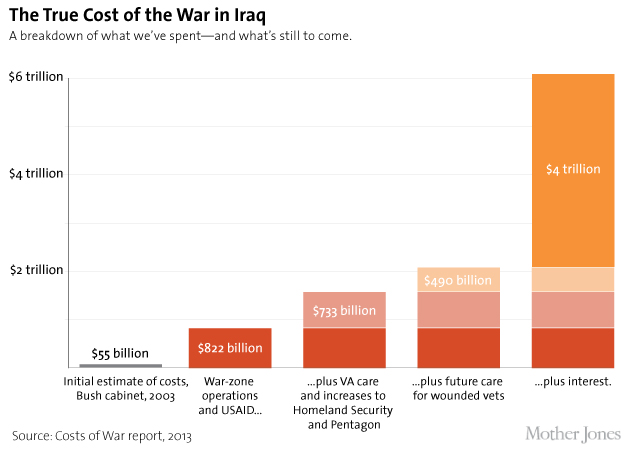
- Discuss: True Cost of Iraq War
- 10 Midweek PM Reads
- Analysis: March 2013 FOMC Statement
- Where the Nation’s Highest Earners Live
- Report from Paris – 2 (2013)
- Chart: Eurozone PIIGS + Cyprus
- 10 MidWeek AM Reads
- What Really Drives Market Sentiment?
| Posted: 21 Mar 2013 03:15 AM PDT
This book is next up in my queue. It looks to be a primer on why big, highly leveraged banks are bad for the economy. The reviews are outstanding; full chapter 9 after the jump. The book’s site is here; Amazon page here.
Reviews:
Full chapter after the jump . . .
Sweet Subsidiaries  | ||||||||||||||||||||||||||||||||||||||||||||||||||||||||||||
| CIA & FBI: Cheney Lied About 9/11 Hijacker Posted: 21 Mar 2013 12:00 AM PDT Cheney Caught In Another Major LieEveryone knew that Iraq did not possess weapons of mass destruction (update here). Dick Cheney admits that he lied about 9/11. MSNBC recently noted that these two facts are intertwined:
Rossini gave MSNBC an example in an interview for the documentary Hubris:
McClatchy confirmed in 2009:
Postscript: Indeed the entire torture program was implemented in an attempt to justify the Iraq war. And the 9/11 Commission was set up with false torture testimony. More background on the Iraq war.  | ||||||||||||||||||||||||||||||||||||||||||||||||||||||||||||
| Discuss: True Cost of Iraq War Posted: 20 Mar 2013 04:30 PM PDT | ||||||||||||||||||||||||||||||||||||||||||||||||||||||||||||
| Posted: 20 Mar 2013 01:30 PM PDT My afternoon train reading:
What are you reading?
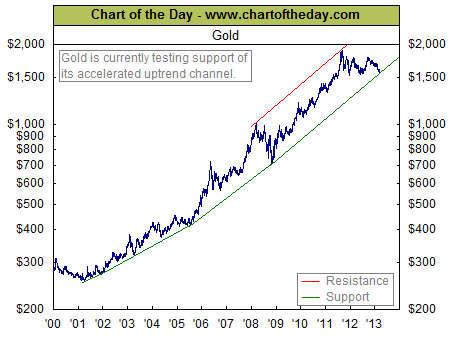
Its Do or Die Time for Gold Source: TRB  | ||||||||||||||||||||||||||||||||||||||||||||||||||||||||||||
| Analysis: March 2013 FOMC Statement Posted: 20 Mar 2013 12:30 PM PDT David Merkel of Aleph Blog does an outstanding job analyzing the key points of the FOMC statement changes:
Comments
Question for Dr. Bernanke Every liability is someone else's asset. Aren't you doing nothing by trying to hold long term interest rates lower?  | ||||||||||||||||||||||||||||||||||||||||||||||||||||||||||||
| Where the Nation’s Highest Earners Live Posted: 20 Mar 2013 12:00 PM PDT click for interactive graphic  | ||||||||||||||||||||||||||||||||||||||||||||||||||||||||||||
| Posted: 20 Mar 2013 11:00 AM PDT Report from Paris – 2 (2013) See Part 1 Report from Paris (2013)
“Just 20 months ago the three largest banks in Cyprus passed the European 'stress tests' with flying colors,” reports Ron DeLegge of ETFguide. The latest estimates are 16 billion euros needed, and that number is rising daily. This will get worse. When we planned this trip to Paris and Dubai, we had no idea that the Eurogroup would launch an unprecedented attack on bank depositors, banks, central banks, and the banking system of the entire Eurozone. But they did. We boarded flights from Sarasota to New York and then to Paris as the news unfolded regarding the "tax," called a "stability levy," on depositors in Cypriot banks. Depositors of €100,000 or less were to have a levy of 6.7 percent confiscated from their bank deposits. Above €100,000, it was to be 9.9 percent. The proposal triggered an uproar and runs on ATMs, and then it fizzled in the Cypriot parliament as a result of the public outcry. The unfolding situation has been a mad scramble ever since. Issues, limits, amounts, back-up credit if there are runs, emergency liquidity provisions, small-saver exemptions, corruption reporting, preservation of national deposit guarantees, and a hundred other issues are being resolved. Every one of the official commentaries characterized the response as a "one-off" event, declaring that this would not happen again and justifying this action as necessary in order to avoid an outcome certain to be even worse. During secret weekend meetings, the Eurogroup, finance ministers of the Eurozone, and other powerful leadership concluded that they could take portions of bank deposits from everybody – foreign or domestic, small or large – and confiscate them. They could confiscate them because of a crisis resulting from their own failure to supervise and regulate one of the member central banks that is part of the Eurosystem. They did that, and the consequences are going to be enormous. We have reached our conclusions about the banking crisis now in the Eurozone following this action and following the previous action in which private-sector debt holders of Greek sovereign debt were essentially "screwed." Unless there are systemic changes for the better, you cannot trust a Eurosystem deposit in a Eurosystem bank in a Eurosystem country. Unless there are systemic changes, you cannot trust and depend on sovereign debt promises of a Eurozone country. Unless there are systemic changes, the Eurosystem, Eurozone debt, and Eurozone bank exposure now carry a risk premium of some amount. That risk will vary by country, bank, and structure. In every case, there is a premium. In the case of countries whose policies and behaviors have been exemplary during the crisis, the premium will be quite small. Finland is a good example of a euro-system, Eurozone, and EU member country that continues to manage its monetary and economic affairs with complete credibility and reliability. We would expect no visible impact on Finnish banks, debt, and financial market structure. Germany is the largest weight in the Eurozone. It is also operated in a disciplined fashion. We do not expect much impact there. But the farther you go into the financially weaker peripheral countries in Europe, the worse the risk premium is going to get. Cyprus is one obvious case study; Greece is another. The question is, what will the impacts be on marginal countries? Some are trying to improve the state of their economic affairs. Does the action in Cyprus make it harder for Portugal to turn around and improve? Is this a setback for Ireland? What happens in Spain, where the banking system is under stress and the economy under double stress? The political mess in Italy renders the questions huge. When you consider the total debt and total size of the troubled countries in the Eurosystem and the Eurozone, you can reach only one conclusion. This system is sick. Its political leaders are making a crisis situation worse by making decisions that they claim to be single events, and without a pattern or overall policy approach. No one believes them anymore. No depositor who is capable of avoiding this exposure will seek the exposure. Instead, depositors will seek alternatives. Taxation rates in some countries, such as France, are driving wealth and entrepreneurial spirit out of the country. In other places, political uncertainty is so high that it impairs any advancement in growth or economic recovery. For the entire Eurozone, we would expect in 2013 that the growth rate will be near zero. Some of the unemployment characteristics in various countries have reached levels that have no precedent and are destabilizing. In some countries the unemployment rate among youth is over 50 percent. In most countries the unemployment rate is measurable in double digits. Europe's leaders, in our view, continue to make bad decisions. In doing so, they make bad matters worse. We have not reached this painful conclusion without careful research. We have had a series of meetings in Paris with money managers, central bankers, investors, and academics. All of our meetings here were private. In the candor of those private discussions, we come away with the most troubled view we have had of the Eurozone, the experiment in this single-currency block, and the market structures in Europe. This is a place in trouble. Courses of action that evidence more flailing than forethought are not making things any better. We will soon leave for Dubai for the Global Interdependence Center event, the latest in the GIC Banking Series, this time focused on challenges and opportunities in the Middle East. Our comments on March 26, 2013, will subsequently be posted on Cumberland's website along with our slides. Interested readers will be able to track this at www.cumber.com. For investors, we would strongly recommend that careful consideration be given to exposures in the Eurozone, the Eurosystem, the European Economic Community, and the European Union. Things have changed. Watch closely for bank runs. Also watch use of Emergency Liquidity Assistance (ELA), and watch how the European Central Bank (ECB) reviews value of collateral. Lastly, watch out for new capital controls in Cyprus. They will signal a death knell for cross-border money flows. ~~~ David R. Kotok, Chairman and Chief Investment Officer, Cumberland Advisors  | ||||||||||||||||||||||||||||||||||||||||||||||||||||||||||||
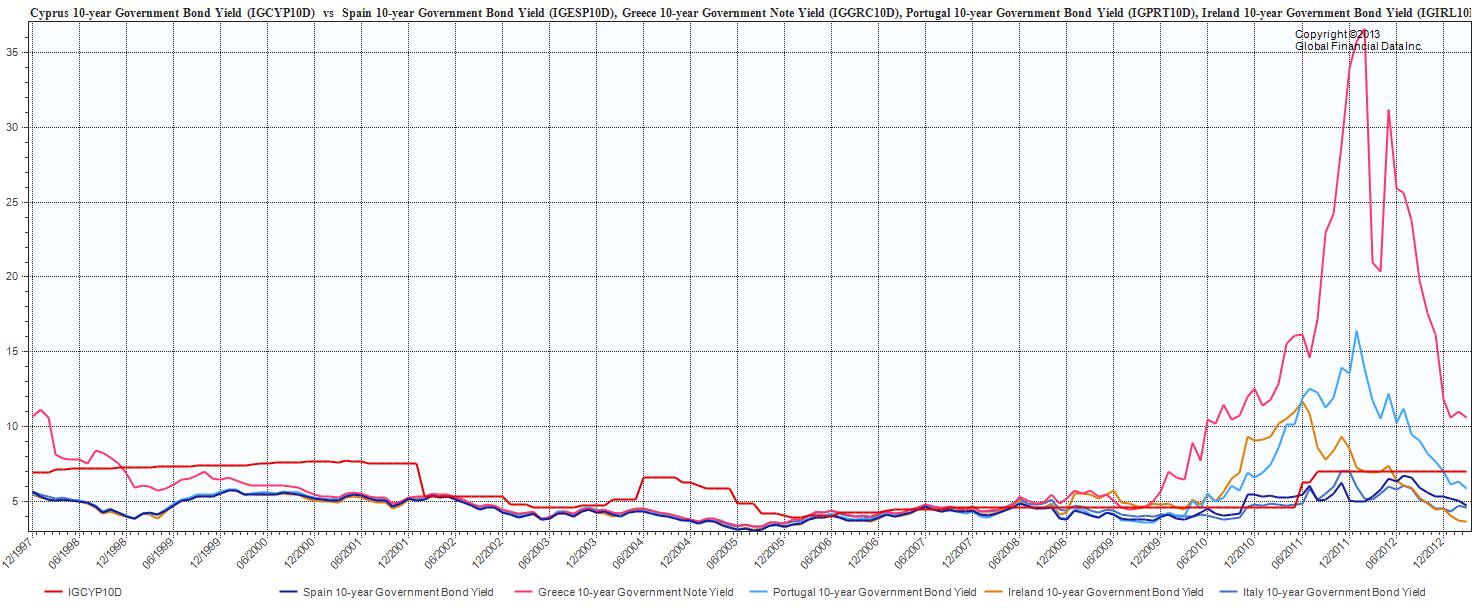
| Chart: Eurozone PIIGS + Cyprus Posted: 20 Mar 2013 09:00 AM PDT Click for ginormous chart
Pretty interesting look at the 10 yr bonds of the Eurozone PIIGS plus Cyprus. With so much speculation about the future of Cyprus, one wonders what happens if one collapses, what will happen to the rest. Thus far, it appears to be of little or no consequence.
Source:  | ||||||||||||||||||||||||||||||||||||||||||||||||||||||||||||
| Posted: 20 Mar 2013 07:00 AM PDT My morning reads:
What are you reading?
TBTF  | ||||||||||||||||||||||||||||||||||||||||||||||||||||||||||||
| What Really Drives Market Sentiment? Posted: 20 Mar 2013 04:00 AM PDT I mentioned last week that bullish sentiment was getting a bit frothy. After a few weeks of record highs, expectations that stock prices will continue rising had surged. Not quite an extrapolation of recent trends into infinity, but getting there. This morning, I wanted to address the flip side of that — Bearish sentiment (expectations that stock prices will fall in the near future). This Pessimism remains above historical average. As I noted all the way back in 2009, this is the most hated rally in Wall Street history. Many participants are unable to pry their eyes from the wreckage in the rear view mirror. This impacts their psychology, investment posture, and allocations. Consider the initial over-reaction to Cyprus. The swiftness in which the bearish commentariat erupted over the weekend was a wonder to behold. It also was far more revealing of the bears own confirmation bias than anything it said about the circumstances in Cyprus itself. Some have made a big deal of the January inflows into equities — the biggest in years — as a sign of the top. Perhaps a little context might help put this into perspective: The $20 billion dollars added to U.S. stock funds in 2013 pales when compared to the over $600 billion in outflows from equity funds over six years though 2012. It is also less than half of $44 billion that flows to fixed-income managers in 2013 (ICI). Thus, we have a market which remains disliked, under-owned by investors, not unreasonably priced, with few alternatives to equities. (Does that sound like the recipe for a market crash to you?) Let me be clear about one thing: I am not implying in any way an organic rally. The normal 20-30% pullback we might have seen as the economy slowed and earnings weaken has been thwarted by Swingin’ Uncle Ben & His No Limit Orchestra. Any concerns I may have had about a pre-recession 30% correction was shelved once QE4 became imminent. The Fed is erring on the side of doing too much this go round, versus their 1930s error of doing too little. Perhaps this thwarting of normal cycles accounts for some of the angst we see amongst the bearish contingency. Maybe they will eventually be proven right after missing a 146% move off of the March 2009 lows — a hollow victory at best. In the meantime, it is helpful to understand what it is that is driving sentiment, in the context of the larger picture.
Note: With this post, I am breaking out Psychology and Sentiment into two distinct categories.
Previously: Strategists Most Bearish on Equities since 1985 (August 1st, 2012)  |




| You are subscribed to email updates from The Big Picture To stop receiving these emails, you may unsubscribe now. | Email delivery powered by Google |
| Google Inc., 20 West Kinzie, Chicago IL USA 60610 | |




0 comments:
Post a Comment