.

{2} GoogleTranslate (H)

English French German Spanish Italian Dutch Russian Portuguese Japanese Korean Arabic Chinese Simplified

Our New Stuff

{3} up AdBrite + eToro

Your Ad Here

Thursday, March 7, 2013

The Big Picture

The Big Picture


Failure to Prosecute Fraud Causes Economic Downturns

Posted: 06 Mar 2013 10:30 PM PST

The Government Has It Bass-Ackwards: Failing To Prosecute Criminal Fraud by the Big Banks Is Killing – NOT Saving – the Economy

U.S. Attorney General Eric Holder said today:

I am concerned that the size of some of these institutions [banks] becomes so large that it does become difficult for us to prosecute them when we are hit with indications that if you do prosecute, if you do bring a criminal charge, it will have a negative impact on the national economy, perhaps even the world economy

As we've repeatedly noted, this is wholly untrue.

If the big banks were important to the economy, would so many  prominent economists, financial experts and bankers be calling for them to be broken up?

If the big banks generated prosperity for the economy, would they have to be virtually 100% subsidized to keep them afloat?

If the big banks were helpful for an economic recovery, would they be prolonging our economic instability?

In fact, failing to prosecute criminal fraud has been destabilizing the economy since at least 2007 … and will cause huge crashes in the future.

After all, the main driver of economic growth is a strong rule of law.

Nobel prize winning economist Joseph Stiglitz says that we have to prosecute fraud or else the economy won't recover:

The legal system is supposed to be the codification of our norms and beliefs, things that we need to make our system work. If the legal system is seen as exploitative, then confidence in our whole system starts eroding. And that's really the problem that's going on.

***

I think we ought to go do what we did in the S&L [crisis] and actually put many of these guys in prison. Absolutely. These are not just white-collar crimes or little accidents. There were victims. That's the point. There were victims all over the world.

***

Economists focus on the whole notion of incentives. People have an incentive sometimes to behave badly, because they can make more money if they can cheat. If our economic system is going to work then we have to make sure that what they gain when they cheat is offset by a system of penalties.

Nobel prize winning economist George Akerlof has demonstrated that failure to punish white collar criminals – and instead bailing them out- creates incentives for more economic crimes and further destruction of the economy in the future.

Indeed, professor of law and economics (and chief S&L prosecutor) William Black notes that we've known of this dynamic for "hundreds of years". And see this, this, this and this.

(Review of the data on accounting fraud confirms that fraud goes up as criminal prosecutions go down.)

The Director of the Securities and Exchange Commission's enforcement division told Congress:

Recovery from the fallout of the financial crisis requires important efforts on various fronts, and vigorous enforcement is an essential component, as aggressive and even-handed enforcement will meet the public's fair expectation that those whose violations of the law caused severe loss and hardship will be held accountable. And vigorous law enforcement efforts will help vindicate the principles that are fundamental to the fair and proper functioning of our markets: that no one should have an unjust advantage in our markets; that investors have a right to disclosure that complies with the federal securities laws; and that there is a level playing field for all investors.

Paul Zak (Professor of Economics and Department Chair, as well as the founding Director of the Center for Neuroeconomics Studies at Claremont Graduate University, Professor of Neurology at Loma Linda University Medical Center, and a senior researcher at UCLA) and Stephen Knack (a Lead Economist in the World Bank's Research Department and Public Sector Governance Department) wrote a paper called Trust and Growth, showing that enforcing the rule of law – i.e. prosecuting white collar fraud – is necessary for a healthy economy.

One of the leading business schools in America – the Wharton School of Business – published an essay by a psychologist on the causes and solutions to the economic crisis. Wharton points out that restoring trust is the key to recovery, and that trust cannot be restored until wrongdoers are held accountable:

According to David M. Sachs, a training and supervision analyst at the Psychoanalytic Center of Philadelphia, the crisis today is not one of confidence, but one of trust. "Abusive financial practices were unchecked by personal moral controls that prohibit individual criminal behavior, as in the case of [Bernard] Madoff, and by complex financial manipulations, as in the case of AIG." The public, expecting to be protected from such abuse, has suffered a trauma of loss similar to that after 9/11. "Normal expectations of what is safe and dependable were abruptly shattered," Sachs noted. "As is typical of post-traumatic states, planning for the future could not be based on old assumptions about what is safe and what is dangerous. A radical reversal of how to be gratified occurred."

People now feel more gratified saving money than spending it, Sachs suggested. They have trouble trusting promises from the government because they feel the government has let them down.

He framed his argument with a fictional patient named Betty Q. Public, a librarian with two teenage children and a husband, John, who had recently lost his job. "She felt betrayed because she and her husband had invested conservatively and were double-crossed by dishonest, greedy businessmen, and now she distrusted the government that had failed to protect them from corporate dishonesty. Not only that, but she had little trust in things turning around soon enough to enable her and her husband to accomplish their previous goals.

"By no means a sophisticated economist, she knew … that some people had become fantastically wealthy by misusing other people's money — hers included," Sachs said. "In short, John and Betty had done everything right and were being punished, while the dishonest people were going unpunished."

Helping an individual recover from a traumatic experience provides a useful analogy for understanding how to help the economy recover from its own traumatic experience, Sachs pointed out. The public will need to "hold the perpetrators of the economic disaster responsible and take what actions they can to prevent them from harming the economy again." In addition, the public will have to see proof that government and business leaders can behave responsibly before they will trust them again, he argued.

Note that Sachs urges "hold[ing] the perpetrators of the economic disaster responsible." In other words, just "looking forward" and promising to do things differently isn't enough.

Robert Shiller – one of the top housing experts in the United States – says that the mortgage fraud is a lot like the fraud which occurred during the Great Depression. As Fortune notes:

Shiller said the danger of foreclosuregate — the scandal in which it has come to light that the biggest banks have routinely mishandled homeownership documents, putting the legality of foreclosures and related sales in doubt — is a replay of the 1930s, when Americans lost faith that institutions such as business and government were dealing fairly.

Indeed, it is beyond dispute that bank fraud was one of the main causes of the Great Depression.

Economist James K. Galbraith wrote in the introduction to his father, John Kenneth Galbraith's, definitive study of the Great Depression, The Great Crash, 1929:

The main relevance of The Great Crash, 1929 to the great crisis of 2008 is surely here. In both cases, the government knew what it should do. Both times, it declined to do it. In the summer of 1929 a few stern words from on high, a rise in the discount rate, a tough investigation into the pyramid schemes of the day, and the house of cards on Wall Street would have tumbled before its fall destroyed the whole economy.

In 2004, the FBI warned publicly of "an epidemic of mortgage fraud." But the government did nothing, and less than nothing, delivering instead low interest rates, deregulation and clear signals that laws would not be enforced. The signals were not subtle: on one occasion the director of the Office of Thrift Supervision came to a conference with copies of the Federal Register and a chainsaw. There followed every manner of scheme to fleece the unsuspecting ….

This was fraud, perpetrated in the first instance by the government on the population, and by the rich on the poor.

***

The government that permits this to happen is complicit in a vast crime.

Galbraith also says:

There will have to be full-scale investigation and cleaning up of the residue of that, before you can have, I think, a return of confidence in the financial sector. And that's a process which needs to get underway.

Galbraith recently said that "at the root of the crisis we find the largest financial swindle in world history", where "counterfeit" mortgages were "laundered" by the banks.

As he has repeatedly noted, the economy will not recover until the perpetrators of the frauds which caused our current economic crisis are held accountable, so that trust can be restored. See this, this and this.

No wonder Galbraith has said economists should move into the background, and "criminologists to the forefront."

The bottom line is that the government has it exactly backwards.   By failing to prosecute criminal fraud, the government  is destabilizing the economy … and ensuring future crashes.

Postscript:  Unfortunately, the government made it official policy not to prosecute fraud, even though criminal fraud is the main business model adopted by the giant banks.

Indeed, the government has done everything it can to cover up fraud, and has been actively encouraging criminal fraud and attacking those trying to blow the whistle.

QOTD: “Let the sequester happen”

Posted: 06 Mar 2013 04:30 PM PST

Fascinating rant from Jon Talton:

“Let the sequester happen and keep it going. Ever since Ronald Reagan ran for the presidency, politicians have gotten ahead by claiming “government is the problem.” And voters accept this as they accept their Social Security checks, Medicare benefits, safe food and drugs, freeways and roads to drive on, in vehicles powered by gasoline kept artificially cheap by federal subsidies, armies and fleets, live in a Sun Belt made habitable by federal initiatives from the TVA to the SRP, survive airplane flights thanks to government air traffic control…and they think government is the problem. A people this stupid and corrupt deserves the real-life experiment of seeing whether they really are rugged individualists who don’t need no gub’ment. Bring it on.”

- Jon Talton, on the current U.S. budget crisis.

Discuss . . .

10 Midweek PM Reads

Posted: 06 Mar 2013 01:30 PM PST

My afternoon train reads:

• Ray Dalio went into this year even more bullish than we thought (Reuters)
• Dismal Science Takes Dim View of Dow ‘Record’ (WSJ) see also Your sequestered brain can't see next crash coming (MarketWatch)
• This is America, Now: The Dow Hits a Record High With Household Income at a Decade Low (The Atlantic)
• Bank of America's Legal Gambit: Keeping Reserves Low (ProPublica)
• Viral Video Shows the Extent of U.S. Wealth Inequality (Mashable) see also Wait, wealth inequality the new Harlem Shake? (Yahoo)
• Foreclosure Sales and and Short Sales Account for 43% of U.S. Residential Sales in 2012 (RealtyTrac) see also Better to Buy Bank Owned or Short Sale? (RealtyTrak)
• Barofsky: The Geithner Doctrine (Linkedin)
• People Writing for Free on the Internet Is an Enormous Boon to Society (Slate)
• The Google Glass feature no one is talking about (creative good) see also 2010 Microsoft Wrote Some Checks That 2013 Microsoft Can't Cash (TechCrunch)
• Shipwreck may contain near-mythical Viking navigation aid (The Raw Story)

What are you reading?


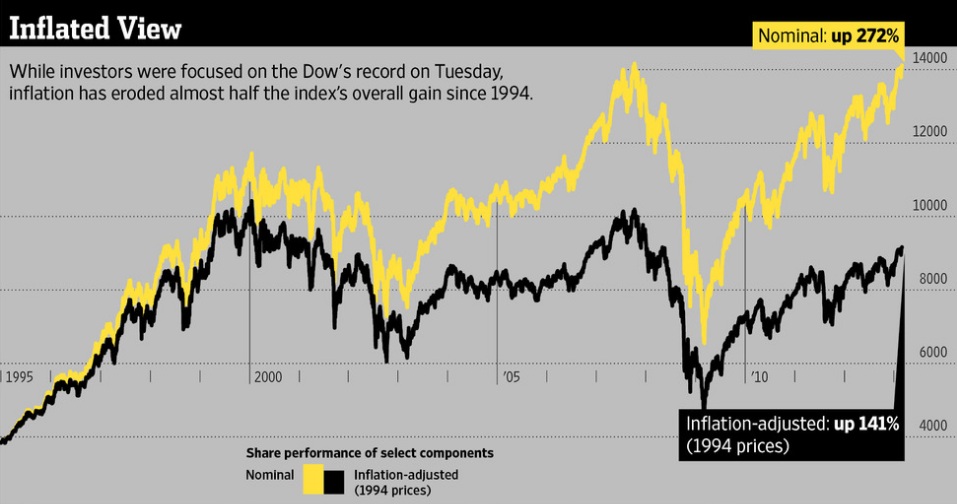
Inflation Adjusted Dow ‘Record’

Source: WSJ

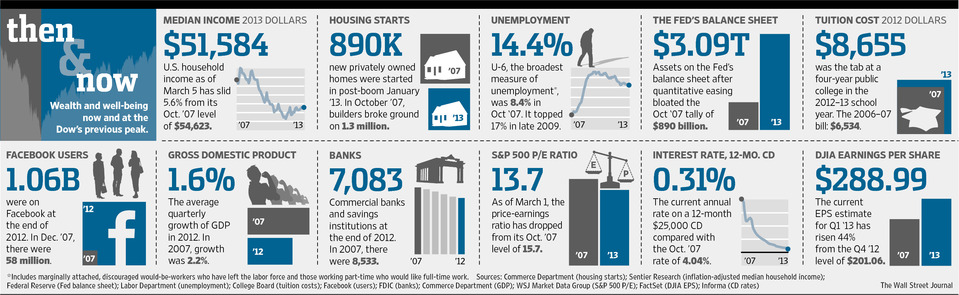
Markets Then & Now

Posted: 06 Mar 2013 11:30 AM PST

click for larger graphic

Source: WSJ


As Chris White of Dewiler Fenton noted recently (hat tip Art Cashin), lots of things have changed since the last peak in 2007:

Dow Jones Industrial Average: Then 14164.5; Now 14,304
GDP Growth: Then +2.5%; Now +1.6%
Unemployed: Then 6.7 million; Now 13.2 million
Food Stamp users: Then 26.9 million; Now 47.69 million
Fed’s Balance Sheet: Then $0.89 trillion; Now $3.01 trillion
Debt as a Percentage of GDP: Then ~38%; Now 74.2%
Total US Debt: Then $9.008 trillion; Now $16.43 trillion
Consumer Confidence: Then 99.5; Now 69.6
VIX: Then 17.5%; Now 14%
10 Year Treasury Yield: Then 4.64%; Now 1.89%
Gold: Then $748; Now $1583
NYSE Average daily volume: Then 1.3 billion shares; Now 545 million shares

All told, quite astonishing.

Drivers of the Dow

Posted: 06 Mar 2013 09:14 AM PST

click for interactive version

Source: WSJ


Nice graphic and article explaining how only 5 stocks (of 30) in the Dow are the prime drivers of the rally, responsible for one third of the gains.

Before you go Oooh, consider the simple math of this. If every stock contributed equally to the Dow’s rise, than 10 stocks would be worth a third of gains.  But as in typical collections of different items, there is a bell curve, a normal distribution.

Thus, it should come as no surprise that some stocks have contributed much more than others.

Point Contributions:

IBM     941.77
Catepillar 507.56
3M  493.81
Chevron  456.63
United Technologies  413.32

The full distribution of winners is losers are at the article.


Source:
Five Stocks Handled the Heavy Lifting
Steve Russolillo
WSJ March 5, 2013

http://online.wsj.com/article/SB10001424127887324539404578342771985751896.html

10 Midweek AM Reads

Posted: 06 Mar 2013 07:00 AM PST

My morning reads:

• As Fears Recede, Dow Industrials Hit a Milestone (NYT) see also As Confetti Settles, Strategists Wonder Will Dow’s Rally Last? (WSJ)
Pursuit of Mediocrity: The high cost of active management (Abnormal Returns)
• How Much of Equity Prices Is Real? (Alhambra Investment Partners)
• 4 Hidden Risks in Bonds (iShares
• Forget Spending Cuts, the U.S. Economy Really Needs a $2 Trillion Stimulus (Fiscal Times)
WTF headline of the day: States Move to Criminalize Whistleblowing on Food Fraud and Animal Cruelty (A Lightning War for Liberty)
• Why has Congress left housing to Fannie Mae and Freddie Mac? (Wonklbog)
• How I ended up with Mac (tirania) but see Why I switched from iPhone to Android (Macworld)
• It's Time to Rethink America's Corn System (Scientific American)
• The 8 Most Obnoxious Internet Commenters (Cracked)

What are you reading?


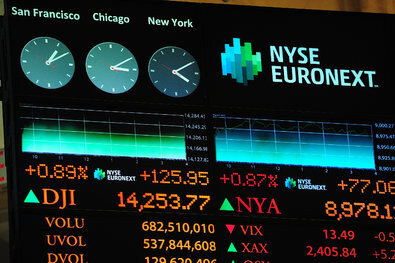
Dow Record Highs

Source: NYT

Bank Liquidity Hoarding and the Financial Crisis: An Empirical Evaluation

Posted: 06 Mar 2013 05:30 AM PST

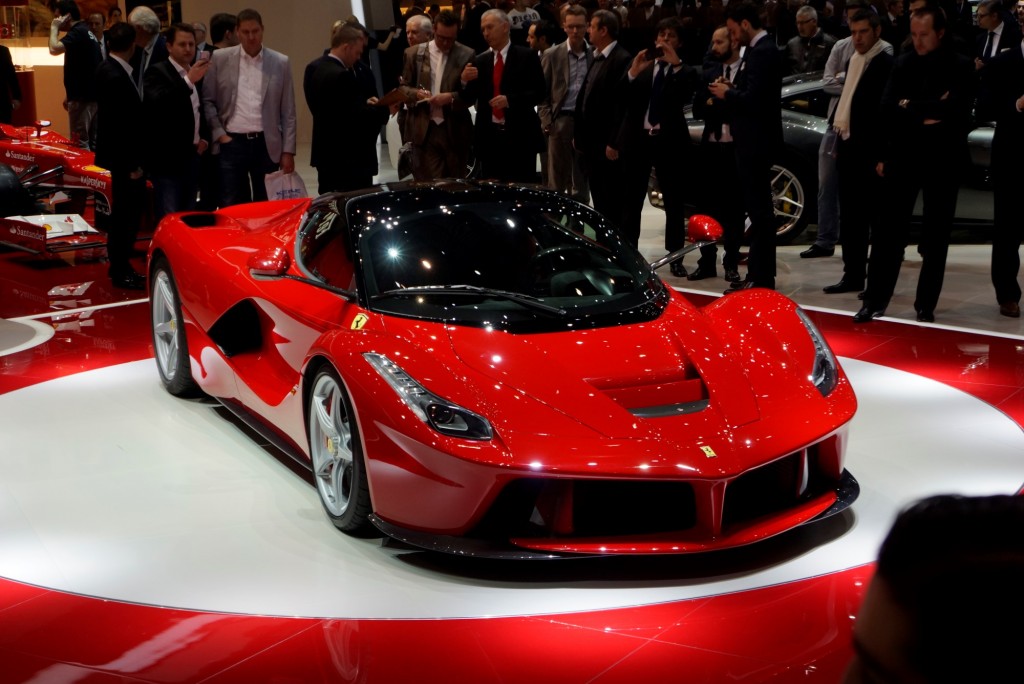
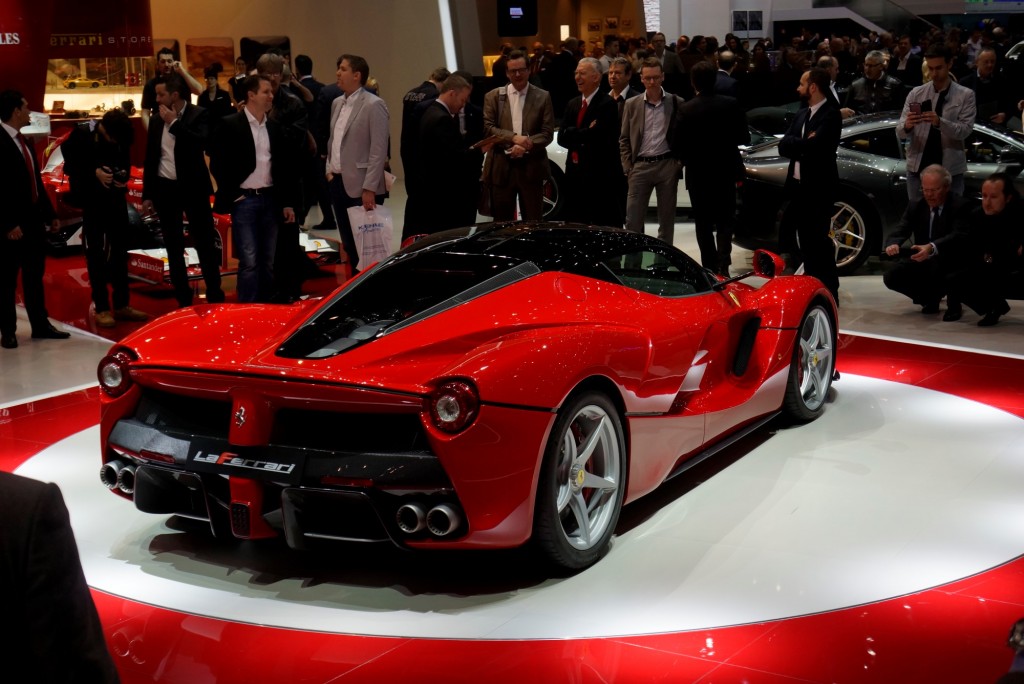
Hybrid V12 Ferrari Revealed in Geneva

Posted: 06 Mar 2013 05:00 AM PST

Click to enlarge

Some details:

• LaFerrari from a dead stop to 62 miles per hour in under three seconds;
• Top speed is 205 miles an hour;
• Only 499 of the cars will be built;
• 789-horsepower gasoline engine and a 160-horsepower electric motor;
• LaFerrari features spoilers and flaps that automatically deploy when needed to provide road-holding downforce;
• LaFerrari represents an opportunity for Ferrari to experiment with technologies that could later be used in the brand’s more widely available automobiles;
• The hybrid system in the LaFerrari was developed so that, in future applications, a car could be driven short distances under electric power only.


Source: Motor Authority and CNNMoney  and Automobile

Wrongstradamus: The Money Losing Forecasts of Michael Boskin

Posted: 06 Mar 2013 04:15 AM PST


“If you chained a thousand Boskins to a thousand keyboards for a thousand years, eventually one of them would make a correct prediction.”


Over the years, I have been critical of economist Michael Boskin: I have critiqued his market forecasts (“Obama's Radicalism is Killing the Dow“) that were made literally on the day markets hit their lows and began a 5 year, 136% rally; I abhor his artifice in damaging  how economic data is assembled; and how he officially distorted how CPI data is modeled.

In 2010, I made the following observation about Boskin:

“For those of you who may be unaware, Boskin is the economist/weasel/fraud who helped to officially distort the CPI, making it more or less worthless as a measure of inflation. The Boskin Commission was an act of fraud, a backdoor method to suppress Social Security cost of living adjustments (COLAs). To be blunt, it was an act of cowardice. Rather than man up and say "fix this, its broken, we can't afford it" the commission took a different route — they fabricated a series of nonsense adjustments  that artificially lowered CPI by 1.1%.

The Boskin Commission's massive government falsehood allowed former Fed Chair Alan Greenspan to take rates to absurdly low levels, as the official CPI data showed no inflation, despite double digit price increases.”

Thus, it was not just that he is merely intellectually dishonest, or just a terrible economist, or also a political hack — it is that these combined to contribute to the financial crisis. His Orwellian artifice in mucking about the BEA/BLS data actually made inflation appear far more tame than it was. This contributed to then Fed chair Alan Greenspan’s irresponsible ultra-low rates. Easy Al was under the false impression that inflation was contained, at least according to the official Boskin adjusted inflation data. It was not.

While we cannot blame Boskin for the financial crisis, we can recognize that he, in his own small way, was one of the many contributing factors.

I was reminded of all this yesterday when I linked to an amusing New York magazine column: World's Wrongest Man Ventures Latest Prediction. The piece details many of the hack predictions that Boskin has made.

New York points out that investors who listened to Boskin over the past 3 decades have gotten annihilated:

“If you are an investor, Boskin's doomsaying is a sure sign of a coming bull market. Four years ago, Boskin penned a Journal op-ed whose thesis was captured in the headline, "Obama's Radicalism Is Killing The Dow." That was the signal for the Dow to go on a tear, doubling over the next four years. As Kevin points out, the Dow's current "high" is an overstated artifact of dumb, unweighted statistics, but the underlying reality remains that the stock market has enjoyed an incredibly good four years under Obama's radicalism.

One might suppose that Boskin has simply suffered a single unfortunate coincidence. In fact, his career is a mighty testament to the power of enduring, invincible wrongness. In 1993, Bill Clinton enacted an economic program centered around some public investment, coupled with deficit reduction with higher taxes on the rich. Boskin was very, very sure it would fail. In a Journal op-ed entered into the Congressional Record by grateful Republicans, he accused Clinton's administration of "fundamental distrust of free enterprise." He made a series of predictions: "The new spending programs will grow more than projected, revenue growth will be disappointing, the economy will slow, and the program will reduce the deficit much less than expected."

Boskin repeated his prophecies of doom in a summerlong media blitz. Boskin labeled Clinton's plan "clearly contractionary," insisted the projected revenue would only raise 30 percent as much as forecast by dampening the incentive of the rich, insisted it would "take an economy that might have grown at 3 or 4 percent and cause it to grow more slowly," and insisted anybody who believed in it would "Flunk Economics 101." (The preceding pre-Internet quotes are all via a Lexis-Nexis search.)”

The article details how “literally every Boskin prediction turned out to be the opposite of reality.”

In the new radical right movement, being consistently wrong is some kind of a badge of honor, and so he rose through its ranks, failing upwards as an economist, but scoring points as a propagandist. As a former George W. Bush economic adviser, we expect him to have made bad decisions, as that was seemingly a requirement for any job in that worst of all administrations. As a fellow at the Hoover Institute, we expect him to continue pursuing the brilliant policies that made President Hoover such an economic success story. (Note its called the “Hoover Institute” because the name “Clusterfuck Foundation” was already taken).

But all of that is just so much political bullshit. What is most unforgivable, is that he sandbagged investors for political reasons. Anyone who listened to the advice of this ‘respected economist,’ wrapped in the language of investing (but in actuality partisan political tripe) was crushed.

That is the real reason you should ignore anything and everything Boskin writes or says — because he is so contemptuous of you as an investor that he is willing to throw you under the bus in pursuit of his own radical right ideology.

You see, it was never Boskin’s intentions to give you investing advice — indeed, from all appearances, he could not care less about that. His agenda was an attempt to scare you politically. That he did so in financial papers like the Wall Street Journal or Investor’s Business Daily simply reveals the contempt he (and their OpEd managers) hold for their readers — saps, marks, subscribers, investors — suckers all.

Over the years, I have mocked the WSJ OpEd pages as filled with drunks and cads hell bent on losing you money. Boskin is a classic example of why you should never let anyone’s politics influence your investing. He is part of the reason why I quarantined money-losers  like the WSJ OpEd pages.

And think, it only took 30 years of money losing advice for the rest of the world to wise up to him . . .


Previously:
Michael Boskin on "The Obama Crash" (December 7th, 2009)

Why Michael Boskin Deserves Our Contempt (January 19th, 2010)

Boskin's Bottom Tick: Obama's Killing the Dow (March 9th, 2011)

Why politics and investing don’t mix  (February 6, 2011)


Source:
World's Wrongest Man Ventures Latest Prediction
Jonathan Chait
New York Magazine, March 5, 2013
http://nymag.com/daily/intelligencer/2013/03/worlds-wrongest-man-ventures-latest-prediction.html

Dow Surges to Record High, Time for a New Playbook?

Posted: 06 Mar 2013 04:00 AM PST

David Bianco, chief U.S. equity strategist at Deutsche Bank AG, Barry Ritholtz, chief executive officer of FusionIQ, and Andrew Keene, president of KeeneOnTheMarket.com, talk about U.S. stock markets and their investment strategies. Stocks jumped today, sending the Dow Jones Industrial Average to a record. Bianco, Ritholtz and Keene speak with Trish Regan and Adam Johnson on Bloomberg Television’s “Street Smart.”

Bloomberg, March 5 2013

.

0 comments:

Post a Comment

previous home Next

{8} chatroll


{9} AdBrite FOOTER

{8} Nice Blogs (Adgetize)