


The Big Picture |

- Only a Tiny Percentage of Americans Opposed to Breaking Up Big Banks
- Violence & Movies: Thoughts by Roger Ebert
- 10 Thursday PM Reads
- Ritholtz: Why Original Thought Is Shockingly Rare
- Bubble/Mania Cycle
- 10 Thursday AM Reads
- Sir John Templeton on Bull Markets
- TED: 100 Websites You Should Know + Use
- Withholding-Tax Collections Surge Higher in March
- Hulbert on New Market Highs
| Only a Tiny Percentage of Americans Opposed to Breaking Up Big Banks Posted: 04 Apr 2013 10:30 PM PDT 50% In Favor of Directly Breaking Them Up … Many More In Favor of Stopping Artificial Support and Letting them Shrink On Their OwnA new Huffington Post/YouGov poll finds:
A Rasmussen poll conducted last month found that:
While polls show that Democrats favor breaking up the big banks more than Republicans, many Republicans point out that the big banks would fail on their own if the government stopped bailing them out. Indeed, a Harris poll from last year shows that 87% of Republicans are against bank bailouts. In other words, the percentage of Americans who favor breaking up the big banks – either directly through government intervention or indirectly by pulling the plug on their taxpayer life support – is probably more like 90-99%. The 27% of Americans who don't yet have enough information to decide whether they are for directly breaking up the big banks may want to note that the following top economists and financial experts believe that the economy cannot recover unless the big, insolvent banks are broken up in an orderly fashion:
And the head of the New York Federal Reserve Bank – and former Goldman Sachs chief economist – William Dudley says that we should not tolerate a financial system in which certain financial institutions are deemed to be too big to fail. Federal Reserve Board governor Daniel Tarullo also backs a cap on the size of banks, and Former Treasury secretary under Reagan and George H.W. Bush, Nicolas Brady, says that we need to put a cap on leverage. The undecideds may also want to note that many top bankers are themselves calling for a break up, including:
Click here for background on why so many top bankers, economists, financial experts and politicians say that the big banks should be broken up. |
| Violence & Movies: Thoughts by Roger Ebert Posted: 04 Apr 2013 04:30 PM PDT Roger Ebert: “The day after Columbine, I was interviewed for the Tom Brokaw news program. The reporter had been assigned a theory and was seeking sound bites to support it. 'Wouldn’t you say,’ she asked, 'that killings like this are influenced by violent movies?’ No, I said, I wouldn’t say that. 'But what about Basketball Diaries?’ she asked. 'Doesn’t that have a scene of a boy walking into a school with a machine gun?’ The obscure 1995 Leonardo Di Caprio movie did indeed have a brief fantasy scene of that nature, I said, but the movie failed at the box office (it grossed only $2.5 million), and it’s unlikely the Columbine killers saw it. The reporter looked disappointed, so I offered her my theory. 'Events like this,’ I said, 'if they are influenced by anything, are influenced by news programs like your own. When an unbalanced kid walks into a school and starts shooting, it becomes a major media event. Cable news drops ordinary programming and goes around the clock with it. The story is assigned a logo and a theme song; these two kids were packaged as the Trench Coat Mafia. The message is clear to other disturbed kids around the country: If I shoot up my school, I can be famous. The TV will talk about nothing else but me. Experts will try to figure out what I was thinking. The kids and teachers at school will see they shouldn’t have messed with me. I’ll go out in a blaze of glory.‘ In short, I said, events like Columbine are influenced far less by violent movies than by CNN, the NBC Nightly News and all the other news media, who glorify the killers in the guise of 'explaining’ them. I commended the policy at the Sun-Times, where our editor said the paper would no longer feature school killings on Page 1. The reporter thanked me and turned off the camera. Of course the interview was never used. They found plenty of talking heads to condemn violent movies, and everybody was happy.”
Roger Ebert, 1942-2013 |
| Posted: 04 Apr 2013 01:30 PM PDT My afternoon train reading:
What are you reading?
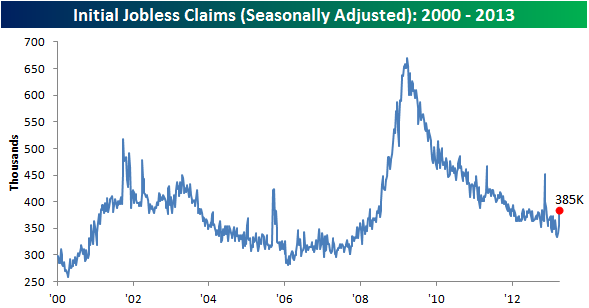
Initial Jobless Claims Rise More Than Expected |
| Ritholtz: Why Original Thought Is Shockingly Rare Posted: 04 Apr 2013 12:00 PM PDT Fusion IQ’s Barry Ritholtz joins Markets Hub for a look at a historic market rally and the one trait Wall Street is plagued by. |
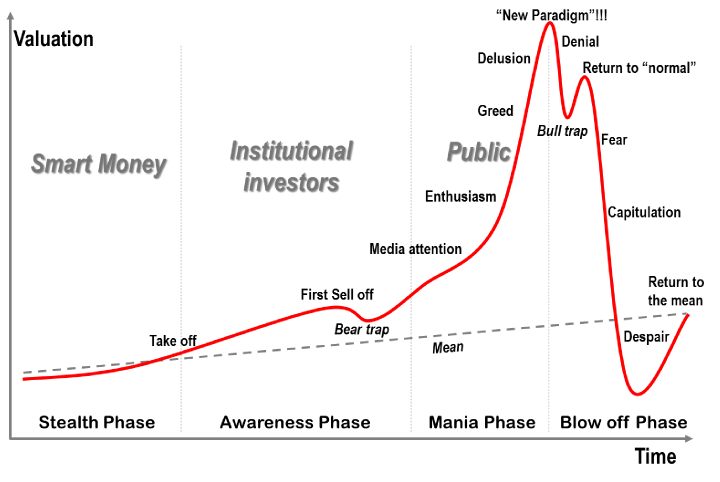
| Posted: 04 Apr 2013 09:00 AM PDT Bubbles and Manias
Fascinating chart showing the psychological of a longer market cycle via Prof Jean-Paul Rodrigue.
Previously: |
| Posted: 04 Apr 2013 07:00 AM PDT My morning reads:
What are you reading?
Gold (GLD) losing its luster … |
| Sir John Templeton on Bull Markets Posted: 04 Apr 2013 06:30 AM PDT Quote of the Day:
|
| TED: 100 Websites You Should Know + Use Posted: 04 Apr 2013 05:30 AM PDT How crazy cool is this: Back in 2007, a TED video discussed a list of 100 websites you should know and use. It became one of their more popular pages. They just updated 100 Websites You Should Know and Use, and through some administrative snafu, the Big Picture is right there in the BUSINESS + E-COMMERCE section. Madness!
click for actual TED page |
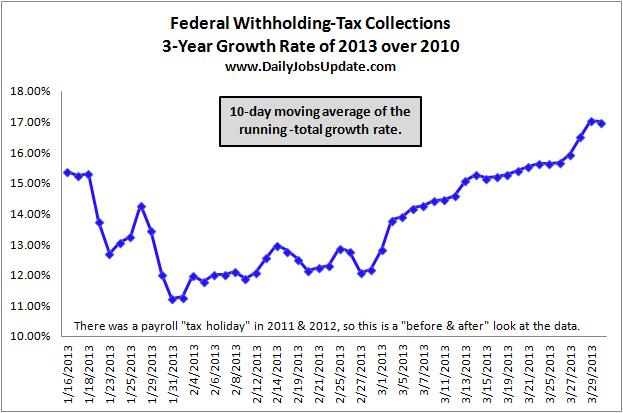
| Withholding-Tax Collections Surge Higher in March Posted: 04 Apr 2013 04:00 AM PDT Click to enlarge:
Matt Trivisonno writes: “At this point of the year in 2010, the Treasury Department had collected $459.6 billion in withholding taxes from the paychecks of American workers. Now in 2013, the amount stands at $545.9 billion – up $86.3 billion or 18.8%. (We compare to 2010 because there was a payroll “tax holiday” in 2011 & 2012). An 18.8% growth rate over three years is pretty respectable in an era of scant wage inflation. Even more impressive is the recent trajectory of the growth rate. In the chart above (“3-Year-Growth”) you can see that the rate surged all throughout March. The chart plots the 10-day moving average of the growth-rate to give us a look at the second-derivative. As you can see it was “up, up, and away” during March. So, the odds of a disappointing jobs report on Friday seem very low. If a weak number is reported, the odds favor it will likely be revised upward in the future. The consensus forecast among economists is for only +193,000 jobs, which is substantially lower than the 236,000 added in February. That forecast appears to be excessively gloomy in light of the withholding-tax data, perhaps setting the stage for another upside surprise. On the other hand, the stock market was strong during March, so perhaps it has already priced in the news.
Source: Daily Jobs Update |
| Posted: 04 Apr 2013 03:00 AM PDT
Here's what happens when market hits a new high Source: |


| You are subscribed to email updates from The Big Picture To stop receiving these emails, you may unsubscribe now. | Email delivery powered by Google |
| Google Inc., 20 West Kinzie, Chicago IL USA 60610 | |



0 comments:
Post a Comment